

.svg)


Key Takeaways
- A third party logistics provider like ShipNetwork manages the entire order fulfillment process-from receiving and storing inventory to picking, packing, shipping, and handling reverse logistics-so brands can focus on growth instead of warehouse operations.
- ShipNetwork's nationwide fulfillment centers located across the U.S. and Canada reach 98% of the U.S. population within 1–2 days via ground shipping, helping ecommerce companies meet modern customer expectations for fast, reliable delivery.
- Working with a 3PL cuts overhead costs compared to in house fulfillment by eliminating the need to lease warehouse space, hire staff, and negotiate carrier contracts independently.
- A strong 3PL depends on technology-warehouse management system software, platform integrations, and tools like ShipNetwork's KNCT-to manage inventory accurately, fulfill orders quickly, and deliver real-time tracking visibility.
- ShipNetwork is built for fast-growing ecommerce brands that need scalable fulfillment solutions and a measurable boost in customer satisfaction.
Introduction: What "Fulfillment" Really Means in 2026
"Fulfillment" gets tossed around like it means one thing. It doesn't. For a founder packing orders in a spare bedroom, fulfillment means tape guns and trips to the post office. For a brand shipping 20,000 units a month across multiple sales channels, fulfillment means coordinated supply chain operations spanning warehouses, carriers, software, and real-time data integrity. The gap between those two realities is where most scaling brands hit a wall.
In 2026, the order fulfillment definition has expanded far beyond "get it out the door." Consumers now expect 2–3 day delivery as baseline-53% of U.S. shoppers say exactly that, and 93% say proactive shipping updates offset frustration during delays. Meanwhile, 74% of shoppers will abandon a brand entirely after just three bad experiences. The margin for error in fulfillment operations is razor-thin.
This is where third party logistics enters the picture. A 3PL like ShipNetwork takes over the operational burden-receiving, storage, order processing, packing and shipping, carrier management, and returns-so brands can invest their time in product development, marketing, and customer acquisition. The rest of this article walks through exactly what a 3PL does, step by step, from the moment inventory arrives at a fulfillment center to the moment a customer receives (or returns) their order.
What Is a 3PL in the Modern Ecommerce Supply Chain?
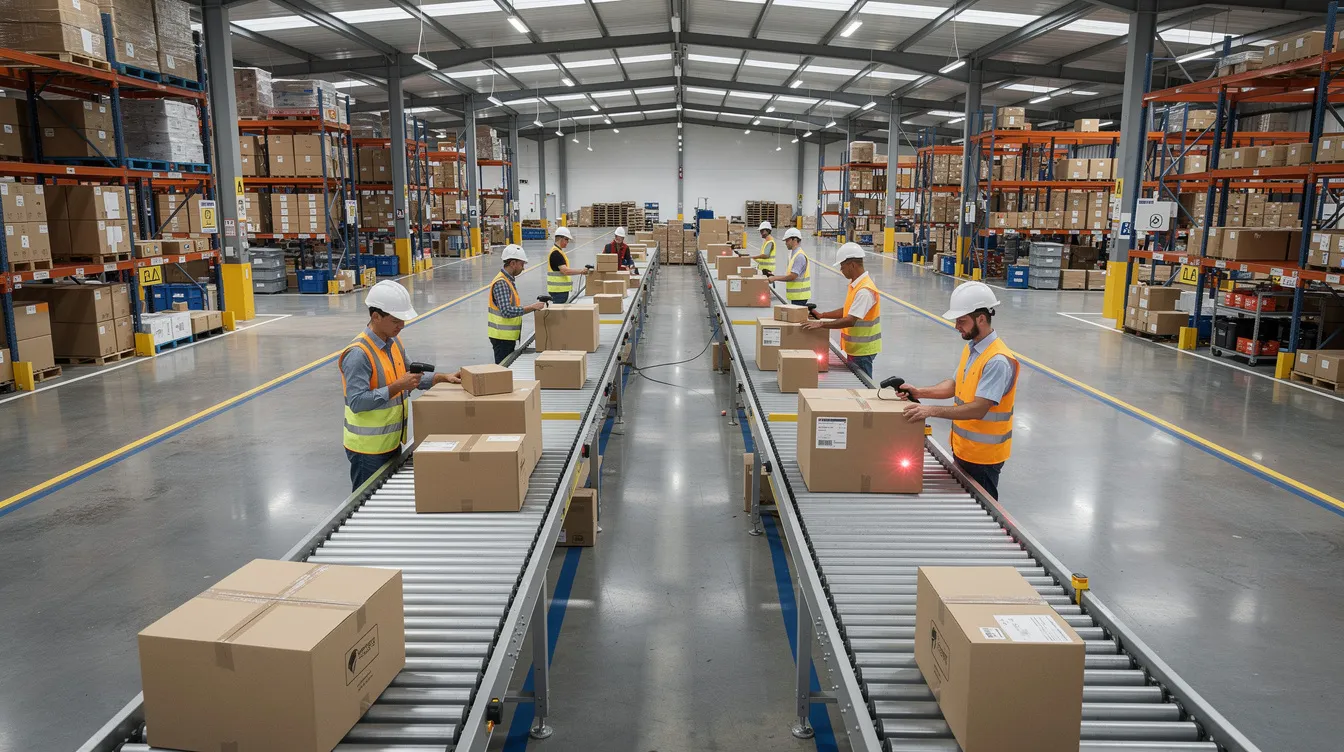
The order fulfillment FAQs that most brands start with usually begin here: what is a 3PL, exactly? A third party logistics provider is a company that handles warehousing, storing inventory, order processing, packing, shipping, and returns on behalf of other businesses. 3PLs have been used since the early 1970s, and today, 90% of Fortune 500 companies rely on one.
Modern ecommerce-focused 3PLs like ShipNetwork operate differently from a single storage facility or a freight broker:
- They run multiple fulfillment centers strategically placed near major population centers to reduce shipping zones and transit times.
- They orchestrate everything inside the warehouse or fulfillment center-receiving, pick-pack workflows, quality control-and across carriers.
- They integrate directly with ecommerce platforms, marketplaces, and order processing management system software to pull in customer orders automatically.
- They provide real-time visibility into stock levels, order status, and carrier performance across all locations.
A 3PL sits between suppliers upstream and end customers downstream in the supply chain. It is not a carrier (which only moves parcels) or a freight broker (which arranges transport). It manages warehousing, inventory, and order fulfillment end to end.
The rest of this article breaks down exactly how a 3PL like ShipNetwork fulfills orders day to day.
Step 1: Receiving and Inventory Intake
Order fulfillment starts with receiving inventory from suppliers. "Receiving" is the moment inbound stock-pallets, cartons, individual units-arrives at a 3PL's fulfillment center from manufacturers or distributors. It is the first quality gate, and mistakes here cascade through every downstream step.
Here is what happens during receiving processes:
- Pallets or cartons are unloaded and inspected for visible damage, deformation, and labeling accuracy.
- Staff checks goods against advance ship notices (ASNs), packing lists, and purchase orders to verify SKU identity, quantity, and lot or batch numbers.
- Each case or unit is scanned into the warehouse management system using barcodes or lot numbers, giving the 3PL the ability to manage inventory in real time from the moment it enters the building.
- Putaway happens quickly-ShipNetwork targets same-business-day putaway to keep inventory available for orders as fast as possible.
Why does this matter? Clean intake prevents stock discrepancies that lead to overselling, mispicks, and customer dissatisfaction. Effective inventory management prevents stockouts and delays. When the company's inventory data is accurate at receiving, every later step-picking, reorder planning, channel availability-runs on solid ground.
Step 2: Storage and Inventory Organization
Once inventory arrives and clears receiving, it needs to be stored in a way that balances space utilization, safety requirements, and fast picking. This is where the difference between ad-hoc in house fulfillment and professional logistics services becomes obvious.
At a 3PL like ShipNetwork, storage works like this:
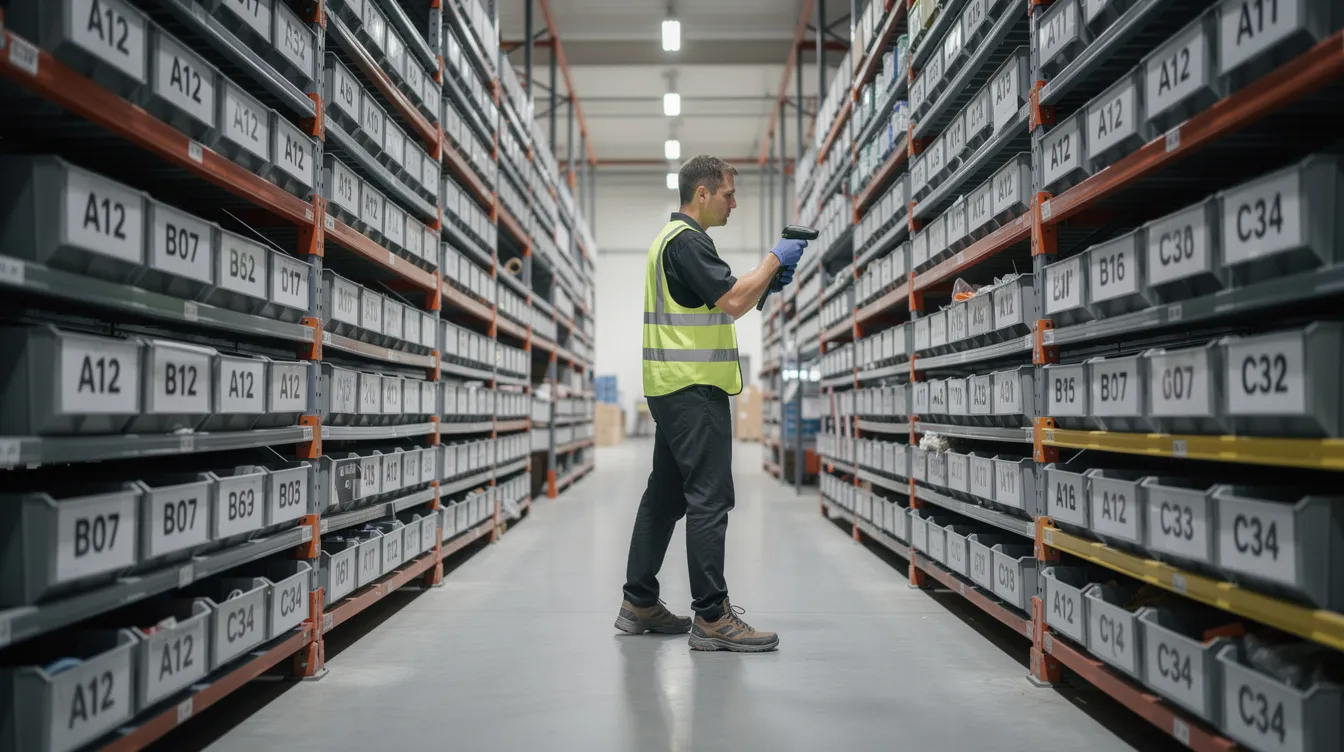
- SKUs are assigned specific bin locations, shelves, or pallet positions inside the distribution center. High-velocity SKUs-the items that sell fastest-are placed closest to packing stations to reduce travel time.
- A WMS-driven location map tracks every unit at the SKU-bin level. This means brands can manage inventory at a granular level across multiple fulfillment centers from a single dashboard.
- Inventory management systems help prevent overstocking and stockouts by maintaining accurate counts and triggering reorder alerts.
- For regulated goods like supplements, food, or health and beauty products, inventory rotation practices like FIFO (first in, first out) or lot tracking ensure expired or non-compliant items never ship. ShipNetwork offers lot tracking and temperature-controlled storage for these categories.
3PLs provide visibility into inventory stages for better management and planning. Smart storage design reduces walking time, prevents mispicks, and directly improves both speed and storage costs compared with managing inventory storage in a spare room or single facility.
Step 3: Order Processing and Pick Accuracy
Order processing starts when a customer places an order and it hits the 3PL's system-usually via direct integrations with platforms like Shopify, WooCommerce, or Amazon. The fulfillment process from this point forward determines whether the customer gets the right product, on time, in good condition.
Here is how it works:
- Customer orders are automatically imported into ShipNetwork's system, validated for payment and inventory availability, and converted into digital pick tickets or wave picks.
- Associates follow scanner-based instructions to collect exact SKUs, sizes, and quantities from mapped bin locations. Barcode scanning at every pick stage confirms the right item is pulled-no guessing, no memory-dependent processes.
- The system also handles order routing, sending each sales order to the optimal fulfillment center based on inventory availability, destination proximity, and promised delivery window.
The order fulfillment process includes picking, packing, and shipping-and picking is where accuracy is won or lost. Industry data from 2026 across 500+ warehouses shows median pick and pack accuracy at about 99.1%, with top performers hitting 99.7%. Automated systems improve shipping accuracy and reduce processing times. ShipNetwork backs this with a 100% Order Accuracy Guarantee-a benchmark that sets the bar for what successful order fulfillment looks like.
Order fulfillment typically aims for 1–2 business days for processing. ShipNetwork's 1-Day Fulfillment SLA ensures orders ship within one business day.
Step 4: Packing Standards and Quality Checks
Packing is where the 3PL controls presentation, protection, and a final layer of quality control before an order leaves the building. It is the last internal checkpoint-and the last chance to catch errors before they become customer inquiries.
What happens at this stage:
- Packers verify line items against the digital order, check for damage, and confirm quantities before sealing. This is another checkpoint that supports ShipNetwork's accuracy guarantee.
- Packing materials are selected based on the product: right-sized boxes or mailers, dunnage, inserts, and branded packaging where requested. Right-sizing packaging minimizes dimensional weight, which directly reduces shipping costs.
- Packing involves preparing items securely for shipment to ensure protection. Fragile items, liquids, or temperature-sensitive products are handled according to documented SOPs that specify cushioning, orientation, and sealing standards-matching the customer's specifications for how their products should arrive.
- Automated inventory management improves order accuracy and efficiency at this stage, with weight and dimensional scans catching discrepancies before labels are applied.
This step is also where value-added 3pl services happen. Many 3PLs offer kitting and bundling services to enhance product presentation. ShipNetwork handles subscription box assembly, promotional inserts, gift wrapping, and custom kitting-all managed through documented SOPs so quality stays consistent even during peak volume.
Step 5: Carrier Selection, Label Generation, and Handoffs
After packing, the 3PL must choose a carrier and service level that meet the delivery promise at the lowest possible total cost. This decision affects fulfillment costs, delivery speed, and customer experience simultaneously.
ShipNetwork's KNCT technology handles this automatically. KNCT optimizes 100% of shipping volume for cost efficiency by evaluating each order's weight, dimensions, origin, destination, and current carrier performance data to select the best option:
- KNCT Priority: 1–3 day average transit for time-sensitive orders.
- KNCT Expedited: balanced 2–5 day delivery.
- KNCT Ground: cost-effective 3–8 day service.
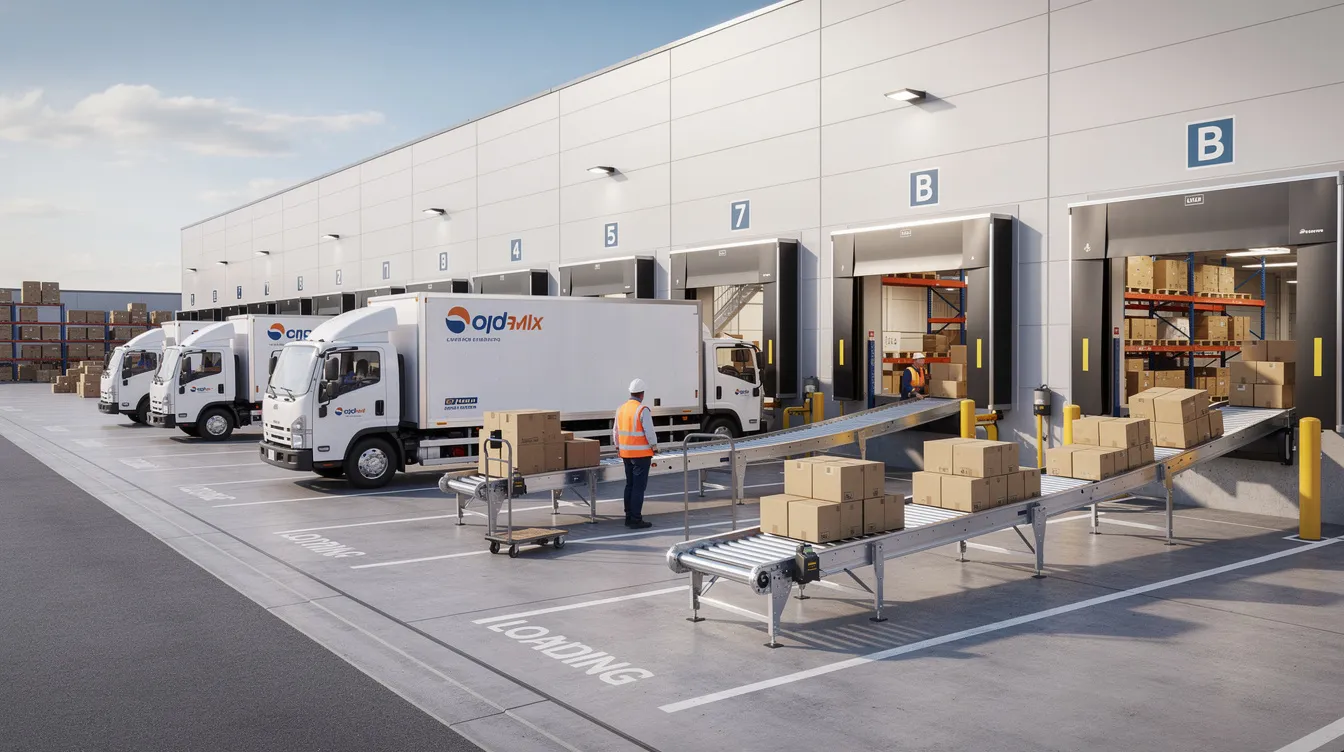
Label generation follows: the WMS transmits shipment data to carriers via API, generates and prints shipping labels, and captures tracking numbers back into the system. Carriers like USPS, UPS, DHL, and regional partners pick up consolidated shipments directly from ShipNetwork facilities on daily schedules aligned with carrier cut-off times.
Shipping is a critical step in the order fulfillment process. 3PLs manage transportation by coordinating shipping with carriers across a network, and 3PLs optimize delivery route selection to enhance logistics efficiency. Shipping costs can be reduced through strategic carrier partnerships-something difficult for individual brands to negotiate on their own. Outsourcing to a 3PL can reduce shipping costs significantly compared to managing one or two carriers independently.
Step 6: Shipment, Tracking, and Customer Visibility
Visibility after an order leaves the warehouse is essential for customer satisfaction-not just for internal reporting. Real-time inventory visibility is crucial for customer satisfaction because customers want to know where their order is at every stage.
Here is how tracking works with a 3PL:
- Tracking numbers are synced back to the merchant's ecommerce platform or order management system, triggering automated customer notifications: order shipped, out for delivery, delivered.
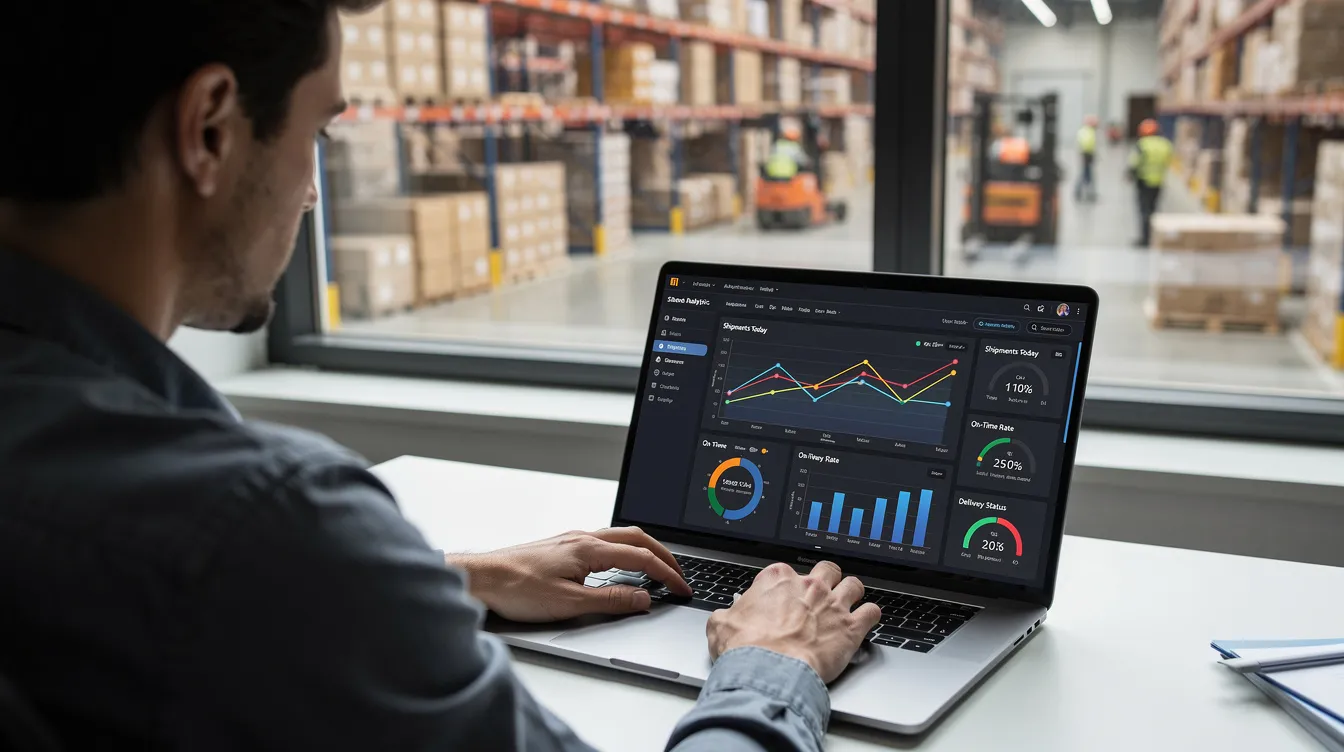
- ShipNetwork's dashboards and APIs give brands real-time views of order status, shipping performance, and exceptions (delays, address issues, carrier problems) across all fulfillment centers.
- Clear tracking reduces "Where is my order?" tickets for customer service teams and helps brands identify systemic issues early-carrier problems, packaging damage trends, delivery failures to specific regions.
- 3PLs can also support branded tracking pages or customized communications to keep the customer experience on-brand even after handoff to the carrier.
With fulfillment centers located across the U.S. and Canada, 98% of the U.S. population is reachable within 1–2 days via ground shipping. That kind of coverage, combined with real-time tracking, turns reliable delivery from a hope into a measurable outcome.
Step 7: Returns, Exchanges, and Reverse Logistics
The entire order fulfillment process is not complete until returns and exchanges are handled. Returns processing is part of the order fulfillment journey, and in ecommerce categories like apparel, return rates can reach 20–24%. Research shows that 24% of customers dislike poor returns experiences-making reverse logistics a direct driver of repeat purchase behavior.
Here is how a 3PL like ShipNetwork manages returns:
- Returned parcels are received at the fulfillment center, scanned back into the system, and inspected to determine condition.
- Restockable items go back into inventory with updated counts. Non-restockable items follow a separate workflow: quarantine, disposal, or vendor returns.
- Returns management software optimizes reverse supply chains by tracking every returned unit through inspection, disposition, and restocking.
- Efficient returns processing minimizes impact on business by getting refund-eligible items resolved quickly and saleable inventory back on shelves.
Best practices include establishing a return window of 30 to 60 days and including pre-printed return labels with every order to reduce friction. Brands should also use returns data to identify product issues-high return rates by SKU often signal quality, sizing, or listing accuracy problems. For seasonal peak planning, returns workflows must be tested and staffed well before volume spikes.
3PL vs. In‑House Fulfillment: Where a 3PL Adds Real Value
The choice between in house fulfillment and outsourcing to a 3PL comes down to what your time and capital are worth. When a brand handles its own fulfillment, it absorbs the cost of warehouse space, equipment, labor, software, insurance, and carrier negotiations-all of which scale linearly with volume.
A 3PL flips that model:
3PLs allow companies to scale logistics operations efficiently without direct management of warehouses. A 3PL's distributed fulfillment centers located near major customer hubs shorten shipping distances and reduce zone-based expenses. Modern 3PL technology-integrations, WMS, and tools like KNCT-is expensive and time-consuming to replicate internally.
Many fast-growing ecommerce brands outsource fulfillment once order volume outgrows what a small team can handle without errors, missed cutoffs, or customer dissatisfaction.
What Separates a Strong Fulfillment Process from a Weak One?
Not all party logistics providers deliver the same results. Measurable performance on key performance indicators is what separates a provider that supports business success from one that creates order fulfillment challenges.
Accuracy: The median pick and pack accuracy across the industry in 2026 is about 99.1%. The bottom quartile sits near 97.5%. For a brand shipping 10,000 orders per month, that gap means roughly 220 more errors per month-at an estimated cost of ~$47 per error, that is over $10,000 in monthly losses from the weaker provider. ShipNetwork's 100% Order Accuracy Guarantee sets the standard.
Speed: Order fulfillment typically targets same-day or next-day processing. ShipNetwork's 1-day fulfillment SLA means every order entering the system before cutoff ships that same business day.
Visibility: Strong providers deliver real-time inventory by SKU, per-order tracking, and clear reporting on carrier performance and exception rates. 3PLs provide real-time visibility into stock levels so brands can plan confidently and respond to customer demand without guesswork.
Flexibility: A strong fulfillment process is standardized yet adaptable-able to handle subscription boxes, B2B orders, seasonal spikes, and kitting without breaking. Weak providers perform adequately at low volume but collapse under complexity.
The business benefits of a well-run fulfillment operation compound: fewer support tickets, higher customer wishes fulfilled correctly, better reviews, and stronger lifetime value.
When Does It Make Sense to Start Working with a 3PL?
The right time to move from running your own fulfillment to outsourcing order fulfillment depends on volume, growth rate, and operational complexity. Here are practical trigger points:
- Regularly shipping 5,000+ orders per month and spending leadership time on logistics operations instead of growth.
- Running out of warehouse space or missing carrier cut-off times consistently.
- Expanding into new markets-adding Canadian customers, new U.S. regions, or a global fulfillment network-where distributing inventory is more efficient than shipping everything from one location.
- Product mix complexity increases: multiple SKUs, lot tracking, subscription orders, or retail/B2B shipments alongside DTC make specialized fulfillment strategies more valuable.
- Customer demand spikes seasonally, and your team cannot scale labor and space fast enough to maintain accuracy and speed.
Start conversations with 3PLs before peak seasons. Onboarding-contracts, systems integration, SKU mapping, test orders-takes weeks, not days. Planning ahead protects your supply chain strategy when it matters most.
How ShipNetwork Supports Scalable, High‑Performance Fulfillment
ShipNetwork is a U.S.-based 3PL founded in 2001, purpose-built for fast-growing ecommerce and DTC brands that need to streamline operations and optimize order fulfillment without sacrificing quality.
Core capabilities include:
- A nationwide network of fulfillment centers reaching 98% of the U.S. in 1–2 days via ground.
- A 1-day fulfillment SLA and 100% order accuracy guarantee-backed by the Flawless or Free promise.
- Specialized fulfillment solutions: subscription box fulfillment, kitting and bundling, lot tracking, temperature-controlled storage, and returns management.
- KNCT, ShipNetwork's proprietary shipping optimization technology, which automatically selects the best carrier and service for every package based on weight, dimensions, origin, destination, and performance data.
- API and platform integrations with Shopify, WooCommerce, Amazon, and more-enabling brands to manage inventory, orders, and reporting from a single connected ecosystem.
ShipNetwork's supply chain management approach is built around measurable outcomes: faster delivery, higher accuracy, lower fulfillment costs, and more time for brands to focus on what drives growth.
Next Steps: Explore Order Fulfillment Services and Pricing
If you are evaluating whether to outsource fulfillment or switch providers, start with real numbers. ShipNetwork's Order Fulfillment Services page details exactly what is included, and the pricing calculator lets you estimate costs based on your monthly order volume, product dimensions, and destinations.
Compare your real overhead costs-rent, utilities, insurance, warehouse staff, equipment, software, carrier rates-against a ShipNetwork quote. For brands shipping thousands of orders per month, efficient order fulfillment through a 3PL often lowers per-order costs while improving service levels.
ShipNetwork's team can review your current supply chain setup, identify quick wins for reducing transit times and costs, and design a phased migration plan if needed. Whether your business grows steadily or spikes seasonally, the infrastructure scales with you.
Contact ShipNetwork for a consultation or demo. Faster delivery, higher accuracy, and more time to focus on what matters-that is the entire process, simplified.
Order Fulfillment FAQs
How is a 3PL different from just using a shipping carrier?
Carriers like USPS, UPS, and DHL move parcels from point A to point B. A 3PL manages the entire order fulfillment process inside the warehouse or fulfillment center: receiving, storing, picking, packing, and preparing shipments. A 3PL also coordinates across multiple carriers, choosing the best option per order instead of locking a brand into a single network. This end-to-end role makes a 3PL a core supply chain partner-not just a transportation vendor. Think of it this way: the carrier is one tool; the 3PL is the team using every available tool to deliver the best result.
Can I use a 3PL for some orders and keep others in house?
Yes. Many brands use a hybrid model where a 3PL handles the bulk of ecommerce volume while the brand keeps some in house fulfillment for special projects, VIP orders, or local same-day delivery. The key requirement is clean order routing rules so each channel or order type goes to the right fulfillment location without manual work. ShipNetwork can integrate with a brand's existing systems to support hybrid approaches when it makes strategic sense.
Where should my inventory be stored to get 1–2 day delivery?
The ideal configuration depends on where your customers are located. The more distributed your customer base, the more valuable it is to split inventory across multiple fulfillment centers. ShipNetwork uses order history and customer demand patterns to recommend which U.S. and Canadian facilities should hold which SKUs. Placing inventory closer to demand reduces shipping zones, lowers costs, and increases the share of orders eligible for 1–2 day ground shipping.
How long does it take to get started with a 3PL like ShipNetwork?
Onboarding timelines vary with complexity, but a typical implementation-contracts, integrations, test orders, and first inventory receipts-can often be completed in a few weeks. Brands should plan extra lead time before major peaks like Black Friday and Cyber Monday so processes are fully tested under real conditions. ShipNetwork provides onboarding support to map SKUs, configure integrations, and align on SLAs and packaging guidelines before the first live orders ship.
What does working with a 3PL cost compared to running my own warehouse?
3PL costs typically include receiving, storage, pick and pack, packaging, and shipping-often with volume-based discounts and technology included. Compare those line items against your own overhead costs: rent, utilities, insurance, staff wages and benefits, equipment, and software subscriptions. For brands shipping thousands of orders per month, partnering with a 3PL like ShipNetwork often lowers per-order costs while delivering faster transit times and higher accuracy. Use ShipNetwork's pricing calculator to see exactly how the numbers work for your business.