

.svg)


DTC and Retail Fulfillment: How Scaling Brands Keep Every Channel Running Smoothly
Key Takeaways
- DTC and retail fulfillment means managing direct to consumer orders, wholesale shipments, and retailer-compliant deliveries from one unified logistics backbone, balancing fast shipping, strict compliance, and margin protection simultaneously.
- DTC sales are projected to reach $212.9 billion in 2025, yet DTC fulfillment requires more complex operational capabilities than traditional retail, pushing brands to rethink infrastructure early.
- Many brands start with fulfillment by amazon fba or Amazon MCF, then discover they need a channel-agnostic fulfillment provider like ShipNetwork to maintain brand control across all sales channels.
- ShipNetwork supports high growth brands with 1-day fulfillment SLAs, a distributed fulfillment network reaching 98% of the U.S. in 1-2 days, and shipping optimization via KCNT.
- The Andie Swim case study anchors this article: three channels, measurable results (99.98% accuracy, 100% retail on-time), and a COO who frames fulfillment as trust. "If she doesn't receive what she ordered on time, in perfect condition, we've lost her trust."
Intro: The Fulfillment Problem That Comes With Growth
Picture a DTC apparel brand doing 5,000+ monthly orders from its own ecommerce website. Business is strong. Then it adds Amazon listings and starts fielding marketplace orders. A year later, a national retailer comes calling. Revenue grows. So does operational complexity.
Each new channel brings different SLAs, packaging rules, routing guides, and shipping promises. DTC and retail fulfillment means managing direct-to-consumer orders, wholesale shipments, and retailer-compliant deliveries from one logistics operation without sacrificing shipping speed, compliance, or margins. DTC customers expect Amazon-level fast shipping. Retail partners demand perfect compliance documentation. Your warehouse, built for branded mailers and parcel shipments, now needs to produce pallets, EDI-compliant ASNs, and case-packed wholesale orders without slowing down the DTC side.
This is the reality of multichannel fulfillment for fast-growing ecommerce and DTC brands. Companies may adopt an omnichannel approach to integrate DTC and retail fulfillment, but executing that strategy operationally is where many brands stall. As brands expand across more channels and more of the world, they need infrastructure that keeps DTC, wholesale, and retail workflows consistent instead of breaking what already works.
This article shows how ShipNetwork approaches that problem, anchored in the Andie Swim story and supported by broader lessons for scaling ecommerce brands. You’ll see the core fulfillment workflows behind operational consistency, the compliance and carrier decisions that shape cost and delivery performance, and why getting multichannel fulfillment right is critical to customer trust, operational accuracy, and profitable growth.
Who Andie Swim Is (And Why Their Fulfillment Story Matters)
Andie Swim is a digitally native swimwear brand founded in 2017, built on fit-first designs and a direct to consumer model that eliminates middlemen in sales processes. The brand grew rapidly through its online store, then expanded into specialty boutiques and, by 2023, launched into major U.S. national retailers.
This isn't a lifestyle story. It's an operations story. Andie's growth forced them to master DTC fulfillment, wholesale shipments, and retail compliance from a single inventory pool. They partnered with ShipNetwork as their 3PL, choosing a provider with a nationwide fulfillment network rather than relying solely on amazon fulfillment centers.
The Challenge: Multichannel Fulfillment and Three Sets of Rules
"If she doesn't receive what she ordered on time, in perfect condition, we've lost her trust." - Pooja Parikh, COO, Andie Swim
That "she" spans three customer types: the individual DTC shopper, the wholesale buyer placing bulk orders, and the retail partner expecting compliant shipments to their distribution centers.
DTC expectations: DTC fulfillment involves high-volume, low-quantity orders. It prioritizes speed and personalized customer experience. For Andie, that meant accurate size and color picks during seasonal peaks (swim season can spike volumes 3-4x), 1-2 day ground shipping targets, and DTC packaging designed for consumer aesthetics and brand experience. DTC packaging often features custom, branded packaging that reflects the premium purchase. DTC fulfillment is driven by fast consumer expectations, requiring quick deliveries, and DTC fulfillment often experiences higher return rates than traditional retail.
Wholesale realities: Case-packed orders, specific carton quantities, agreed delivery windows, and documentation (packing lists, ASNs) that must be exactly right. Traditional retail fulfillment deals with low-volume, high-quantity orders. It uses plain, standardized shipping cartons. Traditional retail relies on freight carriers for scheduled deliveries. Retail fulfillment emphasizes efficient bulk movement rather than individual packages. Traditional retail processes returns in bulk rather than individually.
Retail demands: The retailer owns the customer relationship in traditional retail fulfillment. Traditional retail is better suited for efficiently reaching large audiences but leaves the manufacturer with limited customer data. Large retail partners require strict routing guides, EDI requirements, labeling specifics (GTINs, UCC-128 labels), kitting and pre-packed sets, and penalties for non-compliance.
The core risk: one mispick or late shipment looks like a rounding error on a report, but for a consumer it's a lost season. For a retail buyer, it's a canceled future PO. Transparent communication enhances customer trust and reduces inquiries, but it can't fix wrong product in the box.
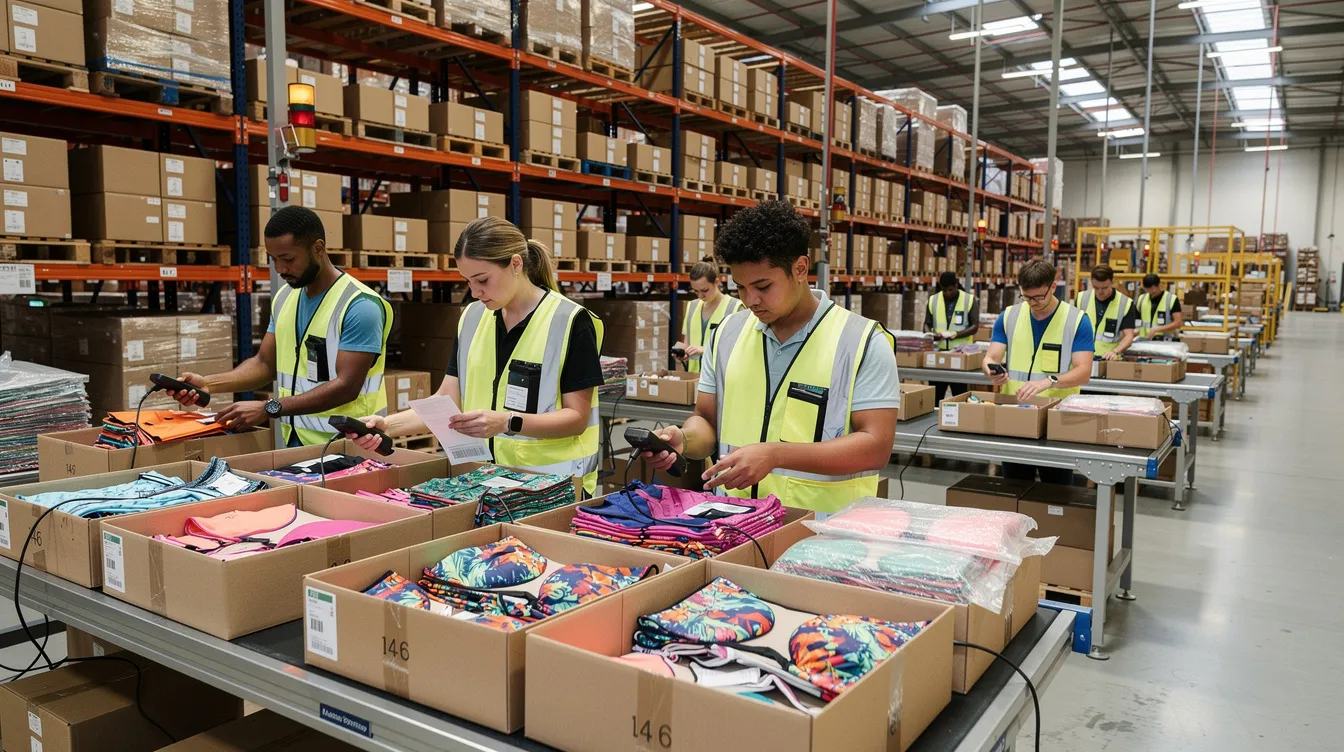
What Operational Consistency Across DTC, Wholesale, and Retail Actually Requires
Andie needed an infrastructure layer where orders from multiple channels could be fulfilled without each channel breaking the others. DTC fulfillment is ideal for brands wanting greater control over customer experience, but that control gets harder to maintain when wholesale and retail workflows compete for the same resources.
Channel-specific workflows: Distinct pick/pack processes and packing rules for DTC parcels, wholesale cases, and retail-compliant pallets, all running from the same distributed inventory. DTC operations need dynamic, e-commerce-optimized warehouse management systems to keep accuracy above the 99.5%+ benchmark that top apparel operations maintain despite thousands of style/size/color variants.
Inventory accuracy: Centralized inventory visibility reduces stockouts and improves delivery accuracy. Businesses can effectively manage DTC and retail fulfillment using a distributed order management system with real time tracking, inventory allocation rules that protect retailer POs, and advanced inventory management that prevents overselling during flash promotions. DTC requires an omnichannel strategy to meet diverse consumer demands across channels.
Compliance management: Routing guide adherence, EDI integrations, automated label generation, and system checks that prevent non-compliant orders from leaving the warehouse. Companies using integrated platforms see 200% greater efficiency compared to fragmented operations.
Carrier optimization: Using technology like ShipNetwork's KNCT to choose the best carrier mix for reliable delivery and cost control across every order. This differs from leaning solely on Amazon MCF or amazon fba: Amazon's fulfillment network is optimized for its own marketplace, while a 3PL like ShipNetwork is optimized for the brand's omnichannel strategy across dtc sites and retail programs.
The Results With Andie Swim - And Why the Numbers Matter
These are real performance results achieved with ShipNetwork's nationwide fulfillment network and technology, not theoretical benchmarks.
99.98% order accuracy across DTC orders, including peak season surges. In swimwear, a wrong size or style triggers returns, negative reviews, and lost lifetime value. This rate means just 2 incorrect orders out of every 10,000 shipped. 3PLs can process orders with a 100% accuracy guarantee, and ShipNetwork backs that promise operationally.
99% of orders delivered on time within the promised delivery window. 98% of the U.S. population can be reached within 1-2 days via 3PL, and hitting this consistently supports reliable shipping expectations even when orders aren't fulfilled by Amazon. It reduces "where is my order?" tickets and builds repeat purchase behavior.
3PL providers can reduce logistics costs by up to 40%, and every percentage point saved translates into margin the brand can reinvest into product development, paid acquisition, or improved customer experience. Fulfillment costs stay predictable rather than volatile.
100% on-time fulfillment for retail and wholesale orders. For large retail partners, a single late or non-compliant shipment can threaten future seasons. Hitting 100% on-time protects those relationships and avoids chargebacks.
12 hours or less average click-to-ship time. This connects directly to Andie's ability to offer tight cut-off times and still hit 1-2 day ground delivery across the U.S.
These numbers aren't vanity metrics. They're the operational expression of keeping customer and retail partner promises, exactly what Pooja Parikh meant by trust.
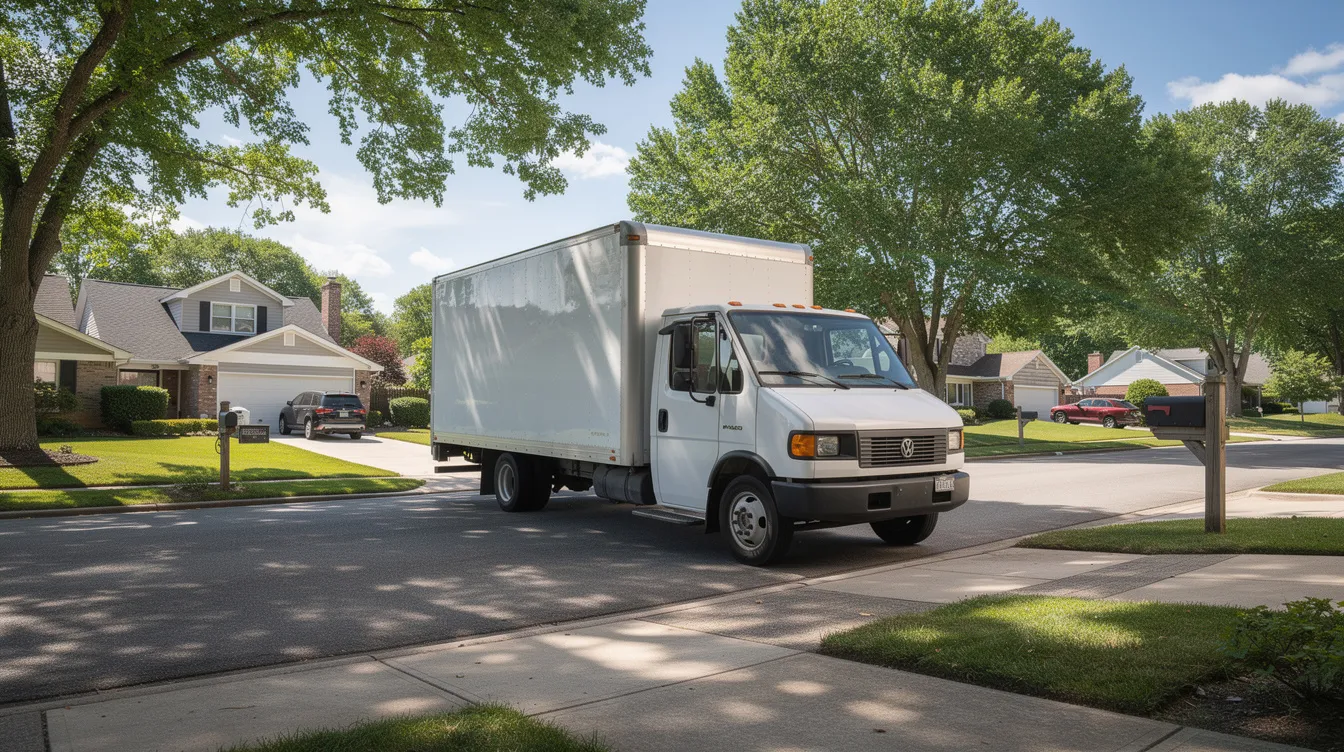
Where Amazon FBA, Amazon MCF, and 3PLs Like ShipNetwork Fit Together
Many brands start with amazon fba for marketplace orders and later test amazon multi channel fulfillment to fulfill orders from other channels. Amazon MCF allows fulfillment from any sales channel, including a brand's own ecommerce website. Many sellers manage this through their amazon seller central account.
Amazon's fulfillment network offers clear strengths: extensive amazon fulfillment centers around the world, proven ability to ship orders at scale, and the fast shipping standard that shapes customer expectations across ecommerce marketplaces. Fulfillment by amazon fba remains a logical starting point for marketplace orders.
But the tradeoffs matter for growing brands. MCF charges separate fees based on order weight and size under a fee based structure. Amazon prioritizes FBA orders over MCF orders, meaning mcf orders can face slower processing during demand spikes. MCF does not provide built-in customer support for sellers. Storage fees increase during peak seasons for MCF, and mcf pricing becomes less predictable as catalog size grows. There's also the risk that amazon picks competing products or promotes alternatives above your own brand within search results.
A specialist fulfillment provider like ShipNetwork complements or replaces these services. You can continue to sell on Amazon (using FBA or FBM) while routing DTC and retail orders through ShipNetwork, using KNCT to optimize carrier choice for every non-Amazon shipment. The strategic question isn't "Amazon vs. 3PL." It's: where should I rely on amazon fulfillment, and where do I need a dedicated partner aligned purely to my brand's omnichannel strategy?
Designing Fulfillment for the Brand You're Becoming, Not Just the Brand You Are
Andie Swim's experience represents a common inflection point. What works for a single-channel DTC brand won't hold once retail and wholesale programs go live. 98% of supply chain leaders plan to invest in fulfillment technology precisely because the supply chain of tomorrow looks nothing like today's.
Fulfillment infrastructure should be architected around the next 3-5 years: planned marketplace expansion, new product lines, anticipated retail partnerships. Over-relying on a single channel's infrastructure (only amazon mcf, for instance) limits flexibility when adding other channels like specialty retail or department store programs. 3PLs enable eCommerce brands to scale without owning warehouses, which matters when growth is uneven across channels and geographies.
ShipNetwork's distributed network is built to flex. The same systems handle DTC parcels, B2B wholesale shipments, EDI-driven retail orders, and subscription box fulfillment. A brand starts with ShipNetwork for DTC fulfillment, adds EDI retail fulfillment the following year, and layers in additional ecommerce marketplaces and international shipping without re-platforming logistics.
Treat fulfillment as a strategic asset that supports marketing and merchandising decisions, not a back-office function that scrambles to react after new channels are already live.
How ShipNetwork Helps DTC and Retail Brands Operate as One Omnichannel Business
ShipNetwork is a B2B 3PL that supports fast-growing ecommerce brands across DTC, wholesale, and retail with 1-day fulfillment SLAs and a nationwide network reaching 98% of U.S. shoppers in 1-2 days by ground. The companies we serve become an omnichannel brand without building the warehousing and logistics infrastructure themselves.
Core capabilities for order fulfillment:
- 100% order accuracy guarantee with barcode-level verification
- Dedicated workflows for retail compliance, including EDI and routing guide management
- Kitting and bundling for retail sets, multi unit orders, and DTC gift packs
- Seamless returns and reverse logistics: 3PLs streamline returns management for eCommerce businesses with inspection, restocking, and quarantine processes tailored to brand rules
KNCT optimizes every shipment by selecting the best carrier and service level (Priority, Expedited, or Ground) based on destination, package details, and carrier performance. It ensures both cost savings and reliable delivery across all channels.
Technology integrations connect directly with major platforms (Shopify, WooCommerce, BigCommerce), other marketplaces, and custom APIs that centralize all orders in one fulfillment platform. Advanced needs like lot tracking, temperature-controlled storage for certain SKUs, and the ability to rebalance inventory across the ShipNetwork facility network are built into the same infrastructure.
Next Steps and Final Thoughts for Scaling DTC + Retail Fulfillment
The real challenge isn't choosing between DTC and retail, or between amazon fulfillment and a 3PL. It's orchestrating all of them so they feel seamless to the end customer. Andie Swim proved that operational consistency across channels delivers measurable improvements in accuracy, on-time delivery, shipping cost, and brand trust during rapid expansion. Profitable growth comes from getting this right.
Ready to go deeper?
- Read the full Andie Swim case study for a detailed look at how ShipNetwork powered their three-channel expansion.
- Explore ShipNetwork's apparel and accessories capabilities to evaluate category-specific support for your brand.
- Request a quote to speak with a fulfillment specialist. ShipNetwork works best with merchants shipping 5,000+ orders per month who need to unify DTC and retail fulfillment under one operations partner.
FAQs: DTC and Retail Fulfillment With a 3PL Like ShipNetwork
These FAQs address practical questions about how brands implement DTC and retail fulfillment with ShipNetwork alongside tools like Amazon MCF.
Can I use ShipNetwork if I already rely on Amazon FBA or Amazon MCF?
Yes. Many brands use a hybrid approach: Amazon FBA or FBM for Amazon marketplace orders, while ShipNetwork handles DTC sites, retail programs, and other marketplaces to maintain brand control and store consistency. ShipNetwork integrates so orders from other channels are fulfilled outside amazon's fulfillment network, reducing dependence on a single provider.
When is the right time to move from in-house fulfillment to a 3PL?
The tipping point often comes around 3,000-5,000 orders per month, or when leaders spend more time on warehousing and storage than on product and marketing. Adding a first retail or wholesale program is another strong trigger, since compliance and EDI requirements are hard to manage without specialized tools.
How does ShipNetwork handle returns for DTC and retail orders?
ShipNetwork offers reverse logistics services: receiving returns, inspecting items, restocking saleable inventory, and quarantining non-saleable units based on brand rules. DTC returns workflows are tailored to the brand's policies, while retail returns follow each retailer's agreed process.
What if my catalog has hundreds of sizes, colors, and styles?
ShipNetwork's systems support large, variant-heavy catalogs with barcode-level tracking and real-time inventory across all connected channels. This focus on last mile delivery accuracy is critical for avoiding overselling during promotions and keeping retailer inventory allocation separate from day-to-day DTC demand.
How quickly can a brand go live with ShipNetwork?
Typical onboarding runs several weeks from contract to first orders shipping, depending on integration complexity, number of SKUs, and retail compliance setup. ShipNetwork's team helps plan inventory transfers, connect sales channels, configure EDI or retailer routing guides, and ship directly from test orders before full launch.