

.svg)


Key Takeaways
- Peak season fulfillment technology helps businesses process high volumes of orders during their busiest times, but only if brands plan for technology the same way they plan for labor and carrier capacity. Most don't.
- Real time visibility into inventory, order status, and carrier performance prevents oversells, mis-picks, and SLA breaches when order volume hits 3 to 5x normal between Black Friday and New Year's.
- Peak season fulfillment technology enables scalability to handle demand spikes without excess costs by integrating warehouse management systems, shipping optimization, and data analytics into one coordinated stack.
- ShipNetwork's nationwide network of fulfillment centers, KNCT carrier optimization, and 1-day fulfillment SLA are built for the exact conditions that break less-prepared operations during peak.
- Talk to ShipNetwork for a peak season fulfillment technology review before October 1, 2026.
Intro: The Peak Planning Conversation Most Brands Skip
By November 25, 2026, your ecommerce business will have a labor plan. Extra temporary staff, extended shifts, overtime approvals. You'll have a carrier plan with rate confirmations and cutoff dates. But will you have a technology plan? Most brands do not. They assume the systems running their fulfillment operations will hold up when order volume multiplies. That assumption creates the worst kind of failure: the silent kind.
Technology failures during peak don't announce themselves. They surface when an integration drops orders from Shopify on the morning of Black Friday. They appear when inventory sync lag causes 500 oversells on Amazon for a viral SKU. They show up when routing rules quietly send every order to the wrong fulfillment center because nobody tested the logic at 3x volume. ShipNetwork has run U.S. peak seasons since 2001, and the pattern repeats: brands that build a technology plan alongside their labor and carrier plans don't get surprised. This article covers the key strategies, technology components, and questions to ask a 3PL before peak so your brand avoids last-minute firefighting.
Why Technology Matters More (Not Less) During Peak Season
In March, a warehouse manager catches a WMS routing error before it ships. At 3x volume with new hires working extended hours, that same error multiplies across hundreds of orders before anyone sees it. Many ecommerce brands generate 30 to 50% of annual revenue between November 1 and December 31. The stakes compress into a few weeks, and 75% of supply chain leaders have faced production challenges recently. Manual workarounds that feel acceptable at normal volume collapse under peak season demand.
Consider specific failure scenarios. A batch inventory sync running every two hours creates oversells on a fast-moving SKU because the system shows stock that's already gone in the warehouse. API rate limits from a marketplace drop orders during a flash sale. Label generation slows to minutes per order when carrier APIs throttle under load. SLA breach rates at 3PLs can rise from a baseline of 4 to 6% to 18 to 28% during the second week of December, according to AHAeCommerce's infrastructure report. And 68% of customers prioritize fast shipping in online shopping, so delays during these high demand periods directly erode customer satisfaction.
Effective peak season planning involves detailed forecasting and strategic resource allocation, but technology readiness is the foundation. ShipNetwork's own peak planning starts with technology capacity and monitoring, then layers staffing plans and carrier logistics planning on top.
The Core Technology Stack Behind Peak-Ready Fulfillment
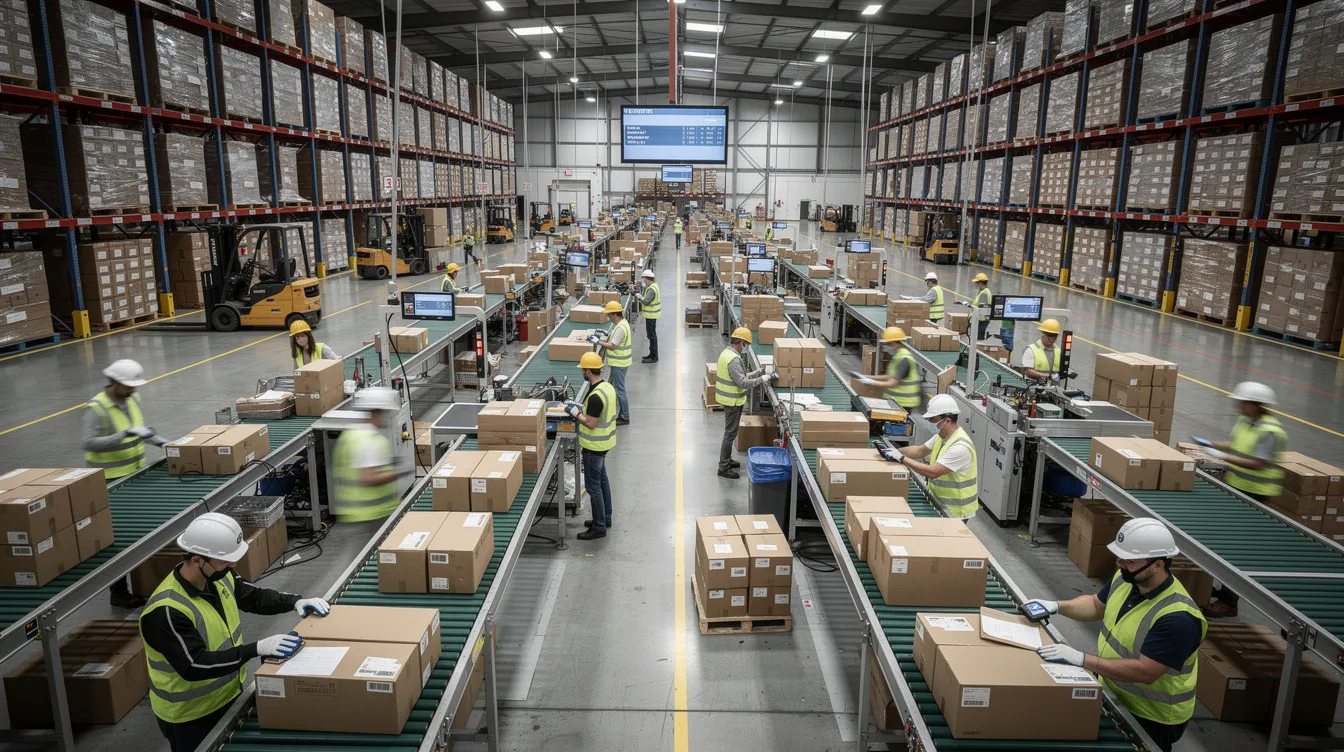
Peak success depends on how well several management systems work together: ecommerce platforms, order and inventory systems, WMS, shipping optimization, and analytics dashboards. Peak season fulfillment technology integrates various systems to optimize the entire fulfillment process, and a gap between any two creates a failure point.
Before October each year, brands should verify:
- Integrations to sales channels (Shopify, Amazon, Walmart) are active and tested under load
- Inventory management syncs in real time, not on a batch schedule
- WMS capabilities cover routing, pick/pack workflows, and exception handling at peak throughput
- Carrier and rate optimization tools respond dynamically to capacity changes
- Client-facing dashboards show order status, inventory levels, and exceptions without a phone call
Successful fulfillment technology uses APIs to enhance connectivity across these systems. Warehouse Management Systems optimize workflows and provide real time visibility into inventory, and WMS platforms capture every inventory transaction instantly. ShipNetwork uses a unified tech stack across its fulfillment centers, with standard processes for receiving, barcode scanning, storage, and picking and packing that keep behavior predictable during high demand.
Real-Time Inventory Visibility Across Channels and Locations
When you sell on Shopify, Amazon, and Walmart Marketplace from a shared inventory pool, the difference between "updated two hours ago" and "updated two seconds ago" is the difference between filling orders and sending cancellation emails. Real time visibility prevents overselling and improves order accuracy. Real-time inventory tracking prevents stockouts by alerting teams when inventory is low.
Industry data shows that 51% to 65% of inventory records contain errors, impacting fulfillment across channels. During peak, those errors multiply. One seller syncing inventory every 15 minutes oversold 847 units in a six-hour window on Black Friday, producing thousands of dollars in refunds and a 45-day Buy Box suspension. Event-driven sync, where stock changes propagate in under five seconds, eliminates this drift.
ShipNetwork's WMS tracks inventory at the bin and lot level inside each warehouse, with every movement captured via barcode scanning so available-to-sell counts stay accurate. To manage inventory during peak, brands should set safety stock rules for top SKUs, apply channel-level inventory buffers for marketplaces, and use data analytics to position inventory based on regional customer demand patterns. That visibility must extend across multiple fulfillment centers so you can see total on-hand, reserved, and in-transit inventory levels by location in a single dashboard with complete visibility.
Order Routing and Network Optimization Under Peak Load
Order routing decides which fulfillment center ships each order. During peak periods, this logic faces its hardest test. Effective order prioritization is critical during peak seasons because a routing error at 1x volume affects a handful of orders; at 3x volume, it can create a logistical nightmare in hours.
What breaks: all orders default to a single facility because the routing rules don't account for capacity. Cut-off times are ignored, so customers expecting overnight delivery get three-day service instead. A Lighthouse Consulting case study showed that replacing manual routing with an automated system cut order processing time by 70%, raised fulfillment accuracy from 87% to 99.2%, and eliminated backlogs during a 4x volume spike.
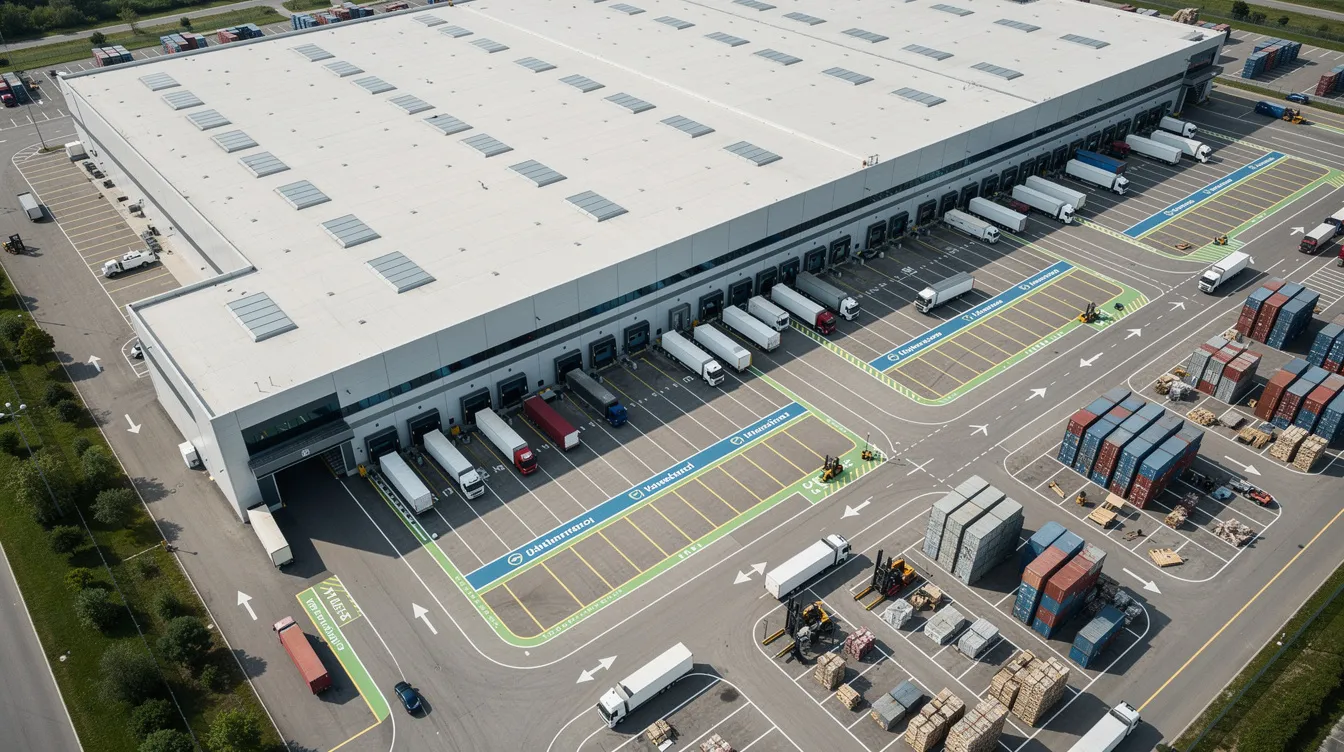
ShipNetwork's distributed fulfillment technology routes orders using rules on ZIP code, inventory availability, cut-off times, and carrier performance. An order from Boston on December 20 routes to the nearest facility with stock and a carrier lane that can meet a two-day ground window. An order from Phoenix on the same day routes differently based on network capacity and increased demand in that region. This is how 98% of the U.S. stays within 1 to 2 day ground coverage even at peak times. AI can optimize picking routes and automate decisions within each facility to prevent bottlenecks, and automated sorting and conveyor systems improve package routing and increase throughput. Autonomous Mobile Robots also help by reducing physical bottlenecks in warehouses during the busiest times.
Carrier Selection Technology and Rate Optimization During Peak
In November and December, carrier capacity tightens, surcharges appear, and lane performance shifts. A static carrier assignment set up in September stops working by Cyber Monday. Transport capacity should be diversified to prevent reliance on single carriers during peak periods. Multi-carrier shipping software helps select the most cost-effective delivery options when conditions change daily.
KNCT, ShipNetwork's proprietary shipping optimization suite, analyzes package weight, dimensions, origin, destination, and real-world carrier performance data to select the optimal service level and carrier on each order. When a major carrier lane slows, KNCT shifts volume to faster alternatives without manual intervention, protecting delivery windows and margin.
During peak, each KNCT service fills a specific role:
- KNCT Priority (1 to 3 day transit): last-minute holiday gifting, time-sensitive promotions
- KNCT Expedited (2 to 5 day transit): mid-season orders balancing speed and cost
- KNCT Ground (3 to 8 day transit): early holiday season orders where margin preservation matters most
Over 68% of customers prioritize fast shipping during peak seasons, so carrier selection directly affects customer expectations and repeat purchase rates. After peak, brands can use ShipNetwork's data analytics on carrier performance to plan for future peak seasons with better lane-by-lane intelligence.
Warehouse Execution Tech: Barcode Scanning, Layout, and New Hires
If execution tools on the warehouse floor are weak, the best WMS and routing logic in the world will still produce mis-picks and delays during high demand. Automation in fulfillment helps improve order accuracy and reduce shipping errors, and automated systems can reduce the labor needed for order fulfillment.
Barcode scanning at every touchpoint (receiving, putaway, picking, packing, returns) eliminates manual keying errors and keeps inventory and order status synchronized. ShipNetwork uses standardized location labeling, pick paths optimized by SKU velocity, and dynamic slotting that uses data to position high-demand items closer to shipping locations. This reduces walking time and congestion when volume spikes after Black Friday. Batch picking improves operational efficiency during peak periods by grouping similar orders for faster processing.
Addressing new hires and temporary workers: labor management includes pre-training seasonal staff to maximize their productivity. Intuitive handheld devices with guided picking workflows and role-based training plans allow temporary staff to reach full productivity in days, not weeks. Automation can reduce manual labor, lowering dependency on last-minute hiring during peak seasons even when labor shortages create pressure on staffing levels. Puma increased capacity by ten times using AutoStore during peak seasons, demonstrating what advanced technology and handling equipment can do for warehouse managers under pressure.

Forecasting, Data Analytics, and Just-in-Time vs. Buffer Inventory
Early forecasting for peak season starts with historical sales data from Q4 2023 through 2025, combined with campaign calendars, marketplace promotions, and upcoming sales events. Predictive analytics improves inventory management by analyzing past sales data, and demand forecasting combined with predictive analytics is used to estimate inventory needs for in demand items. Using predictive analytics can increase inventory and service levels by 35% to 65%.
ShipNetwork and its customers use previous peak season data to adjust receiving schedules, staffing plans, and inventory allocations across fulfillment centers. Using AI in procurement can reduce logistical costs by 15%, making the investment in analytics tools directly measurable.
The trade-off between just in time inventory and buffer stock depends on your supply chain:
Just-in-time inventory reduces storage costs and waste, but buffer stock prevents stockouts during peak demand periods. ABC analysis prioritizes stock based on sales volume, so brands hold more buffer on A SKUs and seasonal bestsellers while keeping leaner levels on long-tail products. Effective peak season planning involves locking in inbound freight capacity to arrive by early October, setting reorder triggers based on lead times plus peak demand multipliers, and modeling scenarios for viral demand spikes. Continuous improvement means feeding post-peak analytics into planning for future peak seasons, tightening assumptions on inventory optimization every year.
Monitoring, Alerts, and the Human Side of Peak Technology
Technology doesn't run itself during peak. Monitoring and analytics are key for proactive management of fulfillment operations during peaks, but someone has to act on the data. Real-time dashboards allow operations managers to monitor performance and adjust resources as conditions change hour by hour.
A healthy monitoring setup during November and December includes automated alerts for integration failures, order backlog thresholds, inventory discrepancies, carrier delays, and SLA risk indicators. Seamless integration with platforms like Shopify improves order synchronization and fulfillment efficiency, but silent failures (a dropped webhook, a failed API call) are the most dangerous because they produce no alert unless monitoring is configured to catch them.
ShipNetwork assigns dedicated account teams and cross functional teams who watch real-time dashboards, respond to exception flags, and communicate with brands when something needs a business decision. Concrete examples of fast human intervention: pausing a channel when a SKU is overselling, rerouting orders to a different fulfillment center after a weather event, or temporarily switching carriers in a failing lane. Brands should know exactly who is watching their account during peak and how escalation works if a technology issue affects order processing. This is where the partnership between brand and third party logistics provider either holds or breaks, and it determines whether a technology issue stays contained or becomes a customer dissatisfaction event and a public relations problem.
Questions to Ask Your 3PL About Peak Season Fulfillment Technology
Brands should evaluate 3PL technology capabilities by asking specific, testable questions well before October 1 each year. 3PL providers manage logistics during peak seasons effectively when they can answer these with data, not platitudes. 3PL providers offer scalable fulfillment solutions for fluctuating demand, and using 3PLs can reduce logistical costs by 15% to 65%, but only if the technology stack performs under load. 3PLs provide access to multiple fulfillment centers for faster delivery, and that access needs verified routing logic behind it.
- "How does your WMS maintain order routing accuracy if our volume is 3x our current daily average for 10 consecutive days?"
- "Is inventory sync with Shopify, Amazon, and other channels truly real time during peak, or does it run on a batch schedule?"
- "How does your shipping technology choose between carriers and service levels when capacity tightens or lanes slow down?"
- "What dashboards and data will my team see in real time during Black Friday week, and how quickly do you act on exceptions?"
- "What is your formal escalation process if an integration, WMS, or carrier system issue starts affecting order processing?"
Red flags in answers: vague claims about "scalability" without examples from a previous peak, reliance on manual checks instead of automated monitoring, or no lane-by-lane carrier performance data. Request concrete peak performance data (on-time fulfillment rates, order accuracy, cut-off compliance) from the 2023 and 2024 holiday seasons.
Building a Continuous Improvement Loop for Future Peak Seasons
Peak season is a recurring event, not a one-off crisis. Every Q4 generates data that should make the next one smoother through streamlining operations and structured reviews.
A post-peak retrospective should cover: order accuracy against SLA, ship-on-time rates, backorder frequency, system incidents, carrier performance by lane, and new hires ramp-up results. Returns management processes should be configured in advance to handle increased volume post-peak, so January return surges don't undo December's gains.
ShipNetwork uses these reviews with clients to refine routing rules, adjust inventory allocations across warehouse space, update service levels, and prioritize technology enhancements before the next peak cycle. Recommended timeline: conduct a formal post-peak review by February using previous peak season data, lock in major changes by June, and run live tests on updated processes by September to be ready for future peak seasons. Brands who treat each Q4 as a data source arrive at future peaks with fewer surprises and better margins.
How ShipNetwork Helps Brands Win Peak Season With Technology
ShipNetwork is a technology-driven third party logistics provider with a distributed network of fulfillment centers, a 1-day order fulfillment SLA, and a 100% order accuracy guarantee designed for peak reliability. Those guarantees exist because the technology behind them is built for scalable fulfillment under load, not just normal operations.
During peak, the capabilities that matter most: nationwide 1 to 2 day ground coverage for 98% of the U.S., KNCT's dynamic carrier optimization across every package, real-time inventory and order dashboards, and tight integrations with major ecommerce platforms. Supporting services reduce friction further: kitting and bundling for holiday sets, subscription box fulfillment for Q4 drops, and returns management for the January surge.
68% of customers prioritize fast shipping in online shopping. Meeting that expectation during the holiday season, when lost sales cost the most and customer demand peaks, requires technology and operations working together. Request a peak readiness consultation with ShipNetwork before early October 2026 to review your ecommerce fulfillment technology, supply chain management processes, and logistics planning before peak hits.
Peak doesn't have to be chaotic when fulfillment technology, people, and process are designed to scale together.
FAQ: Peak Season Fulfillment Technology
These questions cover practical issues brands often ask when planning a tech-enabled peak with a 3PL like ShipNetwork.
How early should we start planning our peak season fulfillment technology?
Serious planning should start right after the previous peak. Conduct a formal technology and process review by February, using historical sales data and KPI results from the prior Q4. Make major decisions on system changes, inventory allocation, and 3PL partnerships by June. Run live tests on any new integrations, routing rules, or demand forecasting models by September. Trying to implement new technology after October 1 introduces risk you cannot recover from during the busiest times.
Can small and mid-size ecommerce brands really benefit from multiple fulfillment centers?
Once a brand consistently ships around 5,000 or more orders per month, splitting inventory across multiple fulfillment centers reduces shipping zones, improves 1 to 2 day ground coverage, and protects against regional disruptions. During peak season, a single-warehouse setup creates a bottleneck where all order volume funnels through one location. Distributing stock across ShipNetwork's network means faster delivery and lower shipping costs even when customer demand spikes by region.
How do we decide how much buffer stock to hold for peak without killing cash flow?
Use SKU-level data from prior peaks to classify items into A, B, and C groups based on sales volume and velocity. Hold more buffer stock on A SKUs and seasonal bestsellers, keep leaner inventory levels on long-tail products, and coordinate with your 3PL to model supplier lead times and just in time replenishment where it's safe. The goal of inventory optimization is balancing lost sales risk against carrying cost, not eliminating all risk.
What metrics should we monitor daily during Black Friday and Cyber Monday?
Track same-day fulfillment rate against your SLA, order backlog by hour, inventory accuracy on top SKUs, mis-pick and return reasons, and on-time delivery percentage by carrier and service level. These metrics let warehouse managers and operations teams correct issues in real time instead of discovering them in January. Real-time dashboards allow operations managers to monitor performance and adjust resources before small problems become large ones.
How does ShipNetwork onboard our tech stack in time for a coming peak season?
ShipNetwork connects to major platforms via APIs, tests order and inventory flows in a sandbox environment, runs controlled live order trials, and ramps volume over several weeks. The goal is having all integrations, routing rules, and dashboards fully validated at least four to six weeks before the first major peak event. Artificial intelligence and advanced technology tools within the platform help with demand forecasting and efficiency gains, but the onboarding process itself is methodical: test, verify, scale.