

.svg)


Key Takeaways
- Kitting and bundling turn multiple SKUs into one sellable unit to increase sales, reduce excess inventory, and deliver faster, error free fulfillment across every channel.
- The kitting process creates a new SKU from grouped products, simplifying the order fulfillment process and improving inventory management for brands shipping at scale.
- Brands can choose between pre assembled kits for speed and build-to-order kitting for flexibility - or use a hybrid approach depending on the product and season.
- Core benefits of kitting include fewer errors, better warehouse efficiency, reduced shipping costs, and the ability to create compelling offers like gift sets, starter kits, and subscription boxes.
- ShipNetwork can help ecommerce brands implement kitting at scale using custom packaging, a nationwide fulfillment network, and a 1-day fulfillment SLA backed by a 100% order accuracy guarantee.
Introduction: Kitting for Fast-Growing Ecommerce Brands
If you sell multiple products online and want to move more units per order, kitting is one of the most practical levers available to you. At its core, product kitting means combining multiple items into a single "kit" that gets its own unique SKU, stored and shipped as one package. Think of a 3-piece skincare routine kit launched ahead of the holiday season, or a pet starter kit with a collar, leash, and bag of treats - each sold and fulfilled as a single unit.
Kitting sits at the intersection of merchandising and operations. On the merchandising side, it lets you create offers that increase average order value and delight customers. On the operations side, it streamlines the fulfillment process with fewer touches, fewer errors, and faster pick-pack-ship cycles. This guide covers what kitting is, how it works in a warehouse, when it makes sense for your ecommerce business, and how to get started.
What Is Kitting in Ecommerce Fulfillment?
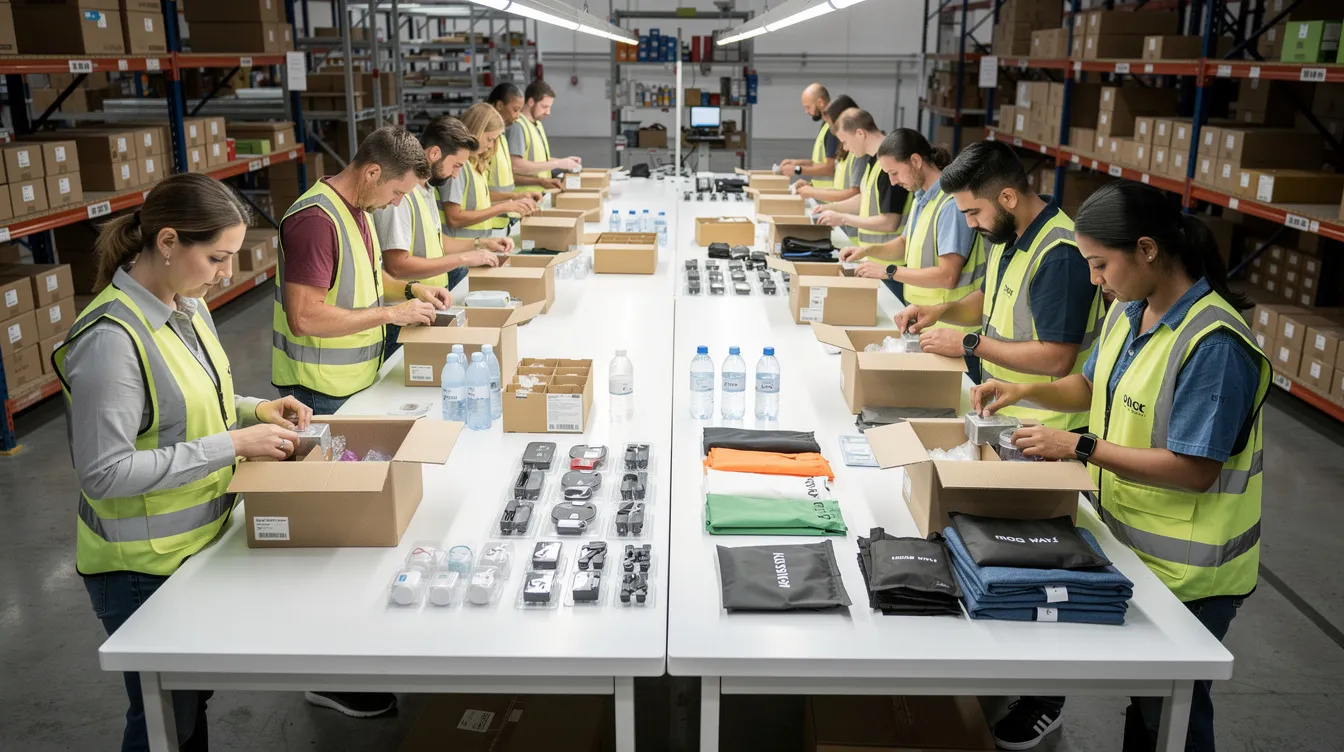
Kitting in ecommerce fulfillment means grouping multiple SKUs into one sellable unit that has its own kit SKU and is ready to ship from the fulfillment center. Kitting groups related items into a single SKU for sale, which improves operational efficiency in fulfillment operations. Instead of picking three or four separate items every time a customer orders a bundle, the warehouse picks one prebuilt kit.
Inventory kitting works as an inventory management technique that converts individual components into a parent SKU with its own stock levels and reorder rules. It can be as simple as relabeling a product differently for a promotion, or as complex as assembling multi-item kits with inserts, dividers, and custom packaging. For DTC brands processing 5,000+ monthly orders, kitting reduces fulfillment time by pre-assembling items and creates a more predictable, scalable workflow.
Kitting vs. Bundling, Assembly, and Other Fulfillment Terms
Terms like kitting, bundling, and assembly get mixed up constantly. Clear definitions matter when configuring your 3PL setup and inventory management rules.
- Kitting and bundling both involve selling multiple products together, but kits usually carry one new SKU with a defined packing plan. Bundles can remain separate SKUs picked at order time. Bundling does not require special assembly or preparation, while kitting involves a deliberate assembly process.
- Kitting vs. bundling in practice: pre assembled kits are built for speed and error free fulfillment. Bundles may be picked item by item for more flexibility. Bundling can include unrelated products sold together, while kitting typically groups complementary items.
- Kitting vs. assembly: warehouse kitting combines finished goods without changing the product itself. Product assembly or a manufacturing process changes or builds the product - like assembling furniture or combining raw materials into a finished component.
For example, a "Holiday Self-Care Kit" with its own SKU, packed with tissue and a branded insert, is a kit. A "Frequently Bought Together" suggestion pulled at pick time is a bundle. 3PLs like ShipNetwork configure kitting rules differently from simple bundles inside their WMS, which directly affects labor and pricing.
How the Kitting Process Works in a Fulfillment Center
Here's what actually happens in the warehouse when a brand decides to implement kitting:
- Decide kit contents based on merchandising goals - starter kits, gift sets, subscription boxes, or clearing excess inventory of slow moving items.
- Create a new kit SKU in the inventory system that links to component SKUs and defines quantity, dimensions, and weight. Each kit gets its own SKU in the system.
- Build a packing plan that specifies what goes where in the box, including order of items, void fill, inserts, and labeling instructions.
- Allocate warehouse space and labor for kitting stations, then schedule kitting runs - weekly, monthly, or ahead of peak season.
- Assemble kits according to a checklist, with quality checks at each step to keep error rates low. Kitting improves order accuracy by reducing picking errors at this stage.
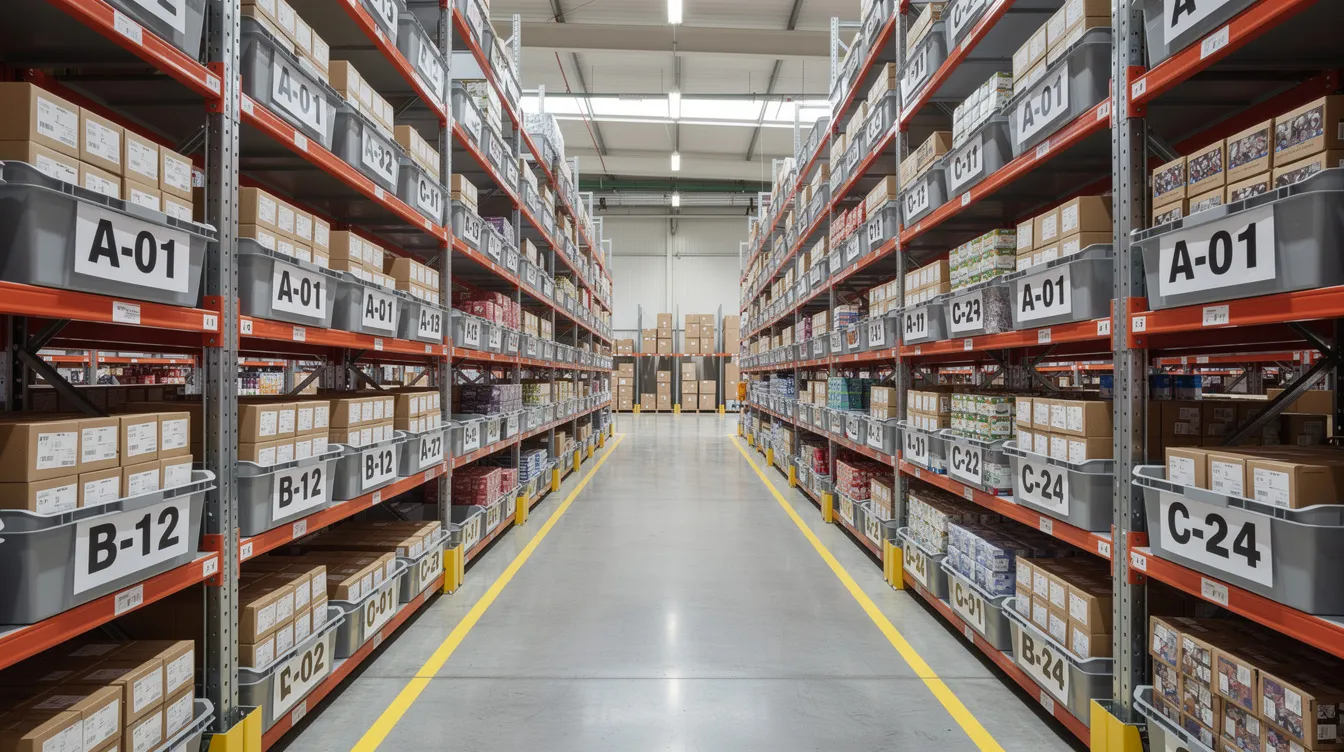
- Store completed kits in designated locations so pickers treat them like any other SKU during the order fulfillment process.
A mature kitting workflow uses barcodes and scans at each step to maintain inventory accuracy for both kits and individual components. ShipNetwork's facilities follow a standardized 1-day fulfillment SLA even for kitted SKUs, with a 100% order accuracy guarantee.
Common Kitting Use Cases for Ecommerce Brands
Kitting is especially powerful when aligned to clear revenue or customer experience goals. Here are the most common scenarios where creating kits pays off:
Gift sets and seasonal packs. Beauty, wellness, and food brands kit popular products into themed boxes for the holiday season. Prebuilt kits allow rapid, error free fulfillment during peak weeks like Black Friday and Cyber Monday. Kitting allows faster shipping by pre-assembling products customers want before demand spikes.
Starter kits and onboarding bundles. Think "new puppy starter kit," "home gym starter pack," or "first-time skincare routine." These kits simplify choice for new customers and increase average order value. Successful kits directly solve specific customer needs rather than being random assortments - they provide ready-to-use solutions that simplify the customer's purchasing process.
Subscription boxes. Monthly or quarterly boxes rely heavily on kitting to curate multiple items under one subscription SKU. Kitting is often used for subscription boxes and built-to-order items. ShipNetwork supports recurring subscription box fulfillment where kitting is done on a fixed production schedule.
Promotional or limited edition bundles. Influencer collab boxes or product launch kits with samples and inserts generate buzz. Kitting ensures consistent presentation across hundreds or thousands of customer orders.
Moving excess inventory. Pair slow-moving SKUs with best-sellers to reduce excess inventory while preserving margins. One apparel brand used bundling items strategically to generate $4.4 million in revenue over nine months with a 3× increase in AOV. Effective kitting utilizes data to identify natural product pairings based on customer behavior.

Pre-Built Kits vs. Build-to-Order Kitting
Brands choose between pre-assembling kits in bulk and assembling kits only when orders arrive. Each approach has clear tradeoffs.
Pre-built (pre-kitted) inventory: You pre-build hundreds or thousands of identical kits, store them as finished goods, and simply pick one kit per order. Advantages include faster picking, fewer errors, predictable labor, and better preparedness for spikes in demand. Kitting reduces overall packaging and saves warehouse space since everything ships in a single package. The downside: less flexibility, and leftover kits if demand shifts.
Build-to-order (on-demand) kitting: Component SKUs stay stored separately, and warehouse staff assemble a kit only after an order is placed. This supports customization options, reduces risk of dead stock, and lets customers "build your own box." The tradeoffs are more touches per order, higher labor cost, and tighter coordination with inventory levels. Custom kitting like this works well for VIP programs or products customers want to personalize.
Many ShipNetwork clients use a hybrid approach: pre-building core kits for high-volume SKUs while reserving on-demand kitting for custom or limited-edition programs. Pre-built kits win on speed and lower labor costs. Build-to-order wins on flexibility. The right mix depends on your catalog and demand patterns.
How Kitting Impacts Inventory Management and Tracking
Inventory kitting needs to be planned with operations and finance teams, not just marketing. The system complexity is real.
When a kit is created, the system maps a parent (kit) SKU to its child (component) SKUs and knows how many units of each component are required. Each time a kit is built, component inventory is decremented. Each time a kit is sold, kit inventory is decremented. Kitting allows for better inventory management by reducing SKU counts visible to pickers while maintaining component-level tracking behind the scenes.
This affects forecasting and purchase orders directly. Brands must account for component consumption from both standalone sales and kits. Misconfigured rules can cause unexpected stockouts of key components while kits appear "in stock" on the site - a common and costly mistake.
Real-time inventory sync between ecommerce platforms (Shopify, WooCommerce, Amazon) and the 3PL's warehouse management system is critical. Good kitting logic helps you track kits accurately, contributes to fewer errors, and supports consistent customer experience. ShipNetwork's systems and API integrations are designed to handle both kit and component inventory across multiple fulfillment centers in the U.S. and Canada.
Operational and Financial Considerations: The Real Cost of Kitting
The benefits of kitting are compelling, but this is a labor-intensive, process-driven activity that needs a clear business case.
Labor and complexity. Each kit requires planned labor: picking components required, assembling, quality checks, and storage. Component variety, fragile items like medical devices, and complex packing plans all increase cost per kit. Simple 2–3 item kits typically cost $1.00–$2.50 per kit, while complex multi-component kits can run $4–$8+.
Packaging and materials. Custom packaging - branded boxes, dividers, tissue, and inserts - is both a cost driver and a branding tool that shapes the post purchase experience. Balance aesthetic goals with dimensional weight and carrier pricing to avoid eroding margins through packaging costs.
Storage and throughput. Pre-built kits occupy storage locations. Too many one-off kits can clutter the warehouse and slow pickers. But consolidating frequently ordered products into fewer kit SKUs can improve the shipping process and reduce shipping costs by combining multiple items into one package.
Pricing and margin strategy. Kitting can increase average order value by encouraging larger purchases. Kits should offer clear perceived value by bundling items at a slightly discounted price compared to individual purchases - customers save money purchasing bundled kits. One drinkware brand saw a +64% AOV increase and +122% revenue uplift after implementing product bundling for back-to-school. Model how kitting will affect margin: higher AOV and more items per order versus discounted pricing and extra labor. Consider running small pilots to collect data on conversion, returns, and pick/pack time.
ShipNetwork typically prices kitting as a value added services offering, with costs based on kit complexity and volume.
When Kitting Makes Sense - And When It Doesn't
Not every brand needs kitting. Here's a quick decision framework.
Kitting is important and high-impact when:
- You sell complementary products customers often buy together (confirmed via order history or analytics)
- You have excess inventory that can be paired with high-demand SKUs to move stock without deep discounting
- Multi-line orders are causing slower fulfillment and more human error
- You're launching subscription boxes, seasonal gift sets, or starter kits as part of your growth plan
Kitting may add unnecessary complexity when:
- Your product catalog is small and simple, with fast single-SKU orders and minimal cross-sell opportunities
- Demand is highly unpredictable, making it risky to pre-build large quantities of specific kits
- You lack reliable inventory data, making it hard to keep kit and component counts in sync
Start with 1–3 clearly defined kits tied to specific goals - for example, increase sales by 10% or reduce dead stock of a certain SKU by 30% - before expanding your kitting strategy. Kitting enhances the shopping experience by simplifying product selection, but only when the kit contents make sense to the buyer. ShipNetwork's team can review your order history and advise whether outsourcing kitting will improve or complicate your current fulfillment process.
How to Implement Kitting with a 3PL Like ShipNetwork
Outsourcing kitting to a 3PL is often the most scalable path once monthly order volume passes a few thousand. Manufacturing kitting in-house or at a manufacturing facility makes sense in some cases, but most ecommerce brands benefit from the infrastructure a 3PL fulfillment partner already has in place.
Here's how it works with ShipNetwork:
- Discovery: Review product catalog, order patterns, and current pain points to identify strong kitting candidates and group items with the highest potential.
- Design: Define kit SKUs, packing plans, and custom packaging requirements aligned to brand goals.
- Systems setup: Configure kit logic in ShipNetwork's WMS and integrate with ecommerce platforms via APIs to save time and maintain accuracy.
- Pilot: Run a limited batch of kits across one or two fulfillment centers to validate accuracy, speed, and customer feedback. Kitting increases customer satisfaction by reducing order errors during this phase.
- Scale: Ramp up kit production and distribute inventory across ShipNetwork's distributed fulfillment network to reach 98% of U.S. customers in 1–2 days via ground shipping, delivering reduced shipping and cost savings at scale.
ShipNetwork uses KNCT - its proprietary shipping optimization engine - to select the best carrier and service level for every kitted order automatically. Additional assembly services often paired with kitting include returns management, subscription box fulfillment, and temperature-controlled storage where required.
Kitting products the right way builds customer loyalty and creates a significant advantage over competitors selling multiple products as individual line items. Whether you're kitting products for the first time or scaling an existing program, the goal is the same: fulfilling orders faster, with fewer errors, while selling multiple products in one package at a compelling value.
Ready to explore kitting services for your brand? Visit ShipNetwork's kitting and bundling service page to discuss your specific ecommerce fulfillment needs and get a custom plan built around your catalog and volume.
FAQ: Kitting and Bundling for Ecommerce Fulfillment
How does kitting reduce fulfillment errors for ecommerce brands?
Pre assembled kits mean pickers grab one item instead of several, cutting the number of decisions and touchpoints per order. Barcoded kit SKUs, standardized packing plans, and quality checks at kitting stations lead to fewer errors compared with ad hoc, multi-line picking. Kitting minimizes labor costs by reducing order fulfillment time at the pick-pack stage. ShipNetwork backs this approach with a 100% order accuracy guarantee - especially valuable for high-volume DTC brands where even small error rates create expensive returns.
Can I still sell the individual items if I start using kitting?
Yes. Most ecommerce businesses continue selling individual components as standalone SKUs alongside kits. The key is configuring inventory management rules so that kit sales reduce available stock for related individual SKUs and vice versa. This dual-selling approach works across your supply chain as long as your WMS supports parent-child SKU relationships.
How do I decide which products to put into a kit?
Start with order data to identify "frequently bought together" items. Include at least one hero product and optionally 1–2 slower-moving SKUs to help clear stock without hurting perceived value. Kitting helps move slow-moving inventory by bundling with popular items. Test different price points and configurations - basic vs. deluxe kits - to find which mix drives the best results.
Does kitting work for marketplaces like Amazon as well as my own Shopify store?
Kitting is compatible with multi-channel selling as long as each kit SKU is listed and mapped correctly in every channel. Brands can create marketplace-specific kits (like Amazon-exclusive bundles) while using the same underlying components elsewhere. ShipNetwork's integrations sync kit SKUs across major platforms, helping maintain consistent stock levels and ecommerce fulfillment performance.
When is the best time of year to launch new kits?
Many brands launch kits before key retail peaks - back-to-school, Black Friday–Cyber Monday, and the December holiday season. Use slower periods like late Q1 or early Q2 to design, test, and implement your kitting strategy before demand spikes. ShipNetwork can pre-build and stage kits in advance so brands enter peak season with inventory already prepared for fast fulfillment.