

.svg)


Key Takeaways
- Most parcel carriers cap shipments at about 150 lbs and 108 inches in length (or 165 inches length plus girth). Anything beyond that is usually considered freight.
- Ecommerce brands typically switch to freight when sending pallets of inventory to a fulfillment center, Amazon FBA, or retail distribution centers, or when shipping large items like furniture or fitness equipment.
- Gray-area shipments (70 to 150 lbs or bulky boxes) can be cheaper as less than truckload LTL freight than as oversize parcels loaded with surcharges.
- Freight pricing is structured differently from parcel. It depends on pallets, lanes, freight class, and accessorials, while parcel is based on per-package weight, zones, and DIM weight.
- ShipNetwork's SmartFreight and fulfillment services help brands decide when to use freight vs parcel and manage inbound freight appointments, paperwork, and carrier coordination.
Parcel vs. Freight: Where the Line Really Is
Most ecommerce brands start with parcel shipping because it's simple. You print a shipping label, hand off individual packages, and parcel carriers like UPS, FedEx, USPS, or DHL move them through automated hubs to your customer's door. Parcel shipping is ideal for smaller shipments under 150 pounds. E-commerce retailers commonly use parcel shipping for direct-to-consumer deliveries, and businesses shipping small quantities benefit most from this approach. Parcels typically weigh less than 70 pounds, and parcel services enhance customer satisfaction through optimized shipping processes, including detailed tracking and precise delivery timelines.
The trouble starts when products get bigger, heavier, or when you need to move large quantities at once. That's when you cross what experienced operators call "the freight line." Parcel shipping is for individual packages under 150 pounds. Freight shipping is for bulk shipments over 150 pounds. Once a given shipment exceeds common parcel thresholds, you're looking at freight territory.
Here's what separates the two in practical terms. Parcel shipments move as individual packages through conveyor systems and automated sort centers. Parcel shipping allows for automated processing of individual items, making it fast and flexible. Parcel shipping is more flexible with precise delivery timelines, which matters for time sensitive deliveries to residential addresses. Freight shipping, by contrast, involves palletized or crated cargo moved by trucks, forklifts, and dock-to-dock networks. Major carriers enforce hard limits: a maximum of about 150 lbs per package, 108 inches in length, and 165 inches combined length and girth. Exceed those, and you're either paying steep oversize surcharges or getting rejected entirely. But it's not just about one heavy box. Multiple boxes going to the same destination on the same day can be more economical and safer as a single freight shipment than as a stack of oversize parcel packages.
What Classifies as a Freight Shipment for Ecommerce Brands?
Here's a quick rule-of-thumb guide for deciding if something is considered freight. When freight is needed, it triggers classification based on weight and dimensional thresholds. Freight shipping is necessary for shipments larger than 108 inches. Freight shipping is essential for oversized cargo that cannot be accommodated by standard carriers. Freight shipping is ideal for shipments over 150 pounds, and freight shipments can weigh hundreds or thousands of pounds.
Common freight triggers for ecommerce include:
- Any single item over 150 lbs (home gym equipment, sofas, king-size mattresses, large outdoor playsets)
- Any carton exceeding 108 inches in length or 165 inches length plus girth
- Palletized inventory (3 to 10 pallets of product going from a manufacturer to a 3PL)
- Palletized beverages, raw materials, or bulk commodities filling significant trailer space
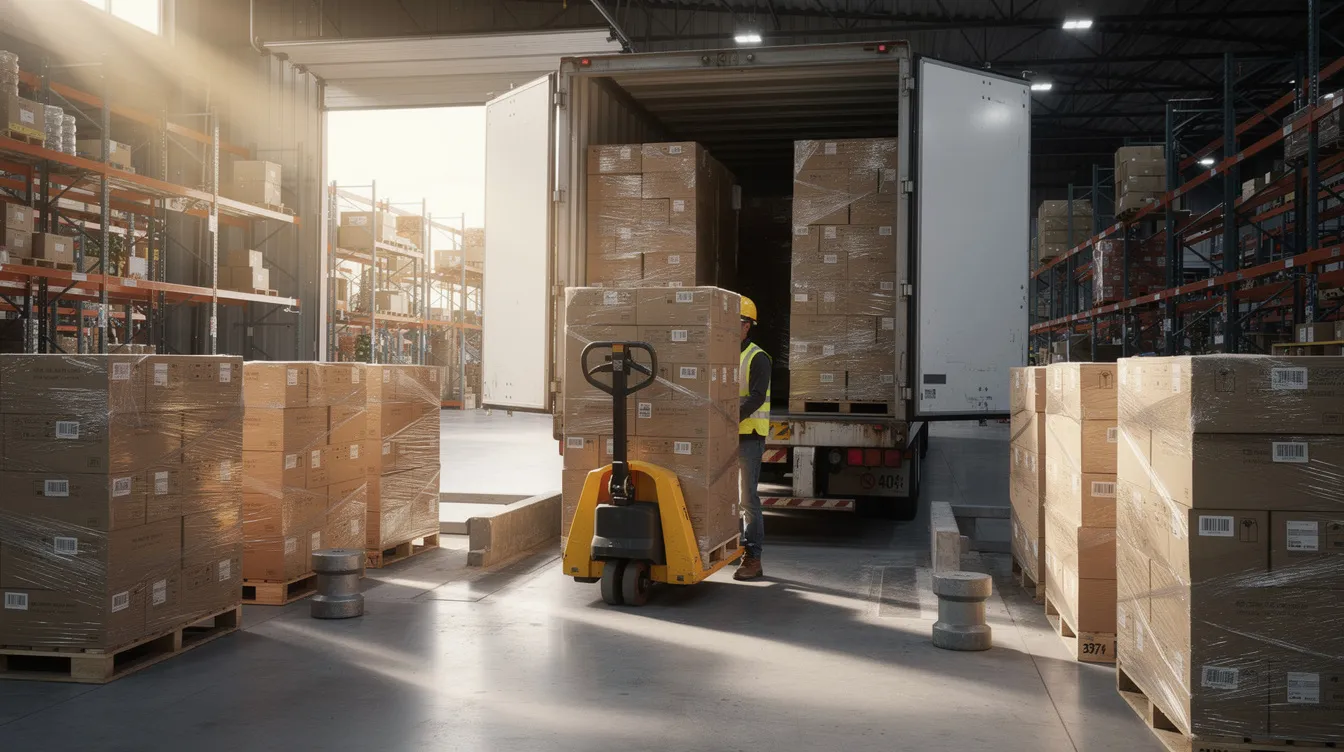
Less than truckload LTL shipping typically covers 1 to 6 pallets or roughly 150 to 15,000 lbs. Full truckload FTL is for filling most or all of a 53-foot trailer, which commonly holds 20 to 26 standard pallets. A standard 53-foot dry van can carry 42,000 to 45,000 pounds. Freight shipments move on pallets (commonly 48 by 40 inches) or in crates, require specialized handling equipment like forklifts or pallet jacks, and use Bills of Lading instead of simple parcel labels. Most ecommerce brands first encounter freight when inbounding product to a fulfillment center or Amazon FC, not in their direct-to-consumer outbound flows.
Common Ecommerce Scenarios That Require Freight Instead of Parcel
The need for freight instead of parcel usually shows up in predictable patterns as brands scale: bigger products, bulk inventory moves, and B2B orders. Freight suits businesses with high volume shipments and is used for shipping inventory to warehouses rather than direct consumer delivery.
Bulk inbound inventory to a 3PL or Amazon FC. When a brand restocks its fulfillment centers with multiple pallets from a manufacturer or importer, parcel doesn't make sense. These shipments require appointment windows, dock access, and proper documentation. Freight typically consolidates multiple large boxes or items into fewer shipments, reducing complexity and cost.
Large or bulky consumer products. Fully assembled furniture, appliances, treadmills, large TVs with protective crating, or oversized patio sets regularly exceed parcel dimensions. These are prime freight packages that need special handling and can't ride conveyor belts.
Wholesale and retail replenishment. Shipping 1 to 10 pallets to retailers, distributors, or regional distribution centers is almost always a freight shipment. International shipments arriving in shipping containers from overseas factories follow the same pattern.
The gray area. Consider 10 to 15 boxes at 60 to 80 lbs each going to the same B2B customer. Technically parcel-eligible, but heavy items may incur additional handling surcharges when shipped via parcel. Palletizing them as one ltl shipments is often cheaper and safer.
Product launches and events. Pushing hundreds of units to pop-up stores or trade shows calls for ltl shipping or even full truckload moves, especially when timing and volume make parcel impractical.
Cost Structure: How Freight Shipping and Parcel Pricing Really Differ
Many merchants only look at the parcel label cost. But freight and parcel shipping follow different pricing logic, and understanding the gap changes where the break-even point lies.
Parcel pricing works on a per-package basis: billable weight (actual weight vs. DIM weight, whichever is higher), zones determined by distance, service level, and surcharges for residential delivery, fuel, large package fees, and additional handling. When parcel shipments approach weight or size limits, surcharges spike. Shipping multiple boxes on a pallet is more cost-effective than using parcel rates once you cross the threshold.
Freight pricing for ltl freight and full truckload is built differently. Rates depend on lane (origin and destination), total weight, density or freight classification, linear feet of trailer space, and accessorials like liftgate, inside delivery, limited access, appointment fees, and residential surcharges. Freight costs are influenced by weight, distance, and urgency. Freight rates can increase due to seasonal demand fluctuations, adding another variable.
Here's a narrative example: a 140-lb oversized carton moved as a parcel triggers large package fees, DIM weight penalties, and oversize charges. Palletized and shipped as ltl freight, the same product moves at a lower cost per pound with fewer penalty fees. According to industry data from Warp, LTL shipments become cheaper over 200 to 500 pounds to the same destination, and at roughly 500 lbs, LTL can be 30 to 50 percent cheaper per pound than parcel. Cost efficiency determines whether to use freight shipping for large volumes, and freight is more cost-effective for bulk transport of goods.
General rate increases affect both parcel and freight shipping annually, but the mechanics differ. Parcel contracts shift with published DIM divisors and surcharge tables, while ltl freight shipping rates move with tariff updates and carrier pricing strategies.
How Inbound Freight to a Fulfillment Center (or Amazon FC) Actually Works
Freight shipping to a 3PL or Amazon fulfillment center has more steps than printing a shipping label. Getting details wrong can mean rejected loads, detention fees, or inventory delays. Freight shipping requires palletization for large or bulky items, and the shipping process demands precision.
The process starts with creating a shipment plan. For Amazon FBA, this means submitting a plan via Seller or Vendor Central that lists all POs or shipment IDs. The Bill of Lading must match those IDs exactly. Carton counts, pallet counts, weights, dimensions, and SKU identifiers all need to be accurate before a carrier picks up the load.
Appointment scheduling is where many brands stumble. Fulfillment centers receive freight on tight dock schedules. Carriers must book time slots in advance, and missed appointments can trigger rescheduling delays and charges. Amazon enforces these rules strictly through portals like Carrier Central.
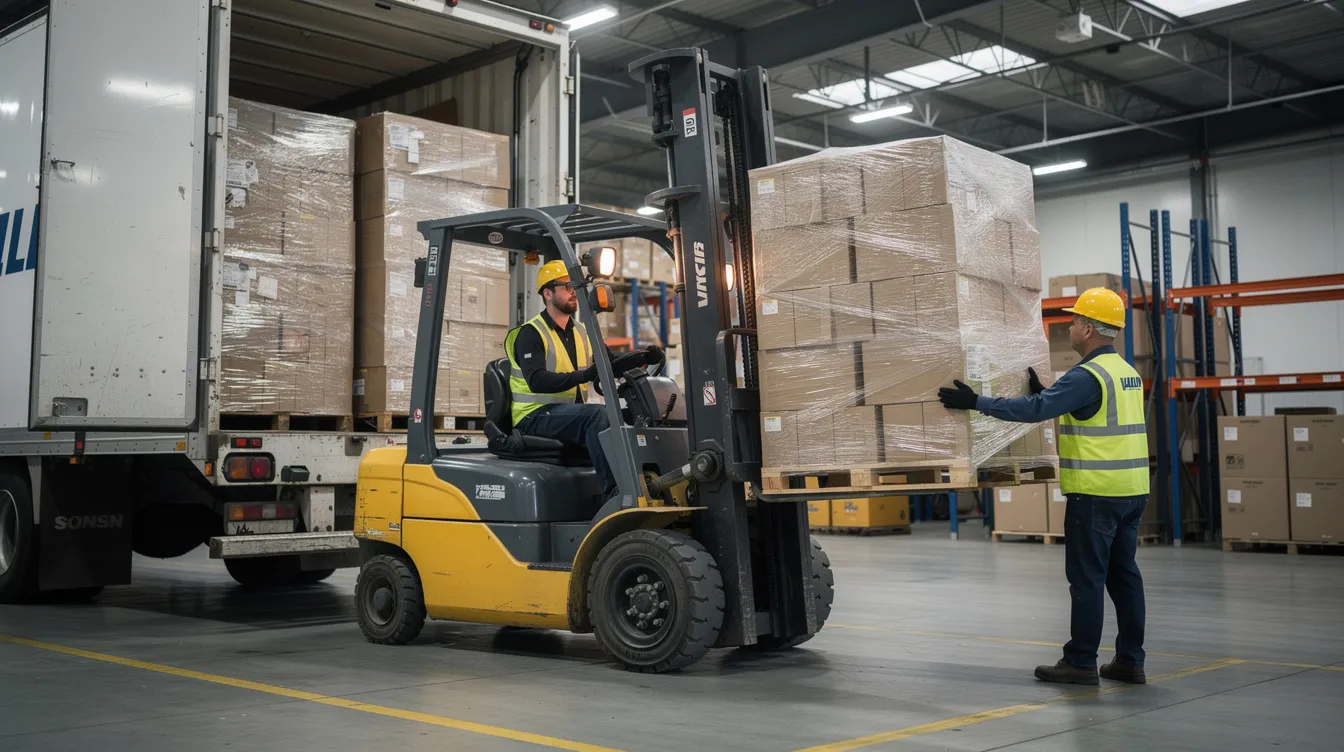
Physical pallet requirements matter just as much. Standard pallets are 48 by 40 inches, with height limits often around 72 to 80 inches including the pallet. Loads must be stable, stretch-wrapped, and labeled with pallet IDs, carton IDs, and barcodes visible from multiple sides. Specialized handling equipment like forklifts is needed for freight at the receiving dock.
The Bill of Lading records shipper, consignee, NMFC freight class, pallet count, weight, and PRO number. Without an accurate BOL, drivers cannot legally move freight and fulfillment centers may refuse delivery.
Inbound freight to ShipNetwork can be coordinated through SmartFreight, reducing the back-and-forth with ltl carriers and ensuring deliveries hit the correct facility and dock window.
Freight Services, Modes, and When to Use Each
Freight shipping is an umbrella term. Ecommerce brands most often use LTL, FTL, and occasionally air freight or expedited shipping for critical timelines. Freight shipping uses trucks, planes, ships, and trains, and freight shipping includes air, sea, rail, and truck options. Freight shipments can utilize multiple transportation methods simultaneously depending on the route.
Less than truckload (LTL) is the default freight option for smaller shipments that still exceed parcel limits. Less than truckload LTL shipping is for shipments between 150 and 15,000 pounds, typically 1 to 6 pallets sharing truck capacity with other shippers. It's the workhorse for transporting goods between factories, 3PLs, and retail partners. Learn more about how LTL and FTL shipping compare in practice.
Full truckload (FTL) is the right shipping method when you can fill most of a 53-foot trailer. Full truckload FTL shipping is for shipments over 15,000 pounds. A standard 53-foot dry van can carry 42,000 to 45,000 pounds across 20 to 26 pallets. FTL provides more direct transit, fewer touchpoints, and lower damage risk, making it ideal for time sensitive shipments or high-value loads.
Air freight enters the picture when delivery speed is paramount. Used for high-value, urgent, or backorder-prevention inventory, air freight moves on cargo planes and delivers fast. But air freight is typically the most expensive shipping option, costing an order of magnitude more per pound than ground transportation. Express services in freight can rival or beat parcel transit times at a premium.
Ocean freight handles international shipments from overseas manufacturers, moving goods in shipping containers at scale. Ocean freight is generally the least expensive shipping option for bulk commodities transported domestically or internationally, but transit times are measured in weeks.
The strategic mix for scaling brands often combines international ocean or air freight from factories, domestic truck freight for replenishment, and parcel delivery for last-mile DTC orders. ShipNetwork's SmartFreight connects brands with domestic and international freight services to align freight moves with inventory and sales plans.
How a 3PL's Freight Support Simplifies the Shift from Parcel to Freight
Many DTC brands know parcel services inside and out but feel overwhelmed when they first need ltl freight or full truckload support. The right 3PL partner makes this transition manageable.
A 3PL like ShipNetwork uses freight forwarding and SmartFreight support to arrange multiple carriers, book appointments, and ensure correct paperwork for domestic and international freight. Integrating freight and parcel under one logistics partner allows better planning: timing inbound freight to inventory needs, distributing stock across multiple fulfillment centers, and reducing last-mile parcel zones for cost savings.
The operational benefits stack up. Freight handling reduces risk of damage for fragile or high-value items thanks to proper palletization and fewer touchpoints. Smoother Amazon FBA and retail replenishment means fewer chargebacks. Better tracking of inbound and outbound freight shipments improves supply chain visibility.
ShipNetwork can advise on when to convert multiple heavy parcels into a single LTL shipment and when to stick with parcel for dispersed DTC orders, enabling businesses to optimize total shipping spend across the entire logistics operation.
Questions to Ask About Freight Capability Before Choosing a 3PL
Not all 3PLs and shipping companies are equally strong at managing freight and parcel shipping together. Many are built around parcel shipping services and treat freight as an afterthought. Before signing, ask pointed questions.
Start with the basics: "Do you offer in-house freight services or work with vetted freight forwarders?" and "Can you manage both inbound freight and outbound parcel from the same platform?" Understanding whether your 3PL handles Amazon FBA and retail DC delivery requirements matters, especially if your brand relies on those channels.
Dig into operational details: "Who schedules dock appointments, and what happens if a carrier misses one?" Ask about pallet and labeling requirements, freight class and NMFC guidance, and how they manage accessorials like liftgate or residential delivery. These details affect your freight costs more than most brands realize.
Push for analytics: "Can you show me examples of when you've converted clients from parcel to ltl and achieved substantial savings on total shipping cost?" A strong freight logistics partner should be able to model crossover points using real data.
Finally, confirm that the 3PL can scale from a few pallets per month to regular LTL and occasional FTL moves tied to major inventory replenishments and product launches without a drop in service quality.
Combining Freight and Parcel into a Cohesive Shipping Strategy
The real goal isn't freight vs parcel. It's using both shipping methods in the right places across your supply chain to control transportation costs and maintain fast final delivery.
A typical mixed strategy looks like this: inbound freight to multiple regional fulfillment centers positions inventory close to customers. Then optimized parcel (ground, priority, and expedited shipping services) handles direct-to-consumer orders. This combination of shipping options is how medium sized businesses achieve cost effective operations without sacrificing customer expectations.
Distributing inventory closer to customers via freight moves reduces parcel zones and enables 1 to 2 day ground parcel delivery across most of the U.S. This aligns with ShipNetwork's distributed fulfillment network, which reaches 98 percent of the U.S. population within that window. Technology like KNCT automatically selects the best carrier and service for each outbound parcel, while SmartFreight handles the upstream pallet and container moves.
Smart brands review where freight vs parcel is used on a quarterly basis as product mix, order volume, and retail partnerships evolve. What worked as an all-parcel startup won't hold as you scale into larger shipments, wholesale channels, and multi-node operations. Freight strategies should grow with you.
Ready to Rethink Freight and Parcel Shipping with ShipNetwork?
Choosing the right shipping method for every shipment across your supply chain is how you protect margins and keep customers happy. ShipNetwork's nationwide fulfillment network, 98 percent 1 to 2 day ground coverage, and SmartFreight capabilities bring freight and parcel optimization together under one roof.
Whether you're shipping lighter shipments via parcel or moving pallets across the country, ShipNetwork helps you find the cost effective balance. Explore ShipNetwork's ecommerce freight service page or contact the team for a freight and parcel shipping assessment tailored to your business.
FAQ: Freight vs Parcel for Growing Ecommerce Brands
At what exact point should I switch a heavy package from parcel to freight?
Once a single package approaches 100 to 150 lbs or nears the 108-inch or 165-inch dimensional limits, you should compare parcel vs LTL quotes. Parcel surcharges and DIM weight penalties often spike costs dramatically in that range. Multiple heavy parcel packages (for example, 5 to 10 boxes at 60 to 80 lbs each to the same address) are strong candidates for palletizing and shipping as one LTL freight shipment. Running a side-by-side cost comparison, which ShipNetwork or a freight expert can help with, takes the guesswork out of the decision.
Do I need a loading dock or forklift to receive a freight shipment?
Businesses without docks or forklifts can still receive freight by requesting a liftgate and, if needed, inside delivery. These count as freight accessorials and add to the cost. Freight shipments often require specialized delivery vehicles like trucks with liftgates for locations without standard dock access. Standard LTL assumes dock-to-dock service, so anything else (residential addresses, pop-ups, studios) must be specified on the Bill of Lading when booking.
Is freight shipping always slower than parcel?
Not always. Standard LTL can be slower than parcel due to hub-and-spoke consolidation and multiple handling points, but transit times vary by lane and carrier. Expedited shipping options exist in freight, including guaranteed LTL and air freight, which can rival or beat parcel transit times for time sensitive shipments. The key is matching the transportation method to urgency: use freight for planned inventory moves and parcel for last-minute, direct-to-consumer orders where delivery speed and customer satisfaction matter most.
How does damage risk compare between multiple parcels and one freight shipment?
Multiple loose parcel packages pass through many automated sort centers and conveyor systems, increasing touchpoints and potential damage for heavy or fragile items. Properly palletized freight, shrink-wrapped and corner-protected, often experiences fewer handling touches and a lower damage rate for large shipments. Brands should factor packaging quality and product fragility into the freight vs parcel decision alongside cost and speed.
Can I use the same insurance approach for freight and parcel?
No. Parcel shipments generally include limited carrier liability and optional insurance, while freight uses carrier liability based on freight classification and declared value, which may not cover the full product cost. Brands moving high-value goods by freight should consider separate cargo insurance policies or extended coverage options. Consulting with logistics or insurance partners helps align coverage levels with product value and risk tolerance.