

.svg)


Key Takeaways
- Ecommerce fulfillment problems don't disappear with growth. They get more expensive and more visible as order volume increases, turning minor annoyances into brand-level risks.
- The math is unforgiving: "good enough" accuracy, shipping costs, and support at 2,000 orders/month can quietly break a business at 20,000+ orders/month through compounding errors, rising operational costs, and frustrated customers.
- Stronger fulfillment operations directly improve customer experience, protect profit margins, and create competitive advantage that compounds as favorably as the problems do unfavorably.
- ShipNetwork's nationwide 3PL network, 1-day fulfillment SLA, and 100% order accuracy guarantee are built specifically for growing ecommerce businesses that need infrastructure ahead of their growth curve.
- The best time to fix fulfillment is before your next growth inflection, not after it exposes every weakness in your current setup.
Intro: The Growth Assumption That Breaks Ecommerce Brands
There's a version of the scaling story that many ecommerce businesses tell themselves: we'll fix fulfillment once we have more revenue. More resources, more leverage with the 3PL, more capacity to invest in the right systems. It's a reasonable assumption. It's also wrong.
Fulfillment problems don't resolve with scale. They compound with it. Scaling an ecommerce business can strain the supply chain in ways that aren't visible at low volume but become structurally painful as orders climb. The issues that are manageable at $2M in revenue become expensive at $10M and brand-damaging at $30M. Growth doesn't fix a weak fulfillment operation. It puts more orders through it.
Ecommerce accounted for 16.6% of U.S. retail sales in Q4 2025, and total retail sales continue shifting online. Fulfillment operations become more complex as ecommerce businesses scale into that demand. At 2,000 orders per month, small fulfillment issues (inaccuracies, shipping delays, poor inventory visibility, carrier mis-optimization, support gaps with the fulfillment partner) are annoying. At 20,000 orders per month, the same issues show up in reviews, churn, and cash flow strain.
This article maps the core ecommerce fulfillment challenges that scaling brands face, explains why they get worse as you grow, and shows what a fulfillment partner built for scale looks like.
The Four Fulfillment Problems Growth Reliably Magnifies
Many "one-off" fulfillment issues in a small online business are actually structural. They point to process, system, or partnership weaknesses that remain hidden until order volume jumps past 5,000 to 10,000 orders per month. Once that threshold hits, what looked like random problems become visible patterns with measurable cost.
The four ecommerce fulfillment problems that scale most reliably: accuracy issues, poor account support, rising carrier costs, and fragile peak-season performance. Each one quietly erodes margins and damages customer experience in ways that compound quarter over quarter.
Problem 1: "Rare" Accuracy Issues That Turn Into a Real Business Risk
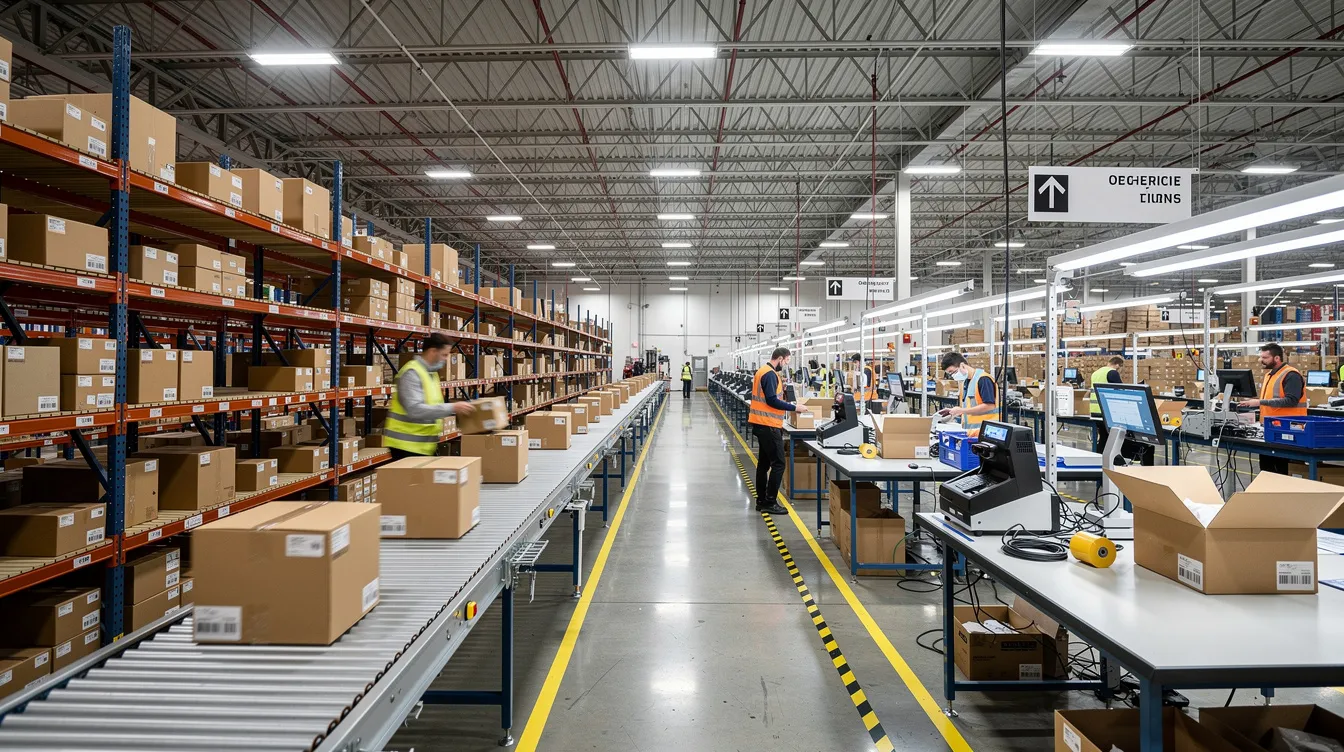
A 99% order accuracy rate sounds strong until you do the math. At 500 orders per month, that's 5 wrong orders. At 5,000 orders per month, it's 50. At 50,000, it's 500. The error rate didn't change. The brand's exposure did.
Order errors increase returns and weaken customer trust at every scale, but the visibility shifts dramatically once volume climbs. Wrong SKUs, missing items, incorrect sizes or flavors, and mislabelled lots are painful in any category and potentially dangerous in supplements and health products. Inaccurate inventory is a major ecommerce fulfillment challenge because inventory mismanagement can cause overselling and stockouts. Retailers lose an average of $1.1 million annually due to stockouts, and 70% of shoppers switch to a competitor when faced with them.
Each mis-ship carries direct cost: replacement product, reshipped orders (often with upgraded shipping speed to appease the customer), refunds, customer support time, and long-term customer lifetime value loss. Manual fulfillment processes can lead to picking and packing inefficiencies that drive these errors. Strong fulfillment operations maintain order accuracy above 99.5% through barcode-scan-verified picking, while paper-pick operations often sit at 97 to 98.5%.
At 10,000+ orders per month, even a small bump in error volume shows up as 1-star reviews, chargebacks, higher return rates, and rising customer complaints. Customer expectations for accuracy aren't negotiable. ShipNetwork's 100% order accuracy guarantee represents the standard scaling ecommerce businesses should demand from any fulfillment partner, backed by financial accountability rather than marketing language.
Problem 2: Shared Account Support That Can't Keep Up With Your Scale
At 1,000 orders per month, a brand typically has a responsive but shared account rep at their 3PL. That rep knows the SKU mix, answers quickly, and handles issues with context. By the time the brand reaches 8,000 to 10,000 orders per month, that same rep is juggling more accounts and more fires. Response times drag from hours to days. Context disappears. Manual order processing issues that once got resolved in minutes now sit in a queue.
This creates operational risk across business operations: slower answers on inventory errors, delayed responses to carrier disruptions, no proactive planning for major campaigns or product launches. Fulfillment performance suffers through more order holds, slower resolution of ecommerce fulfillment problems, and reactive instead of proactive peak readiness.
Scaling ecommerce businesses need an account team that understands their SKU mix, seasonality, and marketing calendar well enough to anticipate problems. When Coyuchi experienced a 400% demand surge over forecast, their 3PL's embedded account support adapted labor, managed inventory, and maintained SLA for accuracy despite last-minute changes. That flexibility comes from a support model where the account manager is deeply embedded in the brand's operational complexity, not shared across dozens of clients.
ShipNetwork's U.S.-based support and dedicated account management model is built for exactly this: keeping operations stable as customer expectations and order volume rise together. The account team grows its knowledge of your business alongside the business itself.
Problem 3: Carrier Costs That Quietly Turn Into Margin Pressure
Many ecommerce businesses begin with a single-carrier or limited-carrier strategy that seems fine at low volume. Relying on a single shipping carrier can inflate costs and slow delivery times. That same setup becomes a major cost center once the brand is shipping thousands of orders per week. Shipping costs fluctuate significantly due to fuel surcharges, dimensional weight pricing, zone-based rates, and seasonal surcharges. Using the wrong box sizes increases shipping costs due to dimensional weight pricing, and those inefficiencies multiply with every additional order.
Suboptimal carrier routing (wrong service level, inefficient zones, not using regional carriers) drives up cost per order as sales volume grows. In December 2024, carrier on-time delivery performance slipped noticeably: UPS delivered approximately 96.5% on time, FedEx dropped to roughly 91.8%, and USPS to about 90.4%. Poor delivery performance and delayed deliveries also hurt conversion rates when brands can't confidently offer competitive shipping speed at checkout.
Multi-carrier shipping software helps select the most cost-effective shipping options for each package. ShipNetwork's Xparcel technology does exactly this: Xparcel optimizes 100% of shipping volume for cost and speed, automatically selecting the best carrier and service (Priority, Expedited, Ground) based on weight, dimensions, destination, and carrier performance.
At scale, even a $0.50 to $1.50 improvement in parcel cost per order across 10,000+ monthly orders becomes a meaningful cash flow and margin advantage, representing $60,000 to $180,000 annually.
Problem 4: Peak Season Exposure That Goes From Recoverable to Brand-Damaging
Early-stage brands can muscle through peak periods with overtime and manual work. The same approach breaks once volume jumps 3 to 5 times during peaks. Scalability issues can lead to delayed shipments during peak periods. HalloweenCostumes.com handled a 15x order volume surge during peak, but that level of scaling requires infrastructure designed for it, not last-minute improvisation.
Peak ecommerce fulfillment problems manifest as backlogs, orders missing carrier cutoffs, phantom inventory from inaccurate counts, and delayed customer notifications. Shipping delays can lead to customer complaints and lost business. According to DP World's research, 41% of holiday shoppers in 2024 abandoned carts when shipping times were too long.
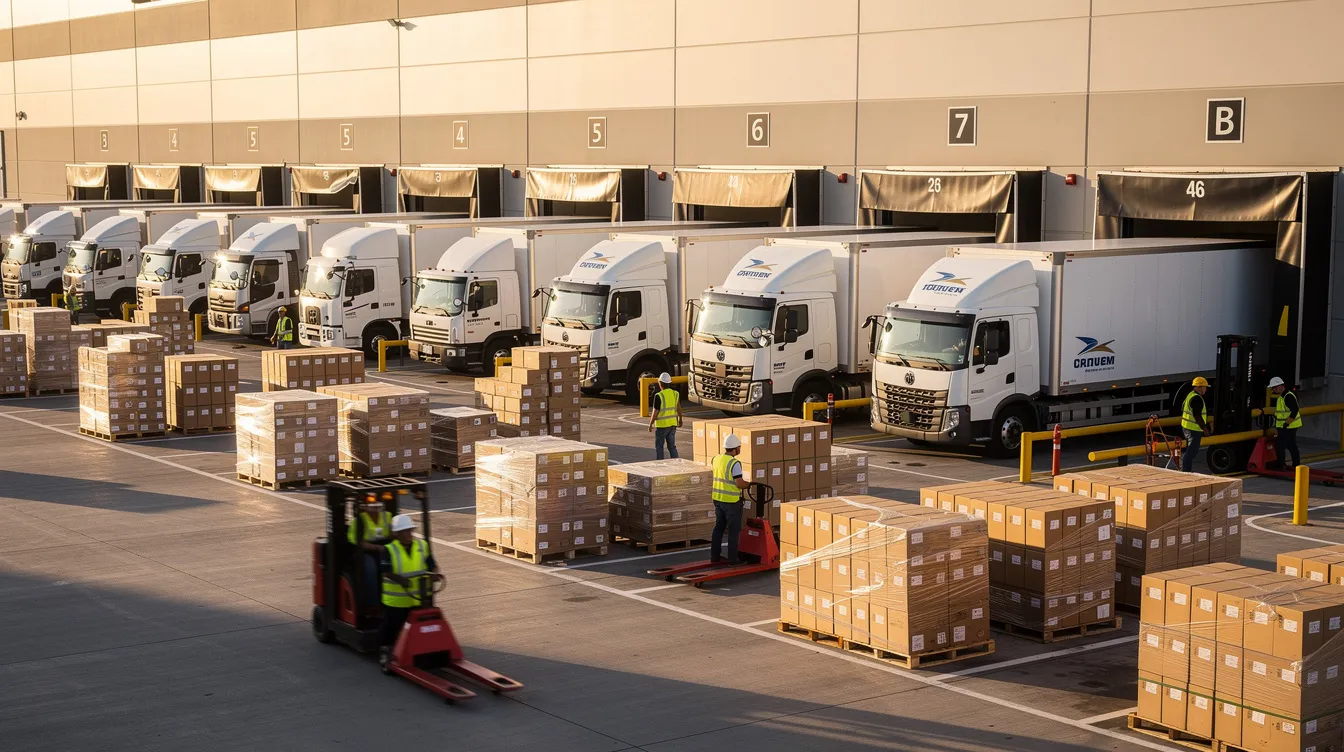
Poor peak performance in November 2025, for example, can depress repeat purchase rates and review scores well into the first half of 2026. The fulfillment operation that handled peak at $2M rarely scales to handle peak at $15M without deliberate redesign. Scalable labor solutions help manage spikes in order volume, and a distributed fulfillment network reaching 98% of the U.S. population within 1-2 days via ground protects brands during their highest-stakes periods. ShipNetwork's 1-day fulfillment SLA holds through peak, not just off-season.
How to Tell if Your Fulfillment Operation Is Ahead of Your Growth or Behind It
Four questions that reveal whether your current setup can support growth over the next 12 to 24 months. You can cover these in a single meeting with your fulfillment partner.
Is your accuracy guarantee specific and financially backed? A meaningful guarantee names a concrete percentage, defines what counts as an error, and includes financial remediation. Vague claims like "near-perfect" or "industry-leading" with no consequences are a warning sign. Accurate inventory enables better forecasting and fewer fulfillment errors. If your partner can't point to specific accuracy data, that's a problem.
Does your account team proactively prepare you for peaks and product launches? Look for forecasting conversations in Q2 for Q4, planned labor and capacity adjustments, and inventory positioning discussions. Demand forecasting based on historical data prevents stockouts and overstocking. If every peak is reactive, your support model is behind your growth.
Is your average carrier cost per order going down, flat, or up as volume rises? Track cost per shipment and zones shipped quarterly. Rising costs driven by operational expenses mean the current model isn't keeping pace with business expansion.
Has your fulfillment operation been stress-tested at a higher volume than you're running today? Ask for real-world references or case studies from brands shipping 5,000 to 50,000 orders per month. If your partner has no evidence of performance above your current run rate, you're the stress test.
What It Looks Like When Fulfillment Is Actually Built for Scale
A fulfillment partner built for scalable growth has specific characteristics that separate it from a warehouse vendor:
- Accuracy: 99.9%+ with clear processes. Professional fulfillment partners improve inventory accuracy and reduce errors through barcode scanning, lot tracking, quality control checkpoints, and cycle counting that maintains inventory accuracy. Automating repetitive tasks reduces human error in fulfillment processes. Implementing a centralized warehouse management system prevents overselling.
- Speed: A 1-day fulfillment SLA means orders received by cutoff are picked and packed the same business day, consistently, in and outside of peak. Batch and wave processing can improve order fulfillment speed during high-volume periods. An optimized warehouse layout minimizes picking times and labor costs.
- Network: Distributed inventory can shorten delivery times and reduce shipping costs versus a single-warehouse model with long zones. A centralized fulfillment hub can reduce shipping costs, and multiple fulfillment centers across regions provide redundancy. 98% of the U.S. population can be reached within 1-2 days via ground from a properly distributed network.
- Technology: Real-time inventory tracking is essential for effective inventory management. Integrating ecommerce platforms with inventory tracking systems reduces data silos. Real time visibility into inventory levels, deep integrations with platforms like Shopify and WooCommerce, and routing optimization that improves cost and transit time as volume grows. Automating fulfillment processes can significantly lower operational costs and free teams from inefficient workflows and repetitive tasks.
The Hidden Cost of Waiting to Fix Fulfillment Problems
Many ecommerce operators stay in "we'll fix fulfillment later" mode, focused on front-end growth across new sales channels, new products, and paid acquisition. Every quarter spent with an underpowered fulfillment partner compounds risk: higher error counts, more customer dissatisfaction, rising shipping costs, and higher internal support workload.
Returns management is essential for maintaining customer satisfaction and cash flow. U.S. online returns represented 17.6% of ecommerce purchase revenue in 2023, roughly $248 billion. Reverse logistics is a growing cost center, and ecommerce companies lose an average of $1.1 million annually due to stockouts that force poor visibility into what's actually available. Every refund, reshipment, and inefficient carrier contract pulls capital out of the business that could fund inventory, marketing, or product development.
The operational drag is just as real. Leadership spends time on warehouse fires and exception management instead of strategy. Manual tracking and poor real time inventory create operational bottlenecks that slow everything else down. The hidden cost of waiting isn't just the lost revenue and rising costs you can measure. It's the potential customers you never convert because your online store can't reliably fulfill orders at the speed and accuracy the market demands. The right time to upgrade is before your business hits its next breaking point.
How ShipNetwork Helps Scaling Ecommerce Brands Turn Fulfillment into a Competitive Advantage
ShipNetwork is a third party logistics partner that grows when the ecommerce brands we work with grow. That alignment of incentives shapes everything about how we operate.
Our distributed fulfillment network spans the U.S. and Canada, enabling 98% of the U.S. population to receive orders in 1-2 days via ground shipping. This reduces reliance on expensive air services and improves shipping speed without inflating operating costs. A 3PL can enhance shipping speed and reliability for businesses while providing scalable infrastructure for growing ecommerce brands. Outsourcing to a 3PL can stabilize shipping costs effectively and reduce operational costs significantly.
Our 1-day fulfillment SLA and 100% order accuracy guarantee directly address common ecommerce fulfillment problems at scale. A 3PL can enhance order accuracy through systemized control and visibility, and outsourcing to a 3PL can significantly reduce order mistakes. 3PLs improve inventory accuracy through systemized control, and a 3PL can help prevent stockouts while reducing costs and improving demand planning.
Value-added services important for scaling brands include subscription box fulfillment, kitting and bundling, returns management, lot tracking, and temperature-controlled storage for specialized products. These capabilities let brands meet demand across warehouse space and physical space constraints without building infrastructure from scratch.
Next Steps: Fixing Fulfillment Problems Before They Limit Your Growth
Fulfillment problems are not an unavoidable side effect of growth. They're the result of operating with a fulfillment partner or in-house setup that's not built for your next stage. The right fulfillment partner turns fulfillment operations from a liability into a growth lever.
Run the four diagnostic questions from this article against your current setup. Focus on order accuracy, shipping cost per order, peak preparedness, and account support responsiveness. If your current operation can't answer those questions with specific, backed-up data, it's time to evaluate alternatives.
If you're shipping 5,000+ orders per month (or targeting that threshold within the next year), request a quote from ShipNetwork to evaluate whether a switch would improve speed, accuracy, and costs.
For deeper reading, explore:
- Our peak season fulfillment scorecard to benchmark your readiness
- A comparison of in-house vs. third-party delivery to weigh your options
- The Andie Swim multi-channel fulfillment case study to see what scaled fulfillment looks like in practice
With the right fulfillment partner, your operations can support growth without sacrificing customer experience, purchase history improvements, or cash flow stability.
FAQ: Scaling Ecommerce Fulfillment Problems
When do fulfillment issues start to seriously affect a growing ecommerce business?
Most brands start feeling real pain once they pass roughly 100 to 200 orders per day or enter their first major Q4 with sustained demand. Small accuracy and speed issues that were invisible at lower volume scale into daily backlogs and rising ticket volume. Early warning signs include rising support tickets about wrong or late orders, frequent stockouts despite seemingly good inventory numbers, and increasing reliance on expedited shipping to hit promised delivery dates. If customers receive the wrong product more than once a week, that's a structural issue, not bad luck.
How do fulfillment problems impact ecommerce cash flow specifically?
Refunds, reshipments, and higher carrier costs pull cash out of the business directly. Slow receiving and poor inventory placement tie up working capital in the wrong SKUs or locations, creating excess inventory in some areas and stockouts in others. Unstable fulfillment performance also makes it harder to confidently invest in paid acquisition or open new sales channels because the team can't reliably fulfill orders at the additional demand without additional risk to customer trust.
Is it better to fix my in-house fulfillment or switch to a 3PL as I scale?
It depends on order volume, product complexity, and capital availability. Once a brand regularly ships thousands of orders per month, the cost of building equivalent infrastructure in-house (labor, warehouse space, automation tools, carrier contracts, management time) often exceeds the cost of partnering with a specialized 3PL. An inventory management system, warehouse management system, and carrier optimization layer are table-stakes requirements that scale successfully only with significant ongoing investment. Evaluate total cost against what an experienced 3PL can offer in terms of 1-day fulfillment, multi-node networks, and negotiated rates.
How long does it take to move fulfillment to a new partner without disrupting customers?
Simple catalogs can sometimes transition in 4 to 6 weeks. More complex, multi-channel operations with kitting and subscriptions may need 8 to 12 or more weeks for careful testing and phased migration. Parallel runs, SKU audits, and integration testing are critical to avoid creating new fulfillment issues during the cutover period. The goal is that customers never notice the transition because delivery performance and accuracy stay stable or improve immediately.
Can improving fulfillment really create a competitive advantage, or does it just fix problems?
High-performing ecommerce fulfillment (fast, accurate, predictable) enables stronger promises at checkout, better customer satisfaction, and lower operational cost per order. All three support more aggressive and profitable growth. Brands that treat fulfillment as a growth lever can improve shipping speed, support more sales channels, and reinvest saved margin into marketing and product development ahead of slower-moving competitors. Fulfillment performance isn't just about preventing customer dissatisfaction. It's about building the operational efficiency that lets a brand scale successfully while competitors are still firefighting.