

.svg)


Every ecommerce brand heading into Q4 tries to nail the forecast. The brands that actually survive peak season are the ones whose fulfillment operation can absorb the gap between what was predicted and what actually showed up.
Key Takeaways
- Peak season readiness is less about a perfect forecast and more about building fulfillment operations that can absorb 30 to 40% unexpected volume without breaking SLAs or accuracy guarantees.
- Q4 2026 peak season planning should start no later than July through September 2026, with firm inventory and carrier plans locked by late October and system changes frozen by early November.
- A strong fulfillment partner uses distributed inventory, flexible labor, and stress-tested systems to protect customer experience on Black Friday, Cyber Monday, and through the January returns wave.
- Brands should actively audit their 3PL's peak readiness: SLAs that hold through peak, defined escalation paths, stress tests, and clear answers to specific operational questions.
- ShipNetwork delivers peak-season-ready fulfillment with a 1-day fulfillment SLA, 100% order accuracy guarantee, and a nationwide network reaching 98% of U.S. customers in 1 to 2 days via ground.
The Peak Season Planning Trap Most Brands Fall Into
Retailers face high stakes during peak seasons, as Q4 alone can represent 30% or more of annual sales. That pressure drives teams to obsess over demand forecasting, refining projections until someone signs off and the plan gets locked. The problem is that the forecast is almost always wrong. Not catastrophically wrong, but wrong enough to expose the operation behind it.
Consider a DTC brand that forecasted a 25% year-over-year lift for Black Friday through Cyber Monday 2025. A viral TikTok campaign pushed actual order volumes to 60% above plan. Warehouse labor was sized for the original forecast. Pack stations hit capacity by noon on Black Friday. Delayed shipments started stacking. Customer satisfaction dropped. Ometria's analysis of recent peak data showed that many brands anticipated 1.5 to 4% growth for Black Friday but actually experienced around 14% growth, with revenue stretching weeks before and after the core weekend.
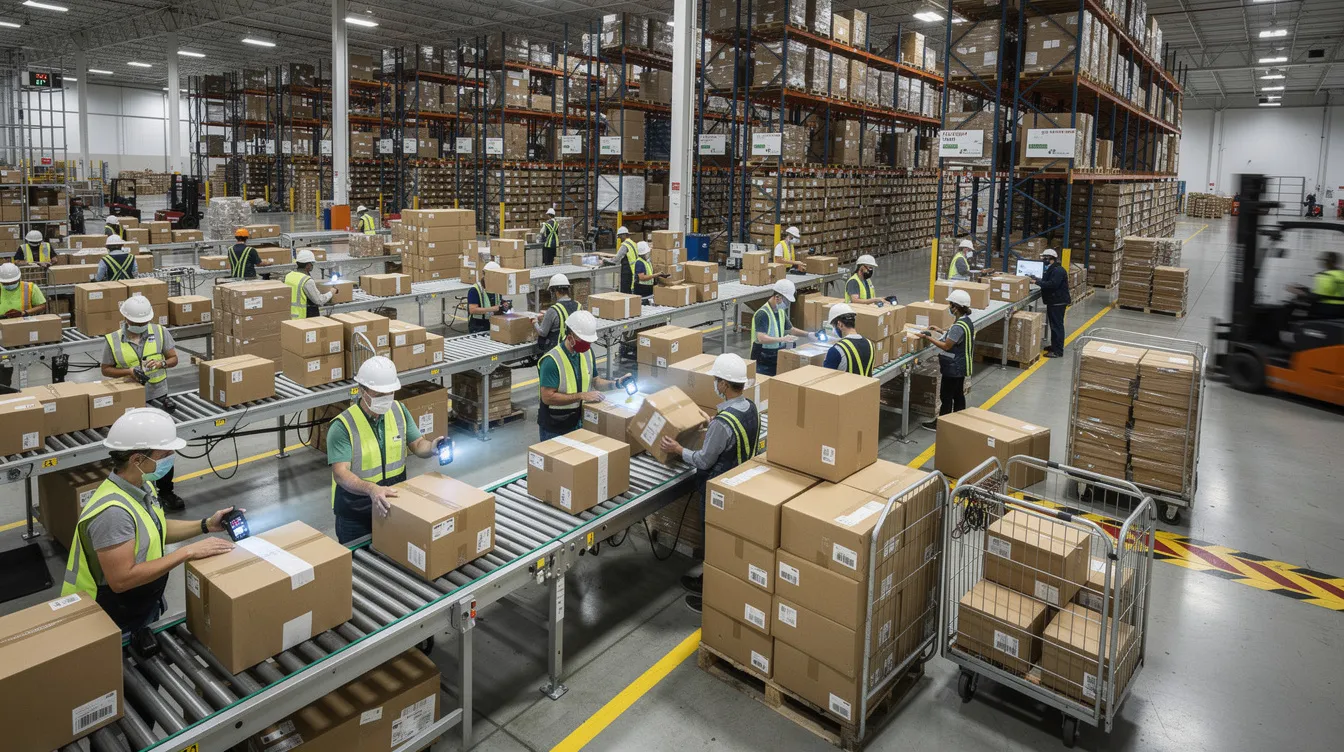
Contrast two outcomes. One brand rigidly built around the "final" forecast and missed SLAs when volume spiked. Another designed their fulfillment process to flex 30 to 40% above plan without sacrificing accuracy or ship speed. Same market conditions, different results. Ineffective preparations during peak seasons lead to increased operational costs, and in some cases, permanent customer loss.
The thesis for this article: peak season success in 2026 and 2027 will come from operational resilience and fulfillment readiness, not from betting everything on a single demand forecast. ShipNetwork's perspective here draws on 20-plus years of running ecommerce fulfillment through multiple peak seasons across apparel, health and beauty, supplements, pet products, and more.
Peak Seasons, Key Dates, and Where the Real Risk Lives
Peak season typically runs from Q4 through early Q1, but the risk window is wider than most operations teams plan for. Back-to-school demand ramps in mid-July 2026. Supplements and wellness brands see a January spike driven by New Year resolutions. And the core Q4 peak includes a set of key dates that each stress different parts of the fulfillment operation.
The risk profiles differ. Black Friday and Cyber Monday stress systems and carrier capacity. Early December stresses fulfillment speed and inventory positioning. Late December and early January stress returns workflows. Identifying potential supply chain disruptions early can help mitigate risks during each of these windows.
Ecommerce operations teams should have their peak season readiness plan finalized by late September 2026 and enter "stability mode" by early November, with no major system changes or process experiments. For brands working with a fulfillment partner, that calendar should be jointly reviewed with their 3PL account team by August or September. Start planning peak season 90 to 120 days early to give yourself enough runway.
Why Forecast Accuracy Is the Wrong Thing to Optimize For
Demand forecasting helps estimate expected sales volumes by product and location. It is valuable. But it is an input to the operation, not a substitute for one. Even sophisticated forecasts miss during peak demand and promotional events. Research on promotional demand forecasting found that forecast error during promotional windows ranged from 30% to 140% of predicted volume for some product categories.
The reasons are structural. Last-minute influencer campaigns shift volume overnight. Channel mix changes, like a spike on Amazon versus Shopify, redistribute demand in ways historical data cannot predict. Supplier delays compress selling windows. Carrier surcharges change customer behavior mid-campaign. Ecommerce businesses should model demand at the channel level, but even then, the forecast will be off by a meaningful margin during peak periods.
Here is what a "small" forecast error actually looks like in the warehouse. A brand running at capacity with zero headroom gets hit with 15 to 20% more volume than planned. Warehouse labor cannot scale fast enough. Order backlogs build. Walking time between pick locations increases as temporary inventory staging creates congestion. Customer experience degrades. Accurate demand forecasts and sufficient inventory are critical for peak readiness, but the operation still needs to absorb the gap. Sales forecasting helps avoid overbuying and stockouts, yet operations must be built for a range of outcomes, not only the median scenario.
The real optimization target should be operational elasticity: the ability to handle a realistic range of outcomes. ShipNetwork designs its fulfillment network to absorb significant variance from forecasts without carving out exceptions to its core SLAs.
What Peak Season Fulfillment Readiness Actually Means
Peak season fulfillment readiness includes inventory planning, labor management, and technology testing, but those need to be defined in concrete terms a COO or Head of Operations can measure. Readiness breaks into four core components.
Capacity headroom. A peak-ready operation should sustain 30 to 40% above planned daily volume for multiple consecutive days without order accuracy dropping or missing same-day and next-day fulfillment commitments. Businesses must prepare their supply chain to handle high order volumes during peak seasons. Building a scalable fulfillment network is what makes that possible.
Labor flexibility. The ability to spin up more workers or shifts within 24 to 48 hours, supported by cross-training, standardized SOPs, and simplified onboarding time for seasonal workers. Warehouse capacity needs to adjust through hiring temporary workers or cross-training employees already on the floor.
Inventory positioning. Inventory should be positioned where it can ship quickly to ensure fulfillment speed. That means the right SKUs in the right fulfillment centers before demand surges, using distributed inventory across multiple warehouses to shorten shipping zones. Pre-position inventory closer to high-demand regions before peak to protect 1 to 2 day delivery even when carriers are strained.
Communication and information flow. Clear escalation paths, real time inventory visibility into throughput and backlogs, and a fulfillment partner that understands your promotional calendar before November. Fulfillment strategies must align across sales and operations to avoid capacity issues during promotions.
Stress Testing Your Ecommerce Operations Before Peak Demand Hits
Conducting stress tests on fulfillment systems helps identify potential bottlenecks before peak demand hits. A stress test should simulate Black Friday-level order loads across the entire ecommerce stack: storefront, OMS, ERP, WMS, and 3PL integrations, well before November 2026.
What to test specifically:
- Order creation at 5 to 10x normal hourly rate
- API throughput to and from the fulfillment partner
- Inventory sync timeliness under load
- System behavior under carrier or 3PL API timeouts
Set a target such as handling 1,000-plus orders per hour for several consecutive hours without degraded performance, data mismatches, or manual intervention. Automating workflows is essential for handling increased order volumes at this scale. Monitoring fulfillment metrics daily is vital during peak seasons to ensure operational efficiency. For context, brands like Hype handle over 3,000 orders a day during peak season, so your systems need to match your ambition.
Create and validate failure playbooks. What happens if an integration queue backs up? If a warehouse hits temporary capacity limits? If a promotion overperforms on a Saturday night? ShipNetwork supports peak readiness by working with brands to run test volumes and validate integrations before Black Friday.
Designing Capacity, Labor, and Inventory for Peak Season Success
This is where peak season preparation moves from planning to execution. Three levers matter most: capacity planning, labor strategy, and how you manage inventory.
Capacity. Model multiple volume scenarios: baseline, plus 20%, plus 40% versus last year. Confirm that your fulfillment network can physically process those order counts within existing SLAs. Average pick time per order is essential for efficiency here, because small inefficiencies in normal periods become major constraints at scale. Labor cost per order helps assess operational efficiency across scenarios. Using multi-channel strategies can enhance efficiency in handling peaks and returns during busy seasons.
Labor. Cross-trained associates provide effective surge protection during peak. Document standard operating procedures to ensure consistency during peak, and reduce walking time in pick paths before volume ramps. Warehouse labor plans should include pre-approved agreements with staffing agencies for Q4 2026, and the existing workforce should be cross-trained across functions by October. Standardized processes reduce errors and improve consistency during peak.
Inventory. Lock key purchase orders for core SKUs by late August or September 2026. Effective inventory optimization prevents costly stockouts and dead stock during peak seasons. Communication with carriers should clarify expected volumes and service levels ahead of peak seasons to avoid delays. ShipNetwork's nationwide footprint allows brands to forward-position available inventory closer to demand centers before peak, improving both cost and delivery times when carrier networks are congested.

The Dedicated POD Advantage When Your Forecast Is Wrong
A shared account rep managing 200 clients has no context for your brand's specific peak patterns when volume spikes. A dedicated POD, a small specialized team, that has managed your brand through previous peak seasons already knows your SKU velocity, geographic demand concentration, and how your volume actually behaves versus how it is projected.
That context drives speed. A POD can proactively add labor, reallocate pick faces, or rebalance inventory across facilities when real-time demand exceeds the plan. Contrast this with a 3PL model where your brand is one of hundreds, leading to slower responses when your Black Friday promotion overperforms or a flash sale drives unexpected volume on a specific product bundle. Many operations suffer during peak season surges because their fulfillment partner treats over-performance as an exception rather than something to plan for.
ShipNetwork's operations teams operate in this contextual, POD-style model, collaborating with clients ahead of and during peak to adjust to what is actually happening. Planning ahead with a team that knows your account is fundamentally different from filing a support ticket during a busy peak season.
What SLAs That Hold Through Peak Actually Require
Customer expectations peak during Black Friday and holiday seasons. SLAs that collapse under load are not SLA failures. They are evidence that the SLA was never designed for peak fulfillment in the first place.
A meaningful peak-season SLA includes:
- Fulfillment speed commitments with no peak-season exceptions
- Explicit order accuracy guarantees (order accuracy rate is a crucial warehouse KPI)
- On-time ship rate commitments (on-time ship rate measures fulfillment reliability during peak seasons)
- Documented escalation paths defined before November
- Carriers that have secured transportation capacity to handle increased demand
Many providers quietly relax service levels during peak or include contractual carve-outs for Q4, which leaves brands exposed just when it matters most. ShipNetwork's 1-day fulfillment SLA and 100% order accuracy guarantee are designed to hold through peak, not be suspended during it. Review your current 3PL contracts for fine print that weakens SLAs around Black Friday, Cyber Monday, and December shipping cutoffs.
How to Evaluate Your Fulfillment Partner's Peak Season Readiness
Before committing to next peak season with any provider, ask direct questions. Evaluate fulfillment partners' capacity to scale during peak season with specifics, not generalities.
Accuracy and speed:
- What is your committed accuracy rate during peak and is it contractually backed?
- What was your actual accuracy during last peak?
Labor and capacity:
- How does your labor model scale when my volume exceeds forecast by 30 to 40% for multiple days?
- What are your daily throughput limits at the facilities where my inventory is stored?
- Can you increase throughput without proportional increases in headcount through warehouse automation?
Inventory and planning:
- Who is responsible for recommending how I manage inventory across your network before peak?
- How early do you need my buy and allocation plans?
- How often do you review my forecast and promotional calendar with me?
Escalation:
- What is the documented escalation process if something goes wrong on Black Friday?
- Who is on-call for my account during weekends and holidays?
- How quickly can you implement a contingency plan if a facility is temporarily constrained?
ShipNetwork welcomes this level of scrutiny. Use these questions whether you are evaluating a new 3PL or auditing your existing partner ahead of peak season 2026 and 2027.
Protecting Customer Experience When It Matters Most
Peak season fulfillment can elevate customer experience significantly, or destroy it. Success is ultimately measured by on-time delivery, accurate orders, clear communication, and painless returns.
Predictable fulfillment performance during peak reduces customer service contacts, negative reviews, and churn. This matters most in November and December, when many brands acquire a disproportionate share of new customers. Automated notifications improve customer satisfaction during peak periods. Timely order status communication, including tracking number updates, reduces inbound support volume so your team can focus on exceptions instead of routine inquiries.
A well-drafted reverse logistics process is crucial for managing post-peak returns swiftly and efficiently. Planning for returns is essential, as peak demand often creates a spike in returns. Return rates for some categories can jump dramatically in January, with Sendcloud reporting that post-holiday return rates may climb from roughly 23.5% to nearly 44.5% for some brands. Average return processing time indicates post-sale efficiency and directly affects how quickly refunds hit customer accounts.

ShipNetwork's distributed network and shipping optimization via Xparcel help maintain fast, reliable delivery windows during carrier congestion by dynamically routing parcels to the best-performing carrier option. A smooth first holiday purchase and returns processing experience makes it far more likely that a shopper will buy again in Q1 and Q2 of 2027. Analyzing performance metrics post-peak enhances future customer experience through continuous improvement. Conduct post-peak debriefs to improve future performance across every function.
Peak Season Readiness with ShipNetwork
ShipNetwork supports ecommerce operations before, during, and after peak season with capabilities built for the pressure of Q4.
- 1-day fulfillment SLA on order fulfillment services that holds through peak
- 100% order accuracy guarantee with no seasonal carve-outs
- Nationwide network reaching 98% of U.S. customers in 1 to 2 days via ground
- Platform integrations with Shopify, WooCommerce, Amazon, and custom APIs
- Specialized services including kitting and bundling for holiday gift sets, subscription box fulfillment, and streamlined returns management
Between July and October, ShipNetwork works with brands to align on forecasts, promotional calendars, inventory positioning, and carrier strategies. The goal is to avoid last-minute scrambling in November and identify bottlenecks before they become problems.
Ready to prepare for your next peak season? Request a peak season readiness consultation or explore the 2025 Peak Season Fulfillment Scorecard to benchmark your current operations.
Frequently Asked Questions
These questions address common, practical concerns ecommerce brands raise when planning for peak season fulfillment readiness.
When should I start planning peak season fulfillment for 2026 and 2027?
Serious planning for Q4 2026 should begin by July or August 2026, with demand scenarios, inventory buys, and high-level labor plans drafted no later than early September. Start planning peak season 90 to 120 days in advance. Lock key peak inventory allocations and confirm warehouse management and carrier capacity with your fulfillment partner by late October 2026, making only minor adjustments after November 1. System-level changes and new integrations should be completed and fully tested by October so the holiday season can focus on stability and execution.
How much extra capacity should I build into my peak plan?
Aim for at least 30% capacity headroom above your "most likely" forecast scenario during core peak periods like Black Friday through Cyber Monday and the final shipping week before Christmas. Model an upside scenario of 40 to 50% above plan for a few specific peak days, particularly if you rely on paid social, influencers, or new product launches that can spike unpredictably. This headroom can come from distributed inventory, flexible labor, extended shifts, and a fulfillment partner that proactively reserves peak-season capacity.
What should I do differently with inventory for peak season?
Peak seasons require deeper stock on proven winners and gifting SKUs, front-loaded into the right fulfillment centers before peak demand hits, rather than relying on frequent in-season replenishment. Work with your fulfillment partner to analyze historical velocity and regional demand to pre-position inventory across multiple warehouses. Have a clear post-peak plan for excess inventory: targeted promotions in January, bundling strategies, or channel-specific sales so warehouse space is freed up early in 2027.
How do I know if my current 3PL can support my peak season goals?
Review your 3PL's performance from the last peak. Did they meet SLAs on Black Friday weekend, during early December, and through the January returns period, or were there unplanned exceptions? Ask direct questions about their 2026 to 2027 peak planning: reserved capacity for your account, staffing models, inventory recommendations, escalation hierarchy, and any SLA carve-outs for Q4.
What changes should I avoid making right before peak season?
Avoid launching major new ecommerce platforms, overhauling your ERP, or switching core fulfillment providers between October and December 2026 unless absolutely necessary. Do not introduce untested promotional mechanics or discount structures in late November that could confuse inventory counts or order routing rules. Lock critical manual processes and systems by early November, focusing on monitoring, minor tweaks, and firefighting playbooks rather than large-scale operational experiments during peak.