Best Ecommerce Fulfillment Service: Complete Guide for Growing Online Stores
The best ecommerce fulfillment service isn't the biggest name in the industry. It's the one that fits how your business actually operates today while giving you room to grow.
For most small and mid-market online retailers, that means finding a fulfillment partner with transparent pricing, a reliable integration with your ecommerce platform, a nationwide fulfillment network that gets customer orders delivered in one to two days, and an account team that knows your business by name - not by ticket number.
This guide breaks down what to look for, what to avoid, and how to evaluate the options that matter most based on your growth stage. Whether you're shipping 200 orders a month or 20,000, the framework here will help you make a sharper decision.
What This Guide Covers
- Direct answer: The best fulfillment service fits your current operations while supporting growth
- Core criteria: Transparent pricing, reliable platform integration, nationwide 1-2 day delivery, and dedicated account support
- Evaluation framework for different business growth stages
- Specific questions to ask providers and red flags to avoid
What an Ecommerce Fulfillment Service Actually Does
Ecommerce fulfillment is valued at over $140 billion industry-wide, and it encompasses every physical step between a customer clicking "buy" and that package arriving at their door. If you're evaluating fulfillment services for the first time, here's what the entire process actually involves.
Receiving and Inventory Storage
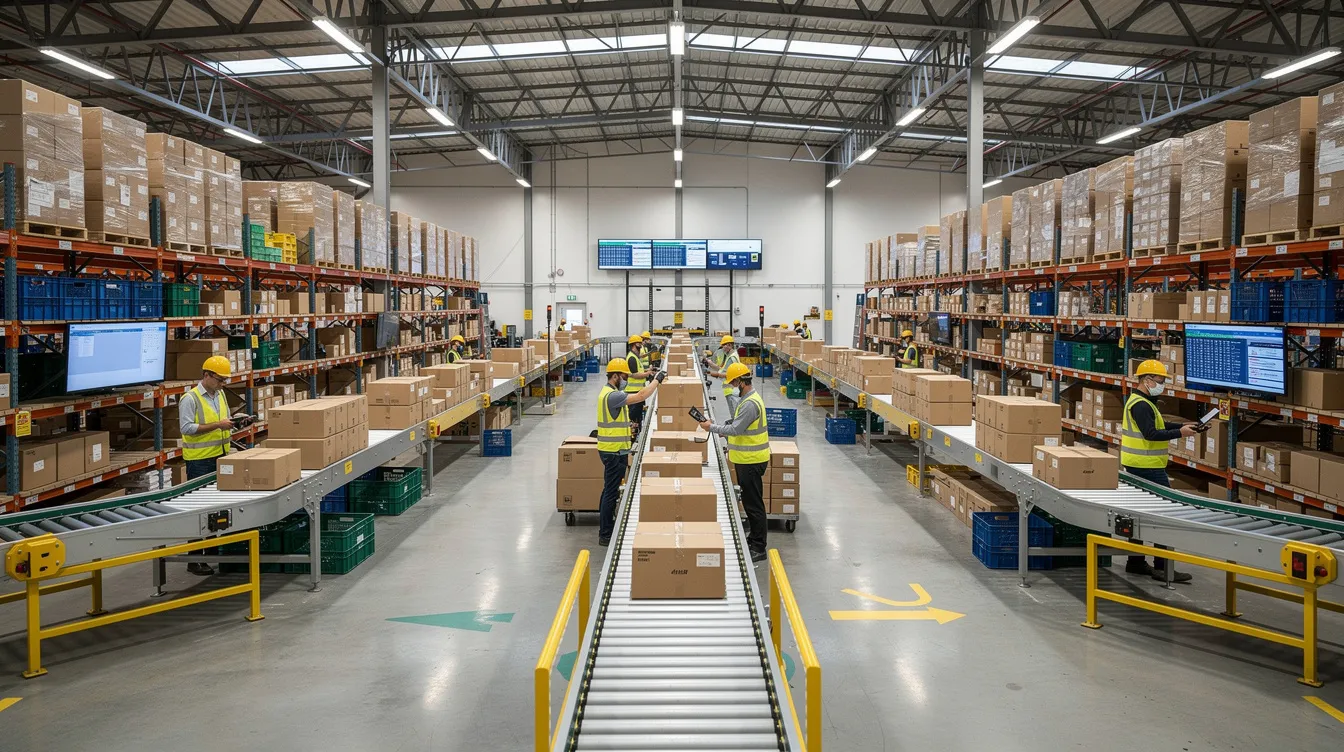
Your inventory arrives at the provider's fulfillment centers - by pallet, loose cartons, or container. The provider unloads, inspects, labels if necessary, and places products into designated storage space (bins, shelves, or pallet racks). This step - called "dock-to-stock" - sets the pace for everything that follows. Top providers complete it within 24 hours. Slower operations take 48 hours or more.
Pick and Pack Operations
When an order hits the system, warehouse staff retrieve the correct items from inventory (picking) and package them for shipment (packing). Ecommerce fulfillment includes picking, packing, and shipping orders - and each step ideally involves barcode scanning to catch errors before the package leaves the building. This is the heart of the ecommerce fulfillment process.
Shipping Coordination
The fulfillment provider selects the best carrier for each package based on weight, dimensions, destination, and delivery speed. Strong providers work with multiple shipping carriers - both national and regional - because using multiple carriers can lower shipping costs and improve delivery speed simultaneously.
Returns Management
Returns management includes receiving and processing returned items, inspecting condition, and restocking or disposing as appropriate. With ecommerce return rates running 15-30% in many categories, this step directly impacts your margins and customer satisfaction.
Technology Integration
Fulfillment software automates inventory and order management processes, syncing your online store with the warehouse in real time. Real-time inventory tracking improves order accuracy and efficiency while preventing overselling. The best providers offer native integrations with platforms like Shopify, Amazon, and WooCommerce - not just third-party middleware.
Third party logistics providers - commonly called 3PLs - handle warehousing, order processing, and shipping for businesses, bundling all of these functions under one roof so you don't have to manage them in-house.
Five Things That Separate Strong Fulfillment Partners from Weak Ones
Not all ecommerce fulfillment services deliver the same results. These five factors create the widest performance gap between providers - and they're the ones most brands underweight during evaluation.
Order Accuracy Rate
Order accuracy is the single most revealing metric of a fulfillment company's operational quality. Manual pick and pack operations typically hit 96-98% accuracy. Warehouses using barcode scan-to-verify workflows push that number to 99.5-99.9%. Top-tier facilities achieve 99.8% or higher consistently.
The gap between 97% and 99.5% might sound small. It isn't.
At 97% accuracy and 10,000 orders per month, you're shipping 300 wrong orders. Each one generates a return, a customer service interaction, replacement shipping costs, and - most damaging - lost trust. Research shows 48% of shoppers abandon a retailer permanently after receiving the wrong item.
3PLs can improve order accuracy to over 99% with automation, scanning verification, and systematic quality control. When evaluating a fulfillment provider, ask not just for their accuracy rate but how they define "error" and what financial accountability exists when mistakes happen. A provider willing to back their accuracy claim with credits or free re-ships is telling you something about their confidence - and their systems.
Delivery Speed and Network Coverage
Delivery speed drives conversions and retention. But fast shipping doesn't have to mean expensive air shipping.
With strategically placed fulfillment centers, 98% of the U.S. population can be reached within 1-2 days via ground shipping. That's the benchmark that top ecommerce fulfillment providers target - and it's achievable through a distributed fulfillment model with multiple warehouse locations across key regions.
Distributed inventory reduces shipping costs and transit times because packages originate closer to customers, crossing fewer shipping zones. Shipping costs can be reduced by 15-40% with strategic inventory distribution - a meaningful savings when you consider that over 90% of shoppers abandon carts due to high shipping costs.
Efficient fulfillment networks can significantly reduce shipping delays, but only if the provider's warehouse locations actually match where your customers live. Ask for a population coverage map, not just a list of cities.
Pricing Transparency
Fulfillment pricing involves multiple cost buckets: receiving, inventory storage, pick and pack, packaging materials, shipping, surcharges, returns processing, and account management. Hidden costs show up most often in receiving charges, packaging, and minimums.
Here are typical 2026 ranges for reference:
Fulfillment providers offer bulk discounted rates for shipping as your volume grows. 3PLs can reduce shipping costs through bulk shipping rates negotiated across their entire client base - leverage you'd never get on your own. But you need to see the full fee structure upfront, not just the pick and pack line item.
Clear fulfillment pricing means itemized billing that shows exactly what you're paying for at each step, with defined thresholds for volume discounts and no surprise surcharges.
Platform Integration Quality
Your fulfillment partner needs to sync cleanly with every sales channel you operate. That means native connections to Shopify, Amazon, WooCommerce, and whatever marketplaces you sell through.
Native integrations - where the provider has built a direct connection with the ecommerce platform - tend to be more reliable and faster than third-party connectors. Real-time or near-real-time inventory updates prevent overselling. Order data should flow automatically without manual CSV uploads or human intervention.
When comparing providers, look at their integration portfolio and ask specifically: which connections are native, which use middleware, and what's the typical latency between an order being placed and the warehouse receiving it? For multi channel fulfillment across platforms like Amazon, Walmart, and your own online store, integration quality becomes the difference between smooth operations and constant firefighting.
Account Support Model
When something breaks - and eventually, something will - the support model determines how fast it gets fixed.
A dedicated account manager who knows your products, your seasonal patterns, and your packaging requirements resolves issues faster than a shared support queue where you explain your business from scratch every time. US-based support teams add another layer of responsiveness, especially for time-sensitive problems during business hours.
Many fulfillment service providers offer tiered support: self-service dashboards for routine questions, with escalation paths for exceptions. That works for basic tracking inquiries. But for inventory discrepancies, shipping errors during a product launch, or customer complaints about damaged goods, you need a person who picks up the phone and owns the problem.
Ask about support SLAs - response times by channel, resolution times for priority issues, and whether your account manager has authority to make decisions or just relays messages.

What to Look For at Each Growth Stage
The best fulfillment companies aren't universally "best." They're best for a specific business profile at a specific stage. Here's a decision framework based on where you are today.
Early Stage: Under 500 Orders Per Month
At this volume, self fulfillment - managing inventory and shipping in house - might still make sense. But if packing and shipping orders is eating hours you should spend on marketing or product development, it's time to look at outsourcing fulfillment.
What matters most at this stage:
- Low minimums and flexible contracts. Month-to-month agreements with minimal setup fees. Avoid providers that require 1,000+ order minimums or 12-month commitments.
- Clean platform integration. Plug-and-play with Shopify or WooCommerce. You shouldn't need a developer to connect your store.
- Transparent pricing without hidden setup fees. You need to model your per-order cost with your actual products - weight, dimensions, SKU count - before signing anything.
- Simplicity over features. You don't need kitting, lot tracking, or EDI at this stage. You need accurate, reliable fulfillment that doesn't require babysitting.
In house fulfillment or managing your own warehouse may feel cheaper, but the hidden costs - your time, errors, slower shipping - add up fast. Many ecommerce businesses reach the outsourcing tipping point well before 500 orders monthly once they calculate the real cost of their time.
Growth Stage: 500–5,000 Orders Per Month
This is where fulfillment quality starts to directly impact revenue. You're acquiring customers faster, adding SKUs, and possibly expanding to multiple sales channels. Fulfillment models can impact shipping speed and customer satisfaction at this stage more than at any other.
What matters most:
- Proven accuracy and speed. Demand documented order accuracy rates of 99%+ and on-time shipping rates of 98%+. Get these in writing as SLAs.
- Multi-channel support. You need your fulfillment partner handling orders from your website, Amazon FBM, and potentially Walmart or other marketplaces - all from the same inventory pool.
- Dedicated account management. Biweekly or weekly check-ins with someone who proactively flags issues before they become problems.
- Scalable pricing. Volume discounts should kick in as you grow. If your per-order cost doesn't improve between 500 and 5,000 orders, something's wrong.
Hybrid fulfillment - combining in-house and outsourced fulfillment methods - can work at this stage if you have specialty products that need hands-on attention alongside standard SKUs that a 3PL handles more efficiently.
Scale Stage: 5,000+ Orders Per Month
At scale, you need a fulfillment strategy built for resilience, speed, and accountability. The stakes are higher: a bad fulfillment week can mean thousands of unhappy customers and a cascade of negative reviews.
What matters most:
- Distributed fulfillment network. Multiple fulfillment centers across strategic regions reduce transit times and provide redundancy during peak surges. Micro-fulfillment centers support same-day delivery expectations in dense markets.
- SLA accountability with financial consequences. Written contracts that specify accuracy, on-time ship rates, dock-to-stock times, and return processing windows - with service credits when targets are missed.
- Enterprise integrations and custom API capabilities. Your ecommerce tech stack is more complex now. You need custom API access, EDI for B2B, and compliance-ready labeling.
- Retail compliance capability. If you're selling into Target, Nordstrom, or other retailers, your provider must handle routing guides, specific packaging and labeling rules, and case/pallet picks.
At this volume, warehouse networks and geographic coverage become non-negotiable. A single-warehouse provider will penalize a significant chunk of your customers with longer transit times and higher shipping costs.
Essential Questions to Ask Any Fulfillment Provider
Before signing with any ecommerce fulfillment company, get clear answers to these six questions. Evaluate providers based on a 25-point rubric if possible - but these six cover the ground that matters most.
1. What is your guaranteed order accuracy rate, and what happens financially when errors occur?
You want a specific number (not ">99%") and a defined remedy - credits, free re-ships, or refunds. Ask how "error" is defined: does it include wrong SKU, wrong quantity, wrong variant, damaged items, or missing components? A provider offering financial accountability for accuracy is telling you they've invested in systems that prevent errors, not just detect them.
2. What percentage of the US population can you reach in 1-2 days via ground shipping?
98% of the U.S. population can be reached within 1-2 days via 3PLs with distributed networks. Ask for the coverage map, not a marketing claim. Request test shipments to addresses in different regions so you can verify transit times with real data.
3. How does your pricing structure change as my order volume grows?
Understand the full cost structure including hidden fees. Ask about volume tiers, shipping discounts, peak season surcharges, and whether packaging materials are included or billed separately. Model your total fulfillment costs at current volume and at 2x and 5x to see how pricing scales.
4. Do you provide a dedicated account manager or a shared support model?
Choose a provider with experience in your industry and a support model that matches your operational complexity. A dedicated account manager matters more as your order volume grows, your SKU count expands, and your channel mix gets more complex.
5. What does your onboarding process look like and how long does it take?
Dock-to-stock time - the window between your inventory arriving and being available for orders - ranges from under 4 hours at the best operations to 48+ hours at average ones. Understand the onboarding timeline, including integration setup, inventory receiving, and the first live order.
6. Which platform integrations do you support natively vs. through third-party connectors?
Check for integration capabilities with your ecommerce platform specifically. Native integrations with Shopify, Amazon, WooCommerce, and your other sales channels should be table stakes. Third-party connectors add latency, complexity, and additional points of failure. Assess the provider's on-time delivery rates and SLAs as part of this conversation.
ShipNetwork: A Proven Example of Excellence
There are many fulfillment providers in the market. Here's why ShipNetwork consistently delivers for growing ecommerce brands - backed by specific, measurable proof points.
Why ShipNetwork Stands Out
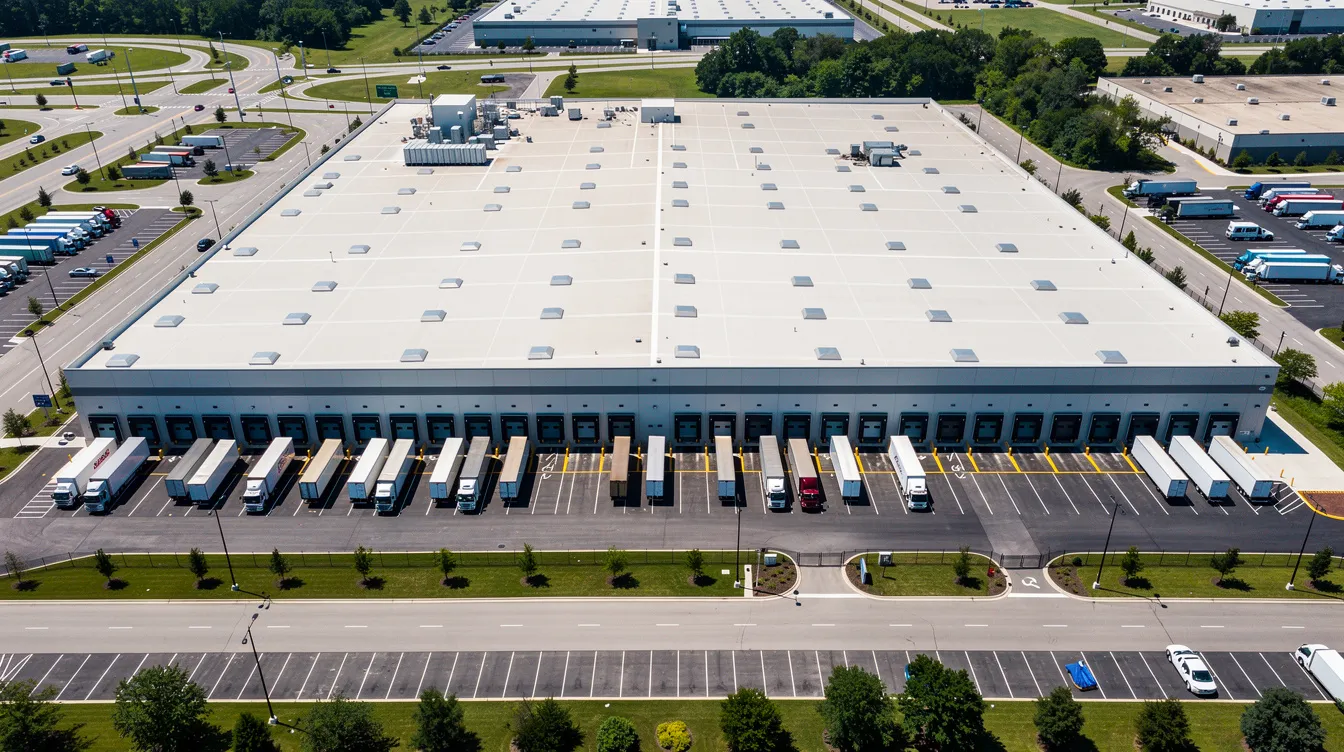
ShipNetwork operates 10 strategically located fulfillment centers across the U.S., covering 98% of the U.S. population within 1-2 days via ground shipping. That is the operational reality, powered by the company's proprietary logistics infrastructure.
The numbers that define the service:
- 99.98% order accuracy rate - verified through client results, not internal estimates. This exceeds industry top-tier benchmarks of 99.5-99.9% by a measurable margin.
- 12-hour click-to-ship standard with a 1-day fulfillment SLA - orders are processed and ready for carrier pickup within one business day.
- 100% Order Accuracy Guarantee - backed by financial accountability. If ShipNetwork makes an error, it gets corrected at their cost.
Best For
ShipNetwork is built for growing ecommerce brands shipping 5,000+ orders per month that need:
- Reliable 1-2 day ground delivery nationwide without paying air shipping rates
- A dedicated account manager (US-based) who knows their business
- Scalable fulfillment operations that grow with them - not against them
- Multi channel fulfillment across DTC, marketplace, and retail channels
Key Strengths
Client retention speaks volumes. ShipNetwork maintains a 97% client retention rate with an 8-year average client relationship. In an industry where switching providers is common and relatively easy, that kind of loyalty only comes from consistent performance.
Broad integration portfolio. Native integrations with Shopify, Amazon, WooCommerce, and 40+ platforms mean your ecommerce order fulfillment flows automatically - no manual intervention, no delayed syncs.
KNCT shipping optimization. ShipNetwork's proprietary KNCT technology analyzes weight, dimensions, origin, destination, and carrier performance to select the optimal carrier and rate for every package. KNCT optimizes 100% of shipping volume for cost efficiency, and it optimizes shipping volume for cost and delivery speed simultaneously. Three tiers - Priority (1-3 day), Expedited (2-5 day), and Ground (3-8 day) - give you control over the speed-cost tradeoff.
Value-added services. Beyond standard order fulfillment services, ShipNetwork provides kitting and bundling, subscription box fulfillment, branded packaging and custom packaging options, lot tracking, and temperature-controlled storage for regulated products.
Returns management is handled with the same operational rigor. A smooth returns process enhances customer satisfaction and retention, and fulfillment providers often offer prepaid return labels for convenience - ShipNetwork builds this into its fulfillment support model.
Proven Results
The Andie Swim case study demonstrates what this looks like in practice: a fast-growing DTC and retail brand achieving 99.98% order accuracy while scaling across multiple channels. That level of precision in fulfillment - the power of order accuracy - translates directly into fewer returns, lower customer service costs, and stronger lifetime value.
ShipNetwork's distributed network delivers consistent 1-2 day delivery performance across the continental U.S. and parts of Canada, with scalable operations that support brands from growth stage through enterprise. For ecommerce brands that need a reliable partner built for performance, not just promises, the track record speaks clearly.
Red Flags to Watch For When Evaluating Providers
Many fulfillment providers look similar on their websites. These warning signs help you separate the best fulfillment service from the ones that will cost you customers.
Hidden receiving fees not disclosed upfront. Some providers bill receiving by the hour with high minimums. If your goods require labeling, quality inspection, or special handling, expect additional charges unless you've confirmed otherwise. Always get receiving fees and dock-to-stock SLAs in writing before sending inventory.
Vague accuracy claims without financial accountability. A provider that says ">99% accuracy" without defining what counts as an error - and without offering credits or remediation when mistakes happen - is giving you a marketing claim, not a service guarantee. The best order fulfillment companies stand behind their numbers.
Self-service-only support models. Chat widgets and knowledge bases are fine for tracking updates. They're insufficient when inventory goes missing, a product launch needs expedited receiving, or a shipping error affects hundreds of orders. If there's no path to a real person who can make decisions, you'll feel the pain at the worst possible time.
Long-term contracts without reasonable exit clauses. Performance should earn your business, not a contract clause. Look for providers willing to offer month-to-month terms or contracts with clear exit provisions tied to SLA violations.
Unclear fee structures requiring custom quotes for basic information. If you can't get a rate card without a 45-minute sales call, it's usually because the pricing is complex enough to surprise you later. Transparency matters from the first conversation.
No proof of actual delivery speed or network coverage claims. If a provider claims "2-day ground everywhere," ask for the coverage map, carrier transit data, and references from clients in regions far from their fulfillment centers. Returns management can be complex with distributed fulfillment networks - make sure the provider can prove their claims with data, not slide decks.
Key Terms You Should Know
Understanding these terms helps you evaluate many fulfillment providers on equal footing and ask sharper questions during the sales process.
Pick Rate The number of items picked per hour in the warehouse. Higher pick rates indicate more efficient fulfillment operations - but only if accuracy stays high. Speed without precision creates more problems than it solves.
Order Accuracy Rate The percentage of orders shipped without errors (wrong SKU, wrong quantity, wrong variant, damaged items, missing components). Manual operations typically hit 96-98%. Scan-verified operations achieve 99.5-99.9%+. This is the single most important metric for evaluating fulfillment quality.
Click-to-Ship Time The hours between an order being placed in your store and the package departing the warehouse. Same-day dispatch (for orders before cutoff) is the standard for strong providers. Cutoff times of 2-3 PM are average; the best fulfillment companies extend to 5-6 PM.
Distributed Fulfillment Operating multiple fulfillment centers across geographic regions to reduce average transit zones, lower shipping costs, and enable faster delivery. This is the architectural foundation of any ecommerce fulfillment strategy that targets 1-2 day ground delivery nationwide.
SLA (Service Level Agreement) A contractual document defining performance guarantees - accuracy rates, on-time ship percentages, dock-to-stock times, return processing windows - with defined consequences (credits, refunds) when targets are missed.
WMS (Warehouse Management System) The software backbone of a fulfillment center. Warehouse management systems handle inventory tracking, pick verification via barcode or RF scanning, slotting optimization, and order management. A strong WMS is what enables 99%+ accuracy at scale.
SKU (Stock Keeping Unit) A unique identifier for every product variant (size, color, configuration). Higher SKU counts increase operational complexity - more storage slots needed, higher mis-pick risk, more receiving and inventory management overhead.
Fill Rate The percentage of orders fulfilled completely from available inventory without backorders or split shipments. A high fill rate depends on accurate inventory management and demand forecasting upstream - not just warehouse execution.
For additional context on fulfillment models - including dropshipping (which allows sellers to fulfill orders without holding inventory), global fulfillment through international fulfillment centers, and Fulfillment by Amazon (FBA) - explore our complete 3PL guide. Third-party logistics (3PL) providers handle storage and shipping for businesses across every model, and the right third party logistics company depends on your product, your customers, and your growth trajectory.

Choose the Right Fulfillment Partner for Your Growth
The best ecommerce fulfillment provider isn't a universal answer. It's the third party fulfillment partner whose operational model matches your order volume, product profile, customer expectations, and growth path.
Here's the decision framework in summary:
Among many order fulfillment companies in the market, prioritize proven performance over the lowest price. The cheapest provider is rarely the most reliable partner - and unreliable fulfillment costs far more in lost customers, negative reviews, and operational firefighting than a slightly higher per-order fee.
The entire fulfillment process - from storing inventory to the final mile - shapes your customer experience. A great fulfillment strategy doesn't just reduce shipping costs. It builds the trust that turns first-time buyers into repeat customers and improves customer satisfaction across every touchpoint.
Ready to see what reliable fulfillment looks like?
- Request a custom quote tailored to your volume and product profile
- Explore ShipNetwork's order fulfillment services in detail
- Read how Andie Swim scaled multi-channel fulfillment with 99.98% accuracy
Your fulfillment solutions should match where your business is headed - not just where it is today.
FAQs
For small ecommerce businesses shipping fewer than 500 orders per month, the best fulfillment service prioritizes low minimums, simple rate cards, clean native integrations with your store platform, accuracy rates of at least 98%, and flexible month-to-month contracts. Avoid providers that charge high setup fees or require long commitments. Many fulfillment services cater to high-volume brands - make sure your prospective provider actually supports your order volume without treating you as an afterthought.
Several signals point to the right time for outsourcing fulfillment: your shipping costs and transit times are rising, packaging and returns are eating into margins, hiring warehouse staff costs more than the fulfillment itself, customers are complaining about speed or accuracy, or you simply can't scale your shipping process internally as volume grows. Outsourcing to a 3PL can save time and operational costs - freeing you to focus on marketing, product development, and growth rather than packing and shipping orders in your garage or own warehouse.
Start with the five factors covered in this guide: order accuracy rate (99%+), delivery speed and network coverage (1-2 day ground reach), pricing transparency (no hidden fees), platform integration quality (native sync with your ecommerce platform), and account support model (dedicated account manager vs. shared queue). Beyond that, look for a provider with experience in your product category, a proven track record with similar brands, and SLAs that include financial accountability. The best order fulfillment companies earn their reputation through measurable performance, not marketing budgets.
Fulfillment costs vary by provider, product characteristics, and volume. Typical ranges: pick and pack runs $2-$3 for the first item with $0.30-$0.75 for additional items. Storage costs $18-$25 per pallet per month or $0.45-$0.75 per cubic foot. Receiving charges run $25-$45 per pallet. All-in fulfillment cost per domestic B2C order (before shipping) typically falls between $3 and $8. Shipping can double the total depending on zones and package weight. Fulfillment by Amazon FBA offers fast shipping through Amazon's network but carries its own fee structure including long-term storage fees and referral charges. Third party logistics (3PL) providers generally offer more flexibility in fulfillment pricing.
Nearly every major U.S. 3PL integrates with the Shopify fulfillment network and broader Shopify ecosystem. The key difference is how smooth the connection is. Some providers - including ShipNetwork - offer native shopping cart integrations that sync orders, inventory, and tracking data in real time. Others rely on middleware (like third-party connectors) that can introduce latency and error rates. Ask specifically whether the integration is native or third-party, and check for Shopify-specific capabilities like automated tracking updates and inventory sync.
For most ecommerce brands, 99%+ is acceptable, 99.5%+ is strong, and 99.8-99.9% is top-tier. Anything below 95% represents significant operational risk - at that level, you're generating enough errors to damage your customer experience and review profile. AI optimizes inventory forecasting and reduces stockouts, and scan-verified picking workflows push accuracy above 99.5%. Effective returns management helps reclaim revenue and improve operations when errors do occur, but prevention is always cheaper than correction.
.svg)