What Makes a 3PL a True Growth Partner: Technology, Service Quality, and Accountability
The word "partner" appears in nearly every third party logistics sales pitch. Most of the time, it means nothing. A real 3PL growth partner is defined by what happens after the contract is signed - how technology, service quality, and long-term commitment hold up when your business scales, your channels multiply, and your customers expect more. This article breaks down what separates a genuine growth partner from a warehouse vendor, with specific metrics, technology requirements, and real client outcomes.
The Real Meaning of Partnership in 3PL Operations
The logistics industry uses "partnership" loosely. Operationally, it means something specific and measurable.
A dedicated account team that knows your business inside and out is the first requirement. Not rotating contacts who need to be re-educated every quarter, but people who understand your SKUs, your peak seasons, your channel compliance rules, and your packaging standards. When your account team knows that your retail orders require specific labeling and your DTC orders require branded inserts, problems get solved before they reach your customers.
Technology that provides real-time visibility into inventory and orders is the second pillar. This isn't a spreadsheet emailed at the end of the day. It's a live dashboard showing what's happening across your fulfillment operations right now - inventory levels by facility, order status by channel, carrier performance, and returns disposition. Technology enables scalability and flexibility in logistics to meet changing business needs, which is why visibility matters more as your business grows.
SLA commitments backed by financial accountability separate a partner from a vendor. An SLA without numeric thresholds and consequences is not really an SLA. A true service level agreement defines order accuracy targets, on-time shipping windows, click-to-ship benchmarks, and damage rate ceilings - with financial penalties when commitments are missed, not apologetic emails.
The final dimension: fulfillment operations that adapt as your business scales from 500 to 50,000 orders monthly without you rebuilding the relationship every time you hit a new growth stage. Logistics technology can transform 3PL providers into strategic growth partners when the infrastructure is designed for scale from the start. Nearly 90% of shippers find their 3PL relationships successful, but the ones that fail almost always break down during growth transitions.

Advanced Technology as the Foundation of Growth Partnership
The technology stack is what separates a modern 3PL growth partner from a traditional warehouse vendor. A warehouse vendor stores your products and ships them. A growth partner runs an integrated technology ecosystem that makes reliability and consistency possible at scale.
Warehouse Management Systems
Modern 3PLs utilize warehouse management systems for inventory tracking and operational analytics. A WMS with real-time inventory visibility enforces scanning at every stage - receiving, putaway, picking, packing, and shipping. It manages cycle counting, lot tracking, location control, and FIFO/FEFO logic. Cloud-based systems improve visibility of inventory, shipments, and logistics operations for businesses of every size. Without this foundation, inventory control breaks down as SKU counts and order volumes increase.
Multi-Carrier Rate Optimization
Optimizing shipping through advanced algorithms can balance cost and speed effectively. ShipNetwork's KNCT system analyzes weight, dimensions, origin, destination, and carrier performance to select the optimal carrier and rate for every package. This isn't manual rate shopping - it's automated optimization across national and regional carriers including USPS, DHL, and UPS, covering 100% of shipping volume. The result: reduced shipping costs without sacrificing transit times.
Distributed Fulfillment Networks
Distributed fulfillment networks can optimize delivery times and reduce shipping costs simultaneously. ShipNetwork operates strategically located fulfillment centers across the U.S. and Canada, reaching 98% of the U.S. population within 1–2 days via ground shipping. This logistics network eliminates the need for expedited shipping on most orders, cutting costs while meeting customer expectations.
Integration and Connectivity
API and EDI integrations allow direct connections between e-commerce stores and 3PL networks. A growth partner connects with 40+ ecommerce platforms - Shopify, Amazon, WooCommerce, BigCommerce, and major marketplaces - for smooth order synchronization. EDI connectivity is critical for retail channels, handling purchase orders, advanced shipping notifications, invoices, and regulatory compliance requirements that retailers demand.
Integration of logistics systems connects various business operations, enhancing efficiency across supply chain management. When your WMS, OMS, TMS, and billing systems share normalized data in real time, you and your logistics partner see the same reality. That direct integration is what prevents overselling, stockouts, and fulfillment errors.
Analytics and Intelligence
Real-time data analytics provide insights into inventory turnover and shipping efficiency. Predictive analytics help 3PLs identify supply chain disruptions before they occur, turning the provider into an analytics resource rather than just an execution resource. AI-driven logistics improves scalability and operational efficiency, enabling smarter decisions about inventory placement, carrier selection, and capacity planning.
Technology-driven 3PLs enhance logistics operations through automation - and that automation is what makes consistency possible when order volumes spike from 5,000 to 50,000 per month.
Superior Service Quality: Metrics That Matter and How They're Measured
Service quality in third party logistics 3PL operations is defined by key performance indicators with clear benchmarks, not vague claims.
The Metrics That Matter
Order fulfillment includes receiving, picking, packing, and shipping inventory - and every step introduces potential for error. A 3PL can improve order accuracy through automated systems that enforce verification at each stage. Automation in third party logistics improves operational efficiency and reduces fulfillment cycle times, which directly impacts customer satisfaction.
Real Client Benchmarks
Andie Swim's results with ShipNetwork demonstrate what these metrics look like in practice:
- 99.98% order accuracy across DTC orders, including peak seasons
- 99% on-time delivery within promised windows
- 12-hour average click-to-ship time
- 100% on-time retail fulfillment
- 9.7% shipping savings through carrier optimization
These aren't hypothetical. They're measured, audited, and tied to financial accountability.
Accountability vs. "Best Effort"
Fast delivery is essential, and many 3PLs offer expedited shipping options. But speed without accuracy creates returns, refunds, and brand damage. 3PLs ensure timely order fulfillment, enhancing customer satisfaction only when that fulfillment is backed by real consequences for failure.
The difference between a benchmark-based SLA and a "best effort" model is accountability. When SLA penalties exist for missed targets, the 3PL invests in the systems, staffing, and technology needed to hit those targets consistently. Advanced automation technologies can dramatically speed up order fulfillment processes, and automation can help 3PLs manage spikes in order volume without proportionately increasing labor - but only if the financial model incentivizes that investment.
Technology improves the customer experience through accurate tracking and proactive communication. When your customers know exactly where their order is and receive it on time with the right items, that's operational excellence translating directly into brand loyalty.
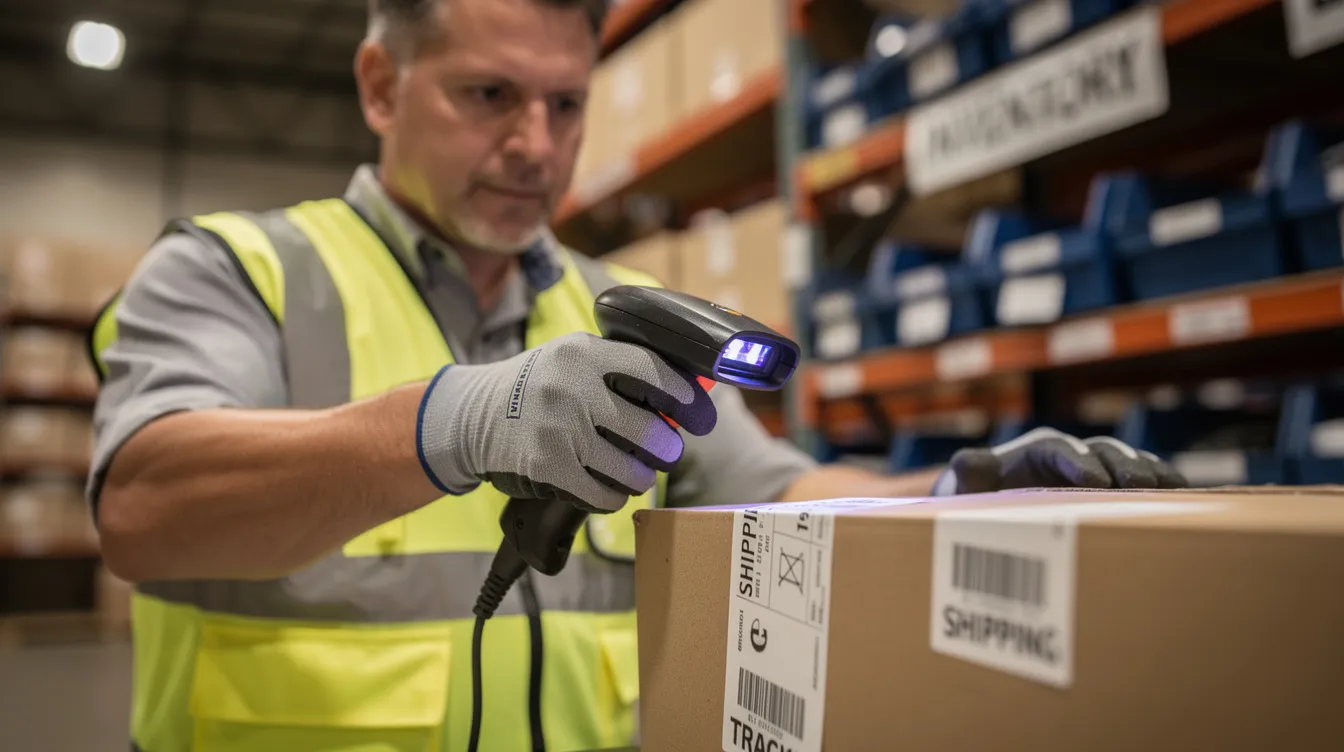
Tailoring Services to Businesses of All Sizes
A true 3PL growth partner doesn't offer a one-size-fits-all model. It serves a brand shipping 300 orders per month differently from one shipping 30,000 - not with different service quality, but with a scaled service model that fits each stage of business growth.
Scaled Service Models
3PLs provide scalable solutions for businesses of all sizes. For smaller brands, this means:
- Pay only for what you use - storage, pick/pack, shipping - without fixed overhead
- Access to the same technology stack (WMS, dashboards, integrations) that larger clients use
- No requirement to over-invest in custom integrations or minimum volumes that don't match current reality
For larger brands scaling into new markets and sales channels, it means:
- Capacity and redundancy across multiple fulfillment centers
- Retail compliance capabilities (EDI, labeling, ASN) ready to deploy
- Value added services like kitting, bundling, subscription box assembly, and lot tracking
- Dedicated account resources who understand complex supply chain operations
3PLs enable businesses to scale operations without heavy capital investment in logistics infrastructure. A scalable 3PL adapts to fluctuating market demands efficiently, whether that's seasonal demand fluctuations, product launches, or channel expansion.
Retention as Evidence
ShipNetwork's 8-year average client relationship demonstrates that this model produces retention across growth stages. Brands don't stay for eight years with a logistics partner that can't keep up. They stay because as their business grows, the service offerings, technology, and operational support grow with them.
A 3PL's geographical reach enhances scalability and market expansion. When a brand decides to expand from DTC into wholesale or retail, the logistics partner should already have the warehouse space, the compliance systems, and the fulfillment expertise in place - not require the brand to find a new provider.
3PLs help manage seasonal demand fluctuations effectively, which is critical for consumer goods, apparel, and health and beauty brands whose order volumes can double or triple during peak periods.
Real-time Tracking and Advanced Inventory Management
The difference between a growth partner and a warehouse vendor shows up most clearly in visibility. Batch reporting - yesterday's data delivered today - creates blind spots. Real-time inventory tracking eliminates them.
What the Client Dashboard Should Display
A comprehensive fulfillment platform gives clients visibility into:
- Order status by channel - DTC, retail, wholesale, marketplace orders tracked separately
- Inventory levels by SKU and facility - know exactly what's where, in real time
- Inbound freight status - track replenishment shipments from origin to dock receipt to putaway
- Returns disposition - see what's awaiting inspection, restocked, or flagged for disposal
- Carrier performance data - delay rates, transit times, damage incidents by carrier over time
Real-time inventory visibility improves decision-making and customer service. When you can see that a SKU is running low at your East Coast facility but has surplus at your West Coast location, you make different decisions than if you're looking at a spreadsheet from yesterday morning.
Advanced Inventory Management Capabilities
Effective inventory management is crucial for 3PL operations. Modern systems support:
- Cycle counting instead of disruptive full physical counts
- Lot tracking for expiry dates, batch codes, and regulatory compliance
- FEFO/FIFO logic for perishable or date-sensitive products
- Multi-facility inventory splitting to improve two-day ground coverage
- Vendor-managed inventory that reduces stockouts and excess inventory
Real-time inventory visibility helps manage stock levels efficiently, preventing the overselling that damages customer experience and the overstocking that ties up working capital. 3PLs use advanced warehouse management systems for inventory tracking that goes far beyond basic storage - it's active inventory control tied to demand signals.
Smooth Data Flow
The technology stack must support smooth data flow between the 3PL's systems and your existing systems. When enterprise resource planning tools, ecommerce platforms, and the WMS share the same data layer, every stakeholder operates from the same source of truth. This integration capability is what makes real-time visibility possible rather than aspirational.

100% Order Accuracy and the Financial Accountability Model
Claiming 100% order accuracy is bold. What makes it credible is the financial accountability structure behind it.
What Financial Accountability Looks Like
ShipNetwork's 100% order accuracy guarantee means every order is verified - correct item, correct quantity, correct packaging, correct label - before it leaves the facility. When errors occur, the response isn't "we'll look into it." It's a defined claims process with documented outcomes:
- Clear reporting mechanism for discrepancies
- Defined documentation requirements
- Assessment timelines
- Financial remedies - credits, replacement shipping, or compensation
- Root cause analysis to prevent recurrence
This model contrasts sharply with the industry-standard "best effort" approach where 3PL providers aim for high accuracy but face no financial consequence when they miss.
The Economics of Accountability
Effective order fulfillment can reduce logistics costs significantly. Companies using 3PLs can reduce fulfillment costs by 15% through economies of scale, optimized processes, and technology. 3PLs reduce logistics costs through economies of scale by aggregating volume across clients. Using a 3PL can minimize overhead costs by eliminating the need to own and operate logistics infrastructure directly.
3PLs negotiate better shipping rates, lowering fulfillment costs for individual brands. And 3PLs help streamline processes to cut inventory and storage costs through smarter warehouse automation and slotting optimization.
But these cost savings only materialize when the operation runs accurately. Every mis-pick, every wrong shipment, every damaged package creates a return, a replacement, a customer service ticket, and potential brand damage. The financial accountability model drives operational excellence because the 3PL has direct economic incentive to invest in the QC systems, the scanning protocols, and the warehouse automation that prevent errors.
Covered vs. Uncovered Errors
A credible accuracy guarantee specifies what's covered. Errors within the 3PL's control - wrong item picked, wrong quantity packed, wrong label applied - fall under the guarantee. Carrier damage in transit, customer-initiated returns, or errors in the brand's own product data typically don't. Contracts must clarify these boundaries to set proper expectations.
What "Partners in Growth" Looks Like Over Time
The strongest evidence that a 3PL is a true growth partner isn't in the sales deck. It's in the retention data, the referrals, and the named client outcomes.
Retention and Referral Statistics
ShipNetwork's numbers tell the story:
- 97% client retention rate - brands stay because the model delivers
- 8-year average client relationship - spanning multiple growth stages, channel expansions, and market shifts
- 42% referral rate - nearly half of new clients come from existing client recommendations
These aren't vanity metrics. A 42% referral rate means brands are actively telling peers to use the same logistics partner. That kind of advocacy only comes from consistent, long-term performance.
Named Client Outcomes
Andie Swim's multi-channel fulfillment story illustrates the growth partnership model in action. Andie scaled from a DTC startup into wholesale and retail channels. As they added complexity - retail-compliant kitting and labeling, quality inspections on returns, multi-channel inventory management - ShipNetwork's logistics solutions scaled with them. The results:
- 99.98% DTC order accuracy, including during peak seasons
- 100% on-time retail fulfillment
- 9.7% shipping savings through KNCT optimization
- ≤12-hour average click-to-ship
Beyond Andie Swim, long-term partnerships with Morrison Outdoors, Mantra Jewelry, and Headlights Depot demonstrate that the model works across product categories and business models. You can explore more client success stories for additional outcomes.
Returns and Reverse Logistics as Partnership Evidence
Effective returns management is essential in e-commerce fulfillment to enhance customer satisfaction. Reverse logistics manages product returns and exchanges efficiently, and effective reverse logistics improves customer satisfaction significantly. High return rates in e-commerce necessitate efficient reverse logistics - with U.S. retail returns reaching approximately $890 billion in recent years.
Streamlined returns management reduces processing times for returns, and reverse logistics can minimize losses from returned products through proper disposition - restocking, repair, or resale. A growth partner handles this complexity as a core service, not an afterthought.
Sustainability considerations are becoming increasingly important in logistics operations, and responsible returns disposition is part of that equation. Improved customer service across the entire order lifecycle - from purchase through delivery through potential return - is what defines a logistics partnership versus a transactional relationship.

Key Terms and Definitions
Understanding the terminology helps you evaluate third party logistics providers more effectively.
Ready to Partner with a True 3PL Growth Partner?
The difference between a logistics provider and a logistics partner shows up in the data - order accuracy, delivery speed, cost savings, and years of retention. If your current fulfillment operation is holding back your business growth instead of enabling it, it's time to evaluate what a true partnership looks like.
Request a Quote - See how ShipNetwork's 1-day fulfillment SLA, 100% order accuracy guarantee, and KNCT shipping optimization fit your brand.
Learn More:
- Complete 3PL Guide: Third-Party Logistics in 2026 - Everything you need to know about choosing and evaluating a 3PL
- ShipNetwork Technology Platform - Explore SmartSuite, KNCT, and the full technology stack
- Client Success Stories - Named outcomes from brands that have scaled with ShipNetwork
FAQs
A warehouse vendor stores and ships products. A 3PL growth partner integrates technology (WMS, OMS, TMS, API/EDI connectivity), enforces SLAs with financial accountability, provides real-time visibility, supports multi-channel fulfillment (DTC, retail, wholesale), and scales infrastructure as your business grows. The difference shows up in measurable outcomes: order accuracy above 99.5%, on-time delivery above 97%, and the ability to expand into new channels without changing providers. A proven track record of long-term client retention is the clearest signal.
ShipBob emphasizes a broad global network and technology-first logistics platform. ShipNetwork emphasizes SLA-backed promises, dedicated U.S.-based support, and domestic delivery speed and accuracy optimized across the us. ShipBob has a larger global footprint; ShipNetwork has tighter operational guarantees and higher published client retention. If you're looking for a shipbob alternative with stronger support and accountability, ShipNetwork is the most direct comparison.
At minimum: a cloud-based WMS with real-time inventory visibility, an OMS for multi-channel order routing, a TMS or rate optimization layer (like KNCT), EDI connectivity for retail compliance, API integrations with major ecommerce platforms, returns management systems, and client-facing dashboards with real-time analytics. The technology stack should be modular and API-first, allowing direct integration with your existing systems without custom development.
An SLA is a contractual agreement defining specific performance targets - order accuracy rate, on-time shipping percentage, click-to-ship time, damage rate ceiling, and returns processing speed. Each metric must have a numeric threshold, a defined measurement window (weekly or monthly), specified data sources, and financial consequences when targets are missed. An SLA without penalties is just a suggestion. Review SLA evaluation guidance to understand industry-standard structures.
ShipNetwork uses a scaled service model where smaller brands pay only for what they use - storage, pick/pack, shipping - without large minimums or complex custom integrations. Larger brands get capacity across multiple fulfillment centers, dedicated account support, retail compliance capabilities, and specialized logistics like kitting and lot tracking. The same technology stack and accuracy standards apply regardless of volume. ShipNetwork's enterprise fulfillment solutions detail how this scales for high-volume operations.
It means every order is shipped with the correct item, correct quantity, correct packaging, and correct label - verified through scanning and QC processes. The guarantee is backed by a claims process with financial remedies: credits or compensation when errors occur, not vague promises. The distinction from industry benchmarks (typically 99.5%–99.9%) is less about statistical perfection and more about accountability - the 3PL has financial skin in the game.
Ask for benchmark metrics with proof: order accuracy, on-time ship rate, inventory accuracy, returns processing time. Inspect SLA terms for numeric thresholds and financial penalties. Review the technology stack - do they offer real-time dashboards, API integrations, and rate optimization? Check client retention rates and named references. Evaluate whether they support multiple sales channels and can handle your growth without requiring you to switch providers. Red flags include vague SLAs, batch-only reporting, lack of named client outcomes, hidden fees, and rigid pricing that doesn't scale. For a deeper evaluation framework, read the complete 3PL guide.
.svg)