What is Kitting and Why It Matters for Ecommerce Fulfillment
Kitting, bundling, and assembly are three different things - and confusing them causes real operational problems.
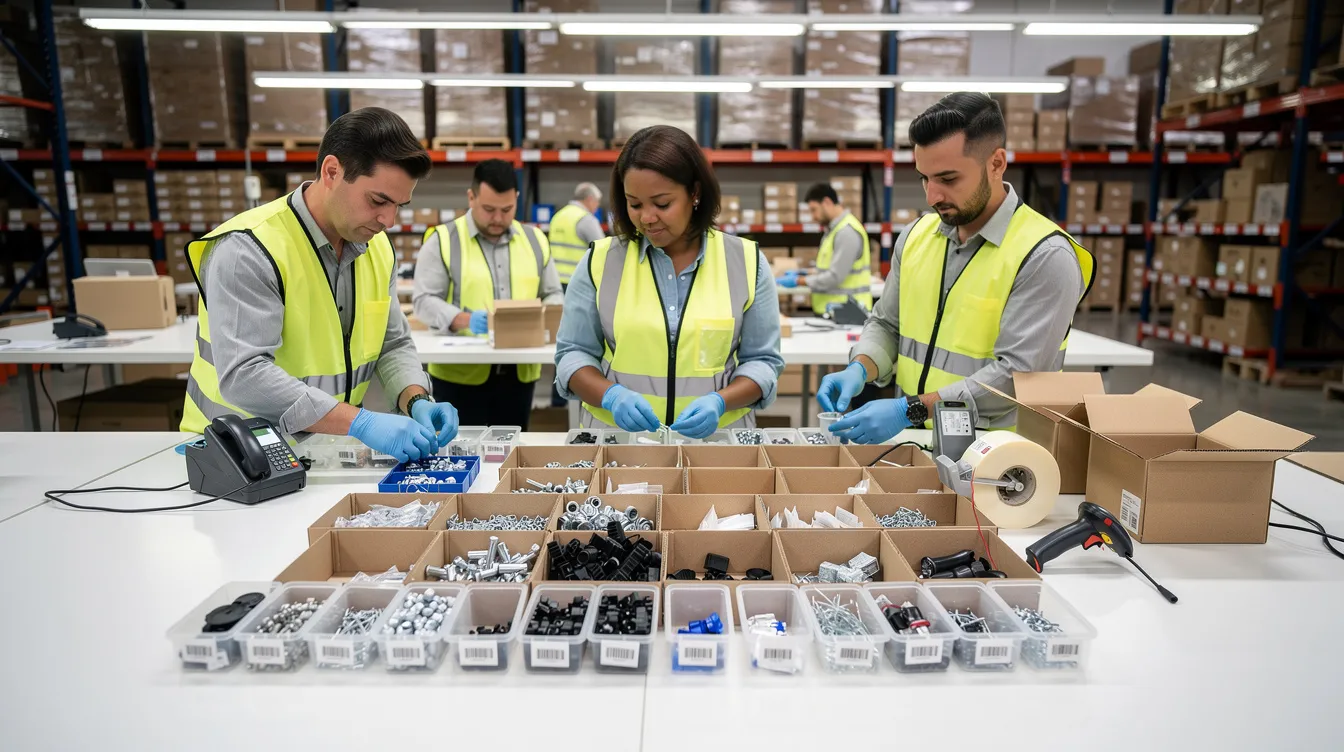
Kitting combines individual products into a single package under a new unique stock keeping unit. The kitting process involves pre-collecting items into a kit before orders arrive. Kitting items generally retain their original form and can be separated later. Kitting creates a new SKU for the assembled kit and focuses on operational efficiency in fulfillment processes.
Bundling is a sales and marketing tactic. It groups multiple products together - often at a discounted price - but bundling does not create a new SKU for individual items. Bundling picks items individually after an order is placed and emphasizes sales strategy and marketing flexibility.
Assembly goes further. Assembly combines parts to create a new item that cannot be sold individually. Assembly can range from simple placing to complex branded packaging. The output is a transformed product, not a group of separable components.
Understanding these distinctions matters because each has different implications for your inventory system, fulfillment process, and supply chain management.
\
How We Evaluated the Best Kitting Strategies
We assessed each kitting approach across seven criteria:
- Operational efficiency - how much each strategy reduces pick time and speeds up the shipping process
- AOV impact - ability to increase sales and boost average order value
- Inventory management complexity - tracking requirements for component SKUs and bundle SKUs
- Labor intensity - labor costs per kit relative to volume
- Scalability - suitability for growing ecommerce businesses
- Customer experience - unboxing quality and perceived value
- 3PL compatibility - how easily a third-party logistics provider can implement the strategy
Top 5 Kitting Strategies for Ecommerce Fulfillment
Pre-Built Kitting
Pre built kits are assembled ahead of customer orders and stored as finished goods under their own SKU. When an order comes in, fulfillment staff picks one item instead of many. Kitting reduces order fulfillment time by pre-assembling items into ready to ship packages.
Why It Stands Out
Fastest fulfillment times. Pre assembling kits before demand hits means your fulfillment center can maintain a one-day shipping SLA without scrambling during peak seasons.
Best For
High-volume sellers with predictable demand patterns and popular product combinations - think best-selling starter kits or same items that consistently sell together.
Key Strengths
- Minimizes pick time and reduces fulfillment errors. Kitting increases efficiency by reducing picking time in the warehouse.
- Optimizes warehouse space by consolidating products into fewer storage locations.
- Enables premium unboxing and customer experience with custom packaging designed in advance.
- Manufacturer-level kitting saves initial handling time for warehouse operations.
Possible Limitations
- Requires accurate demand forecasting to avoid excess inventory and overstock.
- Higher inventory investment and storage costs upfront. If component products change, pre built kits may need rework.
Build-to-Order Kitting
Kits are assembled on-demand after order placement. Component SKUs stay in inventory separately until a customer order triggers assembly. On-the-fly assembly occurs when bundles are created after an order is placed.
Why It Stands Out
Maximum flexibility. You can create kits with different configurations, swap in seasonal bundles, and test new combinations without committing inventory.
Best For
Businesses with diverse product catalogs and fluctuating demand patterns - especially those still learning which products customers purchase together.
Key Strengths
- Lower inventory investment and reduced waste. No risk of sitting on excess stock from unsold kits.
- Supports personalization and custom kit configurations. Customers can purchase multiple items in combinations you haven't pre-defined.
- Easier to test new product bundles without large upfront commitment.
Possible Limitations
- Longer fulfillment times due to assembly requirements at order time.
- Higher labor costs per order since each kit requires individual component pulls.
Subscription Box Kitting
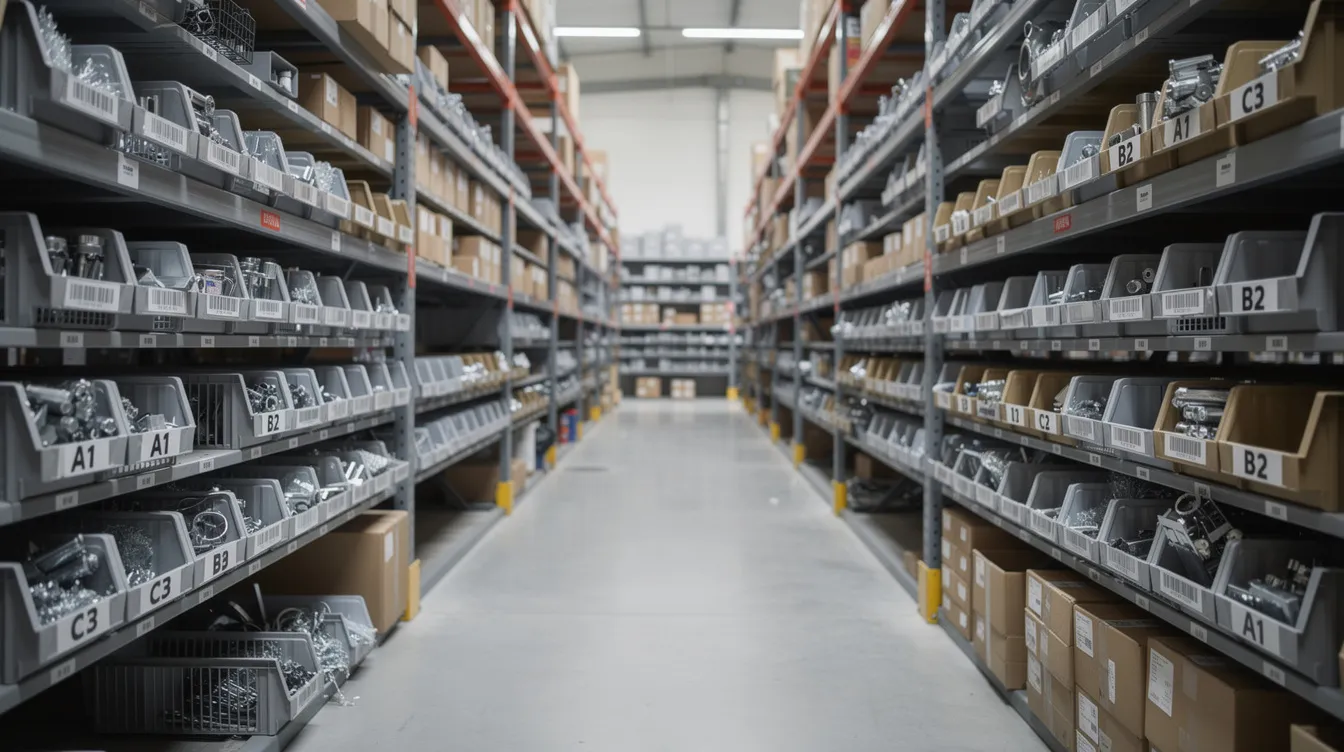
Recurring curated kits assembled on predictable schedules - monthly, quarterly, or seasonally. Subscription boxes involve both fixed items and rotating selections, creating complex bill of materials requirements.
Why It Stands Out
Optimized for recurring revenue and customer retention. Predictable demand enables efficient batch assembly, and standard operating procedures in kitting ensure consistency and efficiency during assembly.
Best For
Subscription businesses and brands with monthly recurring product launches. Common in the beauty industry, supplements, and pet products.
Key Strengths
- Predictable demand enables efficient batch assembly and capacity planning.
- Premium unboxing experience drives customer loyalty and helps delight customers.
- Supports complex BOM tracking with versioning for quarterly content changes.
- You can establish assembly processes to maintain quality and efficiency across each cycle.
Possible Limitations
- Requires sophisticated inventory allocation systems to reserve component products across cycles.
- Seasonality can create capacity planning challenges during peak seasons.
Gift Set Kitting
Premium packaging designed for special occasions and promotional campaigns. Third-party logistics providers perform custom labeling and specialized boxing in kitting to elevate presentation.
Why It Stands Out
Highest AOV impact. Product bundling groups related items at a discounted price to increase perceived value, and gift sets command premium pricing that exceeds what items would bring if sold separately.
Best For
Brands targeting gift purchases and seasonal marketing campaigns - particularly in beauty, wellness, and lifestyle categories.
Key Strengths
- Commands premium pricing over individual components. Some brands report 30–40% AOV lifts through bundle upsells.
- Drives impulse purchases and gift-giving behavior, helping encourage customers to buy more.
- Enhances brand perception through premium packaging and unboxing design.
Possible Limitations
- Higher packaging and assembly costs per unit.
- Seasonal demand fluctuations require careful planning to avoid slow moving products sitting in warehouse space.
Multi-Item Bundle Kitting
Complementary items grouped for convenience and value. This strategy encourages customers to purchase separately priced items together, improving inventory turnover.
Why It Stands Out
Most effective for moving slow-selling inventory and increasing product discovery. Bundling encourages higher average order value by promoting multiple sales.
Best For
Brands with diverse catalogs looking to optimize inventory turnover and clear excess inventory.
Key Strengths
- Helps clear slow moving products and reduce storage costs by pairing them with high-velocity SKUs.
- Increases customer exposure to the full product range - products sell better when paired with complementary items.
- Simplifies customer decision-making. Kitting can lower the chances of stockouts or overstocking by balancing component demand.
- A health/supplement brand leveraging basket analysis saw approximately 20% increase in bundled product sales.
Possible Limitations
- May reduce profit margins if discount expectations are too aggressive.
- Complex inventory tracking across multiple SKUs requires robust systems.

Quick Comparison of Kitting Strategies
How to Choose the Right Kitting Strategy
Order Volume and Predictability
High-volume predictable orders favor pre-built kitting. If the same items ship together hundreds of times per week, pre assembling individual items eliminates redundant picks. Variable or low-volume orders work better with build-to-order approaches - you avoid tying capital into bundled products that might not move.
Inventory Investment Capacity
Limited capital favors build-to-order to minimize upfront investment. You only assemble when a customer order arrives. Strong cash flow enables pre-built strategies where you invest in finished goods inventory for faster fulfillment.
Customer Experience Goals
Premium unboxing requires pre-built kits with custom packaging. If your goal is to improve customer satisfaction through curated presentation, pre assembling kits gives your team time to perfect the packing process. Personalization and flexibility favor build-to-order assembly, where you can create kits tailored to individual preferences.
The Kitting Process in Fulfillment Centers
The order fulfillment process for kitting follows a structured workflow:
- Work order generation - The warehouse management system generates build orders, either as batch jobs for pre-built kits or per-order builds. You must create a new SKU for each kit to track sales accurately.
- Component pull list creation - Individual components are pulled from inventory bins into a staging area or dedicated kitting station based on the BOM.
- Assembly and pack-out - Components are packaged together. Kitting involves pre-collecting items into a kit before orders arrive. This step may include light assembly - folding, wrapping, inserting branded materials.
- Quality assurance - Verification of completeness, correct quantities, proper packaging, and label accuracy. Weight checks and barcode scans catch errors before shipment.
- Labeling and SKU management - Kit SKU barcodes are applied. Kitting reduces the number of individual SKUs to track, simplifying downstream inventory counts.
- WMS integration - The system must support parent-child SKU relationships and real-time stock deduction. Kitting simplifies inventory monitoring and restocking processes while allowing for better inventory accuracy in fulfillment.
Kitting Cost Factors and Business Impact
Component Count
Cost drivers in warehouse kitting include the number of inventory items per kit. More components mean more picks, more staging, and more error potential. Labor costs scale directly with complexity.
Custom Packaging
Branded boxes, inserts, and decorative materials add cost but increase perceived value and higher customer satisfaction.
Seasonality
Peak seasons require capacity planning. Pre-building ahead of known demand windows helps, but increases risk of inventory costs if forecasts miss.
Shipping Costs
Shipping costs can be lowered by optimizing package size. Consolidating multiple items into a single package often reduces dimensional weight charges, delivering reduced shipping costs and real cost savings.
The business case goes beyond operational efficiency. Kitting increases average order value by encouraging bulk purchases. Retailers implementing strategic bundles saw approximately 8.24% increase in AOV and 8.42% increase in revenue per visit. This makes kitting and bundling an ecommerce strategy - not just a fulfillment tactic - to boost sales and boost average order value.
Kitting also helps e-commerce businesses manage inventory efficiently by packaging components together, reducing labor costs by streamlining fulfillment, and reducing fulfillment time by pre-assembling items into kits.
What to Ask Your 3PL About Kitting Services
When evaluating a 3PL for kitting services, ask:
- Lead times - What's the turnaround for pre-built vs. build-to-order kits? How does this change during peak seasons?
- Minimum quantities - Are there MOQs for kit builds or custom packaging runs?
- QA process - How do they verify kit completeness? Weight checks, barcode scans, visual inspection?
- SKU limits - How many unique kit SKUs can they manage? Do they support BOM versioning for seasonal swaps?
- Integration - Can their WMS handle parent-child SKU relationships and integrate with Shopify, WooCommerce, or Amazon?
- Cost transparency - What's the labor cost per kit? Are packaging materials marked up? What are storage fees for finished kits?
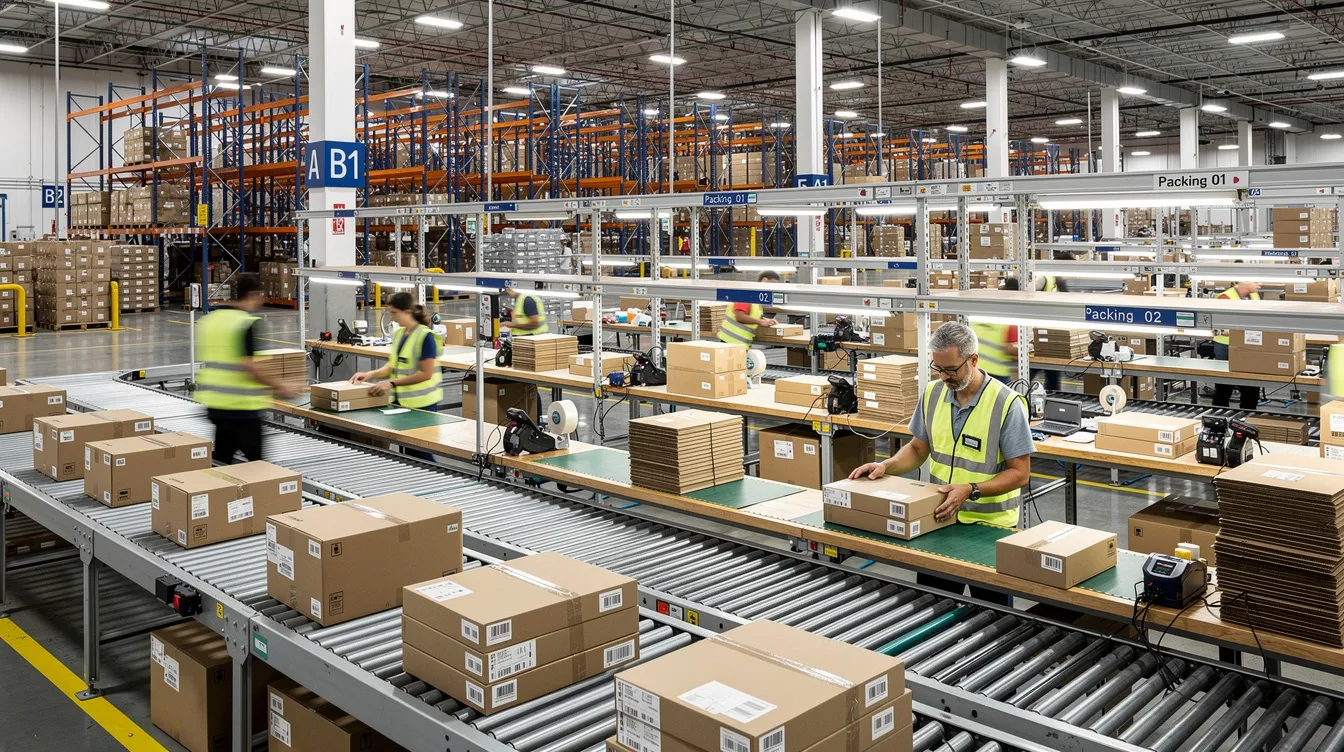
Outsourcing kitting to the right partner should streamline fulfillment and reduce costs, not create new headaches.
Kitting Terminology Glossary
Which Kitting Strategy Is Best for You?
- Choose Pre-Built Kitting if you have predictable high-volume orders and strong cash flow to create kits and own kits as finished goods
- Choose Build-to-Order Kitting if you need flexibility, have variable demand, and want to fulfill orders with items individually selected per order
- Choose Subscription Box Kitting if you operate recurring revenue models and need assembly services on a predictable schedule
- Choose Gift Set Kitting if you target premium pricing, seasonal sales, and want to encourage customers to purchase separately priced items as curated sets
- Choose Multi-Item Bundling if you need to optimize diverse inventory turnover and help products customers haven't discovered reach new buyers
Final Thoughts
The best kitting strategy depends on your business model, order volume, and what your customers expect. Pre assembling kits drives speed. Build-to-order preserves flexibility. Subscription boxes create recurring revenue. Gift sets lift your average order. Multi-item bundles move inventory and boost sales.
Successful kitting requires a fulfillment partner with the systems, accuracy, and scalability to execute - whether you're shipping 5,000 or 50,000 orders per month. Kitting enhances customer experience with curated packages while reducing the number of individual SKUs tracked and helping your e commerce business manage inventory efficiently.
ShipNetwork offers comprehensive kitting and bundling across all five strategies, backed by a 1-day fulfillment SLA and 100% order accuracy guarantee. Whether you need custom fulfillment solutions or dedicated subscription box assembly, we have the infrastructure to scale with you.
Ready to implement kitting? Explore our kitting services or learn more about subscription box fulfillment.
FAQs
Kitting requires tracking both component SKUs and kit SKUs. When a kit sells, the system decrements each underlying component. Kitting allows for better inventory accuracy in fulfillment and simplifies inventory management by reducing SKU counts. Without proper BOM management, you risk "phantom stock" - believing you have kits available when components are actually depleted.
Kitting is a fulfillment operation that physically gathers components under a new kit SKU. Kitting focuses on operational efficiency in fulfillment processes. Bundling is a merchandising strategy that offers multiple products together but doesn't necessarily change how items are picked or tracked. Kitting creates a new SKU; bundling typically does not.
Costs depend on component count, packaging complexity, labor required, volume, and frequency of kit changes. Reducing labor costs through efficient station design and batch processing helps. Custom packaging and seasonal add-ons increase per-unit costs. Pre-building adds storage expense but reduces per-order fulfillment cost.
Kitting can work for smaller businesses if kits are simple, demand is predictable, or you use a hybrid approach - pre-build best-sellers, build everything else to order. But system requirements and error risks grow quickly without sufficient volume to spread fixed costs.
You need a WMS or OMS that supports parent-child SKU relationships, BOMs, and real-time component stock deduction. Most 3PL services offer API integrations with Shopify, WooCommerce, and Amazon. Confirm BOM versioning support and component reservation logic before committing.
.svg)