Which Ecommerce Fulfillment Company Offers the Fastest Shipping in the US?
Fast nationwide shipping is a fulfillment network design problem, not an air freight budget problem. The ecommerce brands consistently offering 1-2 day delivery to most customers aren't paying overnight delivery or UPS 2nd Day Air rates. They're placing inventory closer to customers through distributed fulfillment centers, so ground shipping covers the distance in one to two business days instead of five. This guide explains how that works, what it costs, and what it takes to get there.
How Fast Nationwide Ground Shipping Actually Works
Ground shipping is the most cost-effective delivery method for domestic deliveries. It is ground shipping cheaper than express services and air freight by a wide margin, and ground shipping typically takes 1 to 5 business days depending on distance. The problem is that "1 to 5" range. A package shipped from a single warehouse in Pennsylvania to a customer in Oregon crosses zones 7-8 and takes 5-7 days. The same package shipped from a facility in Nevada arrives in 1-2 days at zone 2-3 rates.
Amazon's Prime program set the baseline: 75% of online shoppers prefer free delivery options, and 65% of shoppers check for free shipping before purchasing. Two day shipping is no longer a luxury; it's a customer expectation that drives cart abandonment when unmet. For any ecommerce business competing outside the Amazon ecosystem, delivery speed is now an important factor in customer satisfaction and conversion.
The core principle: you don't need to speed up the carrier. You need to shorten the distance. Ground services from major carriers like FedEx Ground, UPS Ground, and USPS Ground Advantage all deliver within predictable windows based on how many shipping zones a package crosses. Fewer zones mean faster delivery times and lower shipping cost, simultaneously.
The Best Methods for Fast Ground Shipping Nationwide
1. Distributed Fulfillment Network Strategy
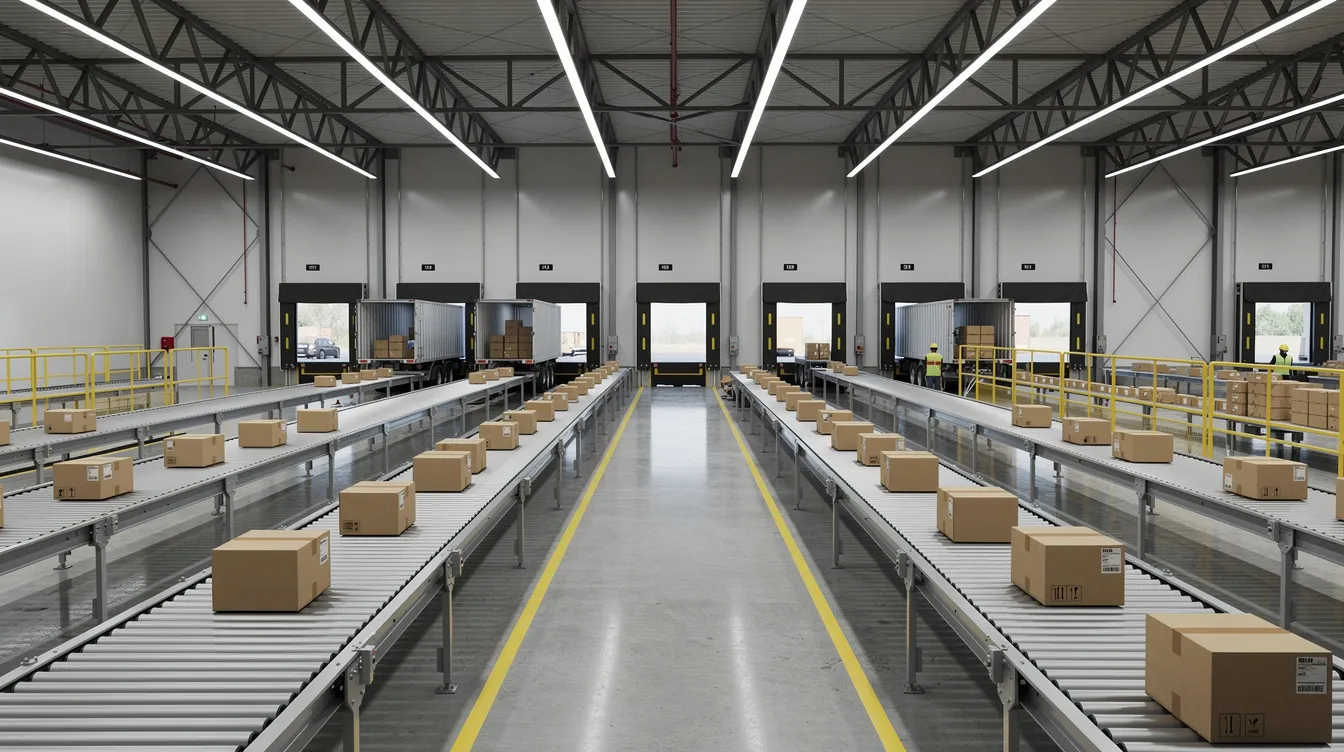
Multi warehouse fulfillment is the single most effective way to offer fast shipping via ground without paying air rates. By positioning inventory across multiple strategically located facilities, you reduce the average zone count per shipment. Multi-node fulfillment cuts delivery times to 1-2 days by reducing shipping zones crossed on each order.
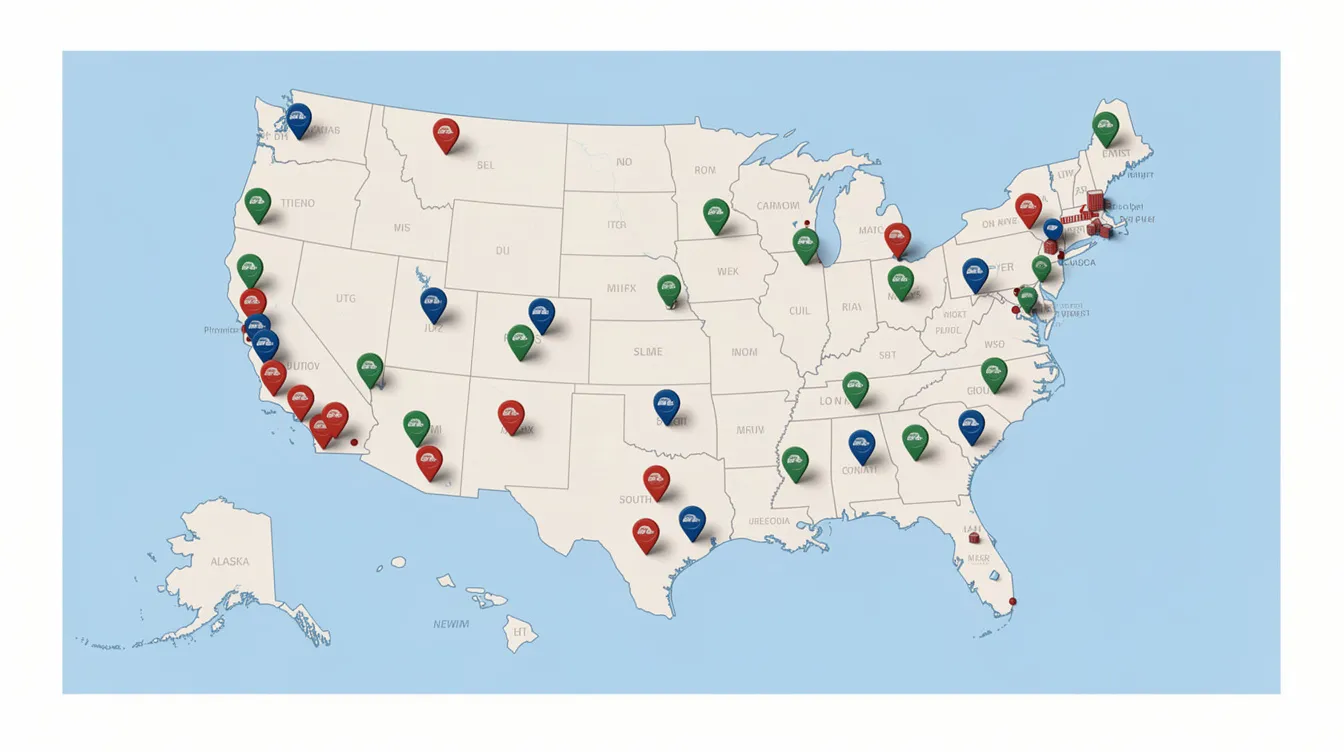
Strategically placed regional fulfillment centers reduce shipping miles for the majority of orders. A hub-and-spoke network architecture enhances delivery speed for customers by routing each order from the closest facility. Using multi-location fulfillment reduces shipping costs and speeds delivery at the same time. ShipNetwork operates a 10-facility network that covers 98% of the U.S. population with 1-2 day ground delivery. Zone skipping consolidates orders into bulk shipments to lower costs and speed delivery within this network. Consolidating individual orders into bulk shipments saves on shipping cost and time across high-volume lanes.
Best for: ecommerce brands shipping 5,000+ orders monthly who want nationwide day delivery coverage without building warehouse operations from scratch.
Possible limitations: inventory allocation complexity increases with each additional facility. Demand forecasting and safety stock policies become essential. Minimum volume thresholds apply; brands shipping a few hundred orders monthly won't see ROI from multiple distribution centers.
2. Zone Optimization Strategy
Every carrier prices and routes by shipping zone, a distance band defined by origin and destination ZIP codes. The relationship between zones and transit is consistent: zones 2-3 map to 1-2 days, zones 5-6 mean 3-4 days, and zones 7-8 stretch to 5-7 business days. UPS Ground typically delivers within 1-5 business days. FedEx Ground also promises delivery within 1-5 business days. USPS Ground Advantage delivers packages in 2-5 business days. The variance depends almost entirely on zone count.
Position inventory based on demand to reduce shipping distances and improve delivery speed. Even adding one facility in a high-demand region can move a large percentage of orders from zone 6-7 down to zone 2-3. You can optimize packaging to lower dimensional weight charges and improve shipping costs at the same time; using compact packaging lowers ground shipping rates by keeping DIM weight below carrier thresholds.
Best for: brands currently fulfilling orders from a single location who want to understand where their shipping speed bottlenecks are and identify the cheapest way to fix them.
Possible limitations: zone optimization without geographic expansion has a ceiling. You can decentralize inventory using multiple regional fulfillment centers to speed shipping, but that requires capital or a partner.
3. Carrier Rate Optimization Strategy
Even without changing fulfillment infrastructure, carrier selection is a lever. Employing multiple carriers in a shipping strategy increases flexibility and reliability across service levels. Using regional carriers can improve efficiency and reduce costs in last mile delivery. DHL Ground is best for high-volume ecommerce shippers on specific lanes. 90% of UPS Ground shipments are delivered in 3 days or less, making standard shipping through UPS a strong baseline for most customers.
Advanced shipping optimization software selects the best carrier and rate for each package. ShipNetwork's KNCT technology evaluates weight, dimensions, origin, destination, and carrier performance to route every order optimally. In the Andie Swim case study, this approach produced 9.7% average shipping savings through carrier optimization and smart routing, with 99% on-time delivery and 99.98% order accuracy. Automated sorting can reduce transit times for packages when combined with intelligent routing. Shipping costs can also be reduced by 72% using tools like ShipStation for rate comparison across carriers.
Technology for dynamic routing minimizes fuel consumption and delays by selecting the fastest available ground shipping options per order. Ground services include tracking for real-time delivery updates and delivery confirmation, which supports customer experience without requiring expedited shipping or express services pricing.
Best for: brands wanting to reduce shipping costs without changing their fulfillment footprint, especially those with adequate delivery speed but a higher cost per shipment than necessary.
Possible limitations: rate optimization requires volume scale to negotiate favorable contracts. Zone skipping saves 10-20% per parcel but needs enough regional order density to fill LTL or FTL loads.
4. Build vs. Partner Strategy
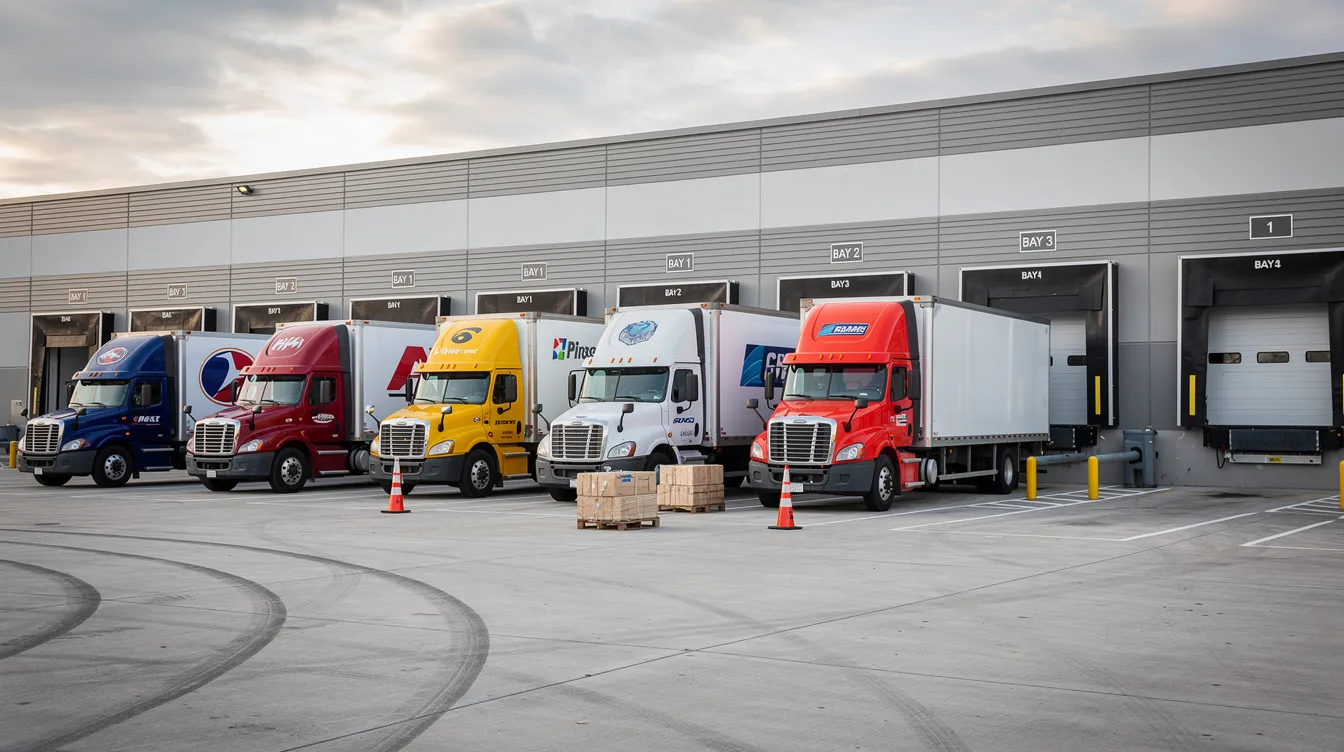
Building a 10-facility distributed network in-house requires real estate, staffing, technology, and carrier relationships at a scale most individual brands cannot access. The timeline runs months to years. Implementing a hybrid operational model for nationwide ground shipping balances speed and cost, but the upfront investment is substantial.
Partnering with third party logistics providers gives brands immediate access to an existing network. ShipNetwork's model includes 1-business-day order processing SLA, carrier rate negotiation across all service options, and inventory distributed across fulfillment centers without the brand owning any of them. Ensuring high utilization and minimal handling in logistics keeps per-order costs low within a shared network.
Best for: brands needing fast implementation to stay competitive in new markets without warehouse ownership and management overhead.
Possible limitations: less direct control over every touch point. Ongoing service costs replace capital expenditure. Dependency on partner reliability for same day shipping commitments, saturday delivery coverage, and handling of time sensitive orders.
Quick Comparison of Fast Ground Shipping Methods
How to Choose the Right Fast Shipping Strategy
Diagnose Your Current Shipping Setup
Map where your orders originate versus where your customers live. Pull 90-180 days of order data by ZIP code and calculate the average zone your shipments cross. If a large portion of orders ship to zones 5-8, those customers are waiting 3-7 days when they could receive orders in 1-2 days from a closer facility. Use a shipping zone calculator to model what transit would look like from alternative origins.
Review cart abandonment data alongside shipping speed. If your online store shows delivery times of 4-5 days at checkout, conversion drops are predictable. 75% of online shoppers want free delivery options, and slow ground delivery makes free shipping offers feel less competitive.
Consider Your Volume and Growth Stage
Volume thresholds matter. If you ship 5,000+ orders per month with geographic clusters of demand (California, Texas, Mid-Atlantic), distributed fulfillment or zone skipping becomes ROI-positive. Smaller volumes may benefit more from carrier rate optimization as a first step. Multi-warehouse fulfillment can reduce shipping costs for brands at the right scale, and ground shipping allows for affordable free shipping offers that drive customer satisfaction.
UPS Ground services are ideal for heavy packages up to 150 lbs. USPS Priority Mail and USPS Retail Ground serve different service levels for lighter parcels. Matching your product weight and dimensions to the right shipping service across carriers is the cheapest option before network expansion.
Evaluate Build vs. Buy Decision Factors
Capital for leases, staff, and technology across multiple sites runs into seven figures. Managing distributed inventory, warehouse operations, and carrier integrations across commercial addresses and residential addresses adds operational complexity. A 3PL partnership compresses implementation from years to weeks and converts fixed costs to variable costs tied to order volume, which fits most business needs during growth phases.
Which Strategy Is Best for Your Business?
- Choose Distributed Fulfillment Network if you need immediate 1-2 day ground delivery coverage across the country without building infrastructure. 1-2 day ground delivery covers 98% of the U.S. population through networks like ShipNetwork's.
- Choose Zone Optimization if you want to understand why your current single-facility setup creates slow delivery and high costs before committing to expansion.
- Choose Carrier Rate Optimization if shipping cost is the primary concern and your current delivery speed meets customer expectations for most orders. Day definite services from carriers give predictable windows.
- Choose Build vs. Partner evaluation if you're weighing long-term infrastructure investment against 3PL services, and need to save money while scaling fulfillment for international shipments or domestic growth.
Glossary
- Shipping Zone: Distance band between origin and destination ZIP codes; carriers use zones 1-8 (contiguous U.S.) to set rates and estimate transit times.
- Transit Time: Days a package spends in carrier transit from pickup to delivery, excluding fulfillment processing time.
- Distributed Fulfillment: Stocking inventory across multiple geographic locations to reduce shipping distance to end customers.
- Zone Skipping: Consolidating packages by destination region, moving them via freight to a carrier hub near the destination, then injecting into local carrier networks for last mile delivery.
- Last-Mile Delivery: Final leg of a shipment from the local carrier hub to the customer's residential delivery address.
- Carrier Rate Card: Published or negotiated pricing schedule from a carrier, varying by zone, weight, dimensional weight, and surcharges.
- Dimensional Weight (DIM Weight): Carrier pricing method based on package volume rather than actual weight; applies when a package is large relative to its weight.
- KNCT Technology: ShipNetwork's proprietary shipping tools that analyze package attributes, origin, destination, and carrier performance to select the optimal carrier and rate.
- Ground vs. Air Service Levels: Ground services move parcels overland via truck and rail. Air and express services use air transport at a higher cost for faster same day delivery or next day delivery.
Final Thoughts
Fast nationwide ground shipping is achievable through network design, not premium carrier service levels. Ground shipping is the most cost-effective delivery method for eCommerce, and the right fulfillment setup turns that cost advantage into a speed advantage. The best approach depends on your order volume, growth stage, and willingness to invest in infrastructure versus partnering with an established network.
For most growing ecommerce brands, distributed fulfillment through a 3PL offers the strongest balance of speed, cost, and scale. Explore ShipNetwork's distributed fulfillment services to see how your brand can reach 98% of the U.S. in 1-2 days via ground, or use the fulfillment center locations map to visualize coverage from ShipNetwork's 10-facility network.
FAQs
The fastest ground shipping option depends on distance. FedEx Ground and UPS Ground both offer 1-5 business day delivery windows. USPS Ground Advantage delivers within 2-5 business days. For the fastest results, a distributed fulfillment network shipping from the closest facility to each customer keeps most orders in zones 2-3, achieving 1-2 day ground transit.
No single carrier is fastest everywhere. Ground shipping speed is determined by zone count, not carrier brand. The shipping process that delivers fastest nationwide uses multiple carriers and multiple fulfillment origins. Priority Mail from USPS offers 1-3 day service but at a higher cost than ground advantage.
They use distributed fulfillment networks to position inventory near demand clusters. Ground shipping is typically cheaper than air shipping; by reducing zones crossed, brands match air delivery speed at ground rates. This is how most cost effective two day shipping programs work.
Research and industry data suggest 3-5 facilities can reach 90%+ of the U.S. population within 2-day ground transit. ShipNetwork uses 10 facilities to cover 98% of the U.S. population.
Yes. ShipNetwork's distributed fulfillment network reaches 98% of the U.S. population with 1-2 day ground delivery, combined with a 1-business-day fulfillment SLA and 100% order accuracy guarantee.
Shorter shipping distances mean lower zone-based rates from carriers. Although operating multiple fulfillment centers adds facility costs, the net shipping cost per order drops when zone reductions are large enough to offset those fixed costs. Brands also gain access to volume-negotiated carrier rates through 3PL partnerships.
.svg)