Best Ecommerce Fulfillment Providers That Integrate with Shopify
A Shopify fulfillment integration is the difference between orders flowing automatically from your store to a customer's doorstep and someone on your team manually exporting CSVs at 3 PM every day. This guide breaks down what a real Shopify integration looks like, how to evaluate ecommerce fulfillment providers that integrate with Shopify, and which providers deliver the strongest combination of speed, accuracy, and multi-channel support in 2026.
What Is a Shopify Fulfillment Integration?
A third party logistics company's Shopify integration is the operational backbone that moves orders from your Shopify store to your customer. The full data flow works like this: a customer places an order in Shopify, the ecommerce platform marks it "unfulfilled," and the integration sends order details (customer address, SKUs, variant info, order tags) to the 3PL's warehouse management system. Warehouse staff receive a pick-pack list, package the products, generate a shipping label, and ship the order. The 3PL then pushes tracking numbers and order fulfillment status updates back to Shopify, which triggers customer notifications.
A strong integration automates every step of that chain. Orders route to the warehouse within seconds of checkout. Inventory levels sync in real time across all sales channels. Tracking numbers appear in Shopify before customers ask "where's my order?" Edge cases like partial fulfillments, cancellations, and post-checkout edits resolve automatically without someone on your team intervening.
A weak integration does some of that, some of the time. Maybe orders sync every few hours via batch upload. Maybe inventory management runs on a daily schedule, leaving a window for overselling. Maybe cancellations require a support ticket to the 3PL. 3PL integration reduces manual data entry for order processing, but only when it actually covers the full workflow.
What most integrations do not include by default: B2B wholesale order routing with EDI compliance, real-time returns syncing back to Shopify, multi-location inventory allocation across several warehouses, and passing custom metadata (like "gift" or "fragile" tags) through to the fulfillment floor. Those capabilities exist, but they require configuration, middleware, or a provider that built them into their system from the start.
How We Chose the Best Shopify Fulfillment Providers
Choosing an ecommerce fulfillment provider depends on product type and order volume. We evaluated providers against six criteria that directly affect fulfillment performance for shopify merchants:
Integration quality. Does the provider offer a native shopify app listed in the Shopify App Store, or does it rely on a third-party connector? Native integrations built directly between a 3PL's WMS and Shopify tend to have fewer failure points and faster sync speeds than middleware solutions.
Inventory sync and order routing speed. Integration with 3PLs allows real-time inventory syncing. Providers that update stock within seconds of a sale prevent overselling. Those running hourly or daily batch syncs create operational risk during high-traffic periods.
Multi-channel support. Brands selling on multiple sales channels need a provider that manages Amazon, Walmart, TikTok, and other platforms alongside Shopify from one system.
Order accuracy and fulfillment speed. We prioritized providers with documented SLAs. Select a 3PL with a strong track record for order accuracy. Evaluate 3PLs based on their shipping speed capabilities, not just their marketing claims.
Geographic coverage. 3PLs can achieve 98% two-day ground delivery coverage in the U.S. through distributed fulfillment networks, which directly affects shipping costs and customer satisfaction.
Returns and exceptions. Returns management is a key service offered by 3PL providers. We assessed how quickly returns are received, inspected, restocked, and reflected in Shopify inventory.
3PL costs typically range from $0.40 to $5+ per order depending on item complexity, and 3PLs charge for receiving, storage, pick-and-pack, and shipping. High up-front costs include software integration and account setup. Storage fees can vary based on item size and volume. We factored transparent pricing into our evaluation because hidden fees erode margins fast.
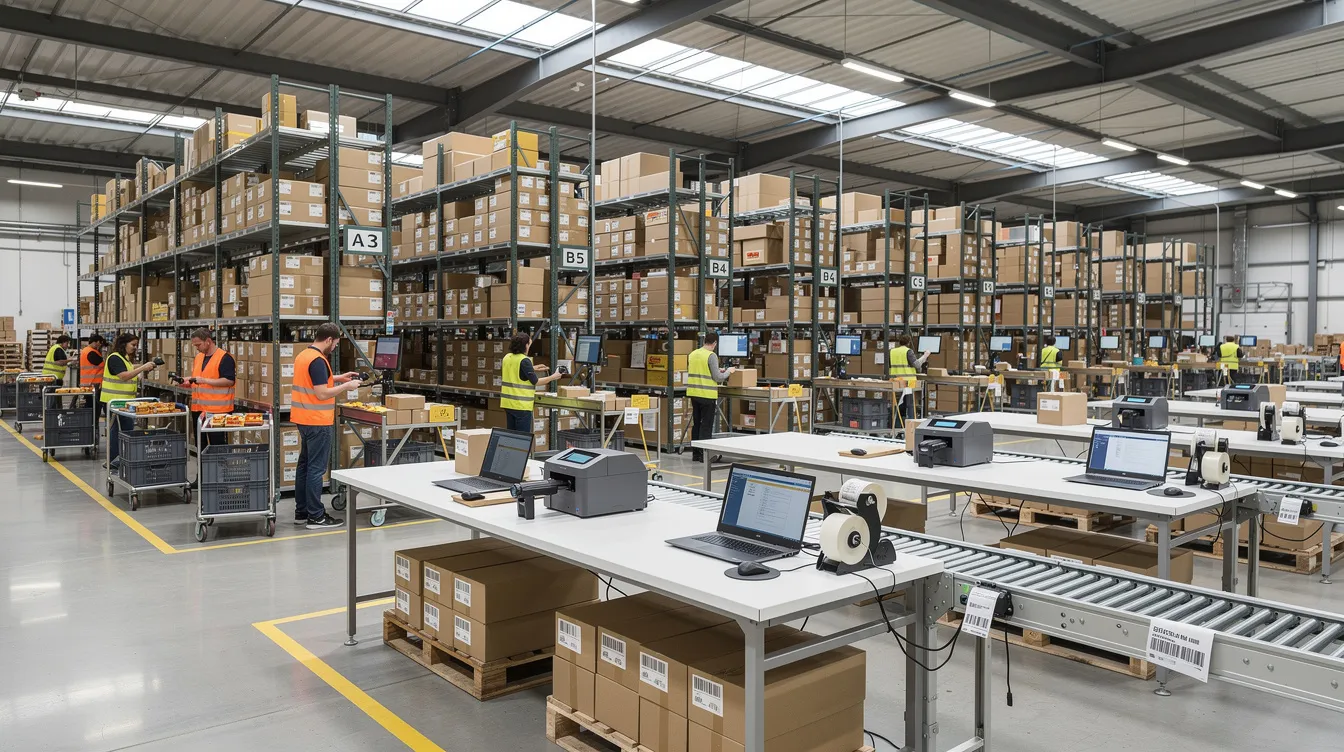
Top 7 Ecommerce Fulfillment Providers for Shopify Integration
1. ShipNetwork
ShipNetwork operates a nationwide network of fulfillment centers across the U.S. and Canada, reaching 98% of the U.S. population within 1-2 days via ground shipping. Every order ships under a 1-day fulfillment SLA with a 100% order accuracy guarantee; if ShipNetwork gets it wrong, the fulfillment is free.
The shopify integration connects directly to Shopify and supports automatic order routing, real-time inventory sync, and tracking pushback. ShipNetwork also integrates with 40+ platforms including Amazon, Walmart, WooCommerce, eBay, TikTok, Etsy, Best Buy, Nordstrom, and ShipStation.
Best for: Fast-growing DTC brands shipping 5,000+ orders monthly that need reliability across multiple channels.
Key strengths:
- KNCT, a proprietary shipping optimization engine, analyzes weight, dimensions, origin, destination, and carrier performance to select the best rate for each package
- In the Andie Swim case study, ShipNetwork delivered 99.98% order accuracy, 99% on-time delivery, 9.7% average shipping cost savings, and 12-hour average click-to-ship time
- Custom packaging and kitting services, subscription box fulfillment, lot tracking, and temperature-controlled storage
- Companies using 3PLs can save on shipping costs through bulk rates, and ShipNetwork's carrier rate comparison optimizes this across every shipment
Possible limitations: Volume requirements make this a better fit for higher-volume merchants. Limited international facilities compared to global providers like Amazon.
2. ShipBob
ShipBob operates 60+ fulfillment centers globally and offers a native Shopify app with two-way syncing of inventory and orders. Its REST API allows programmatic access to order and fulfillment data for ERP or returns tool integrations.
Best for: High-growth international DTC brands needing global reach and distributed inventory.
Key strengths:
- ShipBob is ideal for fast, distributed inventory and scaling direct-to-consumer brands
- 2-day Express shipping program for U.S. coverage
- Hub & Spoke model for inventory distribution across regions
- Strong after-market integrations with returns platforms, subscription tools, and analytics
Possible limitations: Pricing for high-volume orders can be complex to compare. B2B retail fulfillment and heavy item handling are less specialized than dedicated providers. Fulfillment cost transparency has been a recurring concern in merchant reviews.
3. Shopify Fulfillment Network (Flexport)
The Shopify Fulfillment Network integrates directly with Shopify stores through the shopify admin, providing the tightest native experience for Shopify-only merchants. Inventory placement uses AI-driven optimization, and there are no minimum order requirements for entry.
Best for: Shopify-only merchants wanting fulfillment managed inside their existing admin panel.
Key strengths:
- Native shopify integration with no connector middleware required
- Freight forwarding capabilities for inbound logistics
- Multi-carrier support for outbound shipping
- Automated inventory placement recommendations based on demand forecasting
Possible limitations: Limited multi-channel support. If you sell on Amazon, Walmart, or other platforms alongside Shopify, this provider's Shopify-only focus becomes a constraint. Less flexibility for brands that need fulfillment services across multiple sales channels.
4. Red Stag Fulfillment
Red Stag Fulfillment specializes in heavy, bulky, or high-value products requiring accuracy. Its Shopify plugin automates order forwarding with an hourly backup sync to catch any orders missed by webhooks.
Best for: Shopify brands shipping oversized, heavy, or premium products where handling errors are costly.
Key strengths:
- $50-per-error accuracy guarantee; Red Stag pays you when they make a mistake
- Real-time inventory sync via direct integrations and through partner systems like Fulfil.io
- Transparent pricing with no hidden fees for special handling
- Specialized infrastructure for items that standard fulfillment operations aren't built to handle
Possible limitations: Fewer warehouse locations than DTC-centric providers. Per-order costs tend to be higher for lightweight, small-parcel items. Integration complexity is lower than fully native apps but requires more initial configuration.
5. Amazon Multi-Channel Fulfillment
Amazon Multi-Channel Fulfillment allows leveraging Amazon's logistics network for Shopify orders. The official Shopify MCF and Buy with Prime app maps Shopify SKUs to Amazon SKUs and pushes tracking back into Shopify.
Best for: Amazon-first sellers treating Shopify as a secondary channel who already have inventory in Amazon FCs.
Key strengths:
- Amazon's massive fulfillment networks provide reliable 2-day U.S. delivery
- Cost-effective for single-pick orders using existing FBA inventory
- Supported in the U.S., UK, Canada, Mexico, Germany, France, Italy, Spain, and India
Possible limitations: Amazon-branded or unbranded packaging limits branded packaging and custom packaging options. Multi-pick orders get expensive. The older "MCF: US Fulfillment" app retires September 30, 2026, requiring migration to the new app. Returns flow back into Amazon's system but may not sync cleanly to Shopify inventory by default. Amazon multi channel fulfillment works best when Amazon is your primary channel.
6. ShipMonk
ShipMonk is known for subscription boxes and custom kitting in ecommerce fulfillment. Its native Shopify app syncs orders and inventory across channels, and its proprietary WMS supports EDI for retail partners.
Best for: Mid-market sellers needing Amazon FBA prep alongside Shopify fulfillment.
Key strengths:
- Multiple U.S. fulfillment centers with automated reorder alerts for low stock
- FBA prep services for brands splitting inventory between DTC and Amazon
- Bundling and kitting built into the WMS
- Dashboards for inventory history and centralized stock visibility across locations
Possible limitations: Less transparent pricing makes fulfillment cost comparisons difficult. Complex fee structures including potential peak surcharges. Less specialized in heavy or regulated products. Fulfillment speed varies by warehouse proximity to the customer.
7. GoBolt
GoBolt operates 14 North American fulfillment centers with EV last-mile delivery capabilities. It's a certified Shopify Fulfillment Network partner with bidirectional inventory and order sync.
Best for: High-volume North American brands prioritizing sustainability in their supply chain.
Key strengths:
- Real-time inventory visibility with granular controls over inventory allocation
- Sustainable delivery fleet using electric vehicles
- Bidirectional sync with Shopify for orders, inventory, and returns
- Distributed fulfillment networks improve logistics efficiency for ecommerce brands through GoBolt's multi-node approach
Possible limitations: 2,000+ monthly order minimum. Limited global coverage outside North America. Newer entrant compared to established providers with longer operational track records.
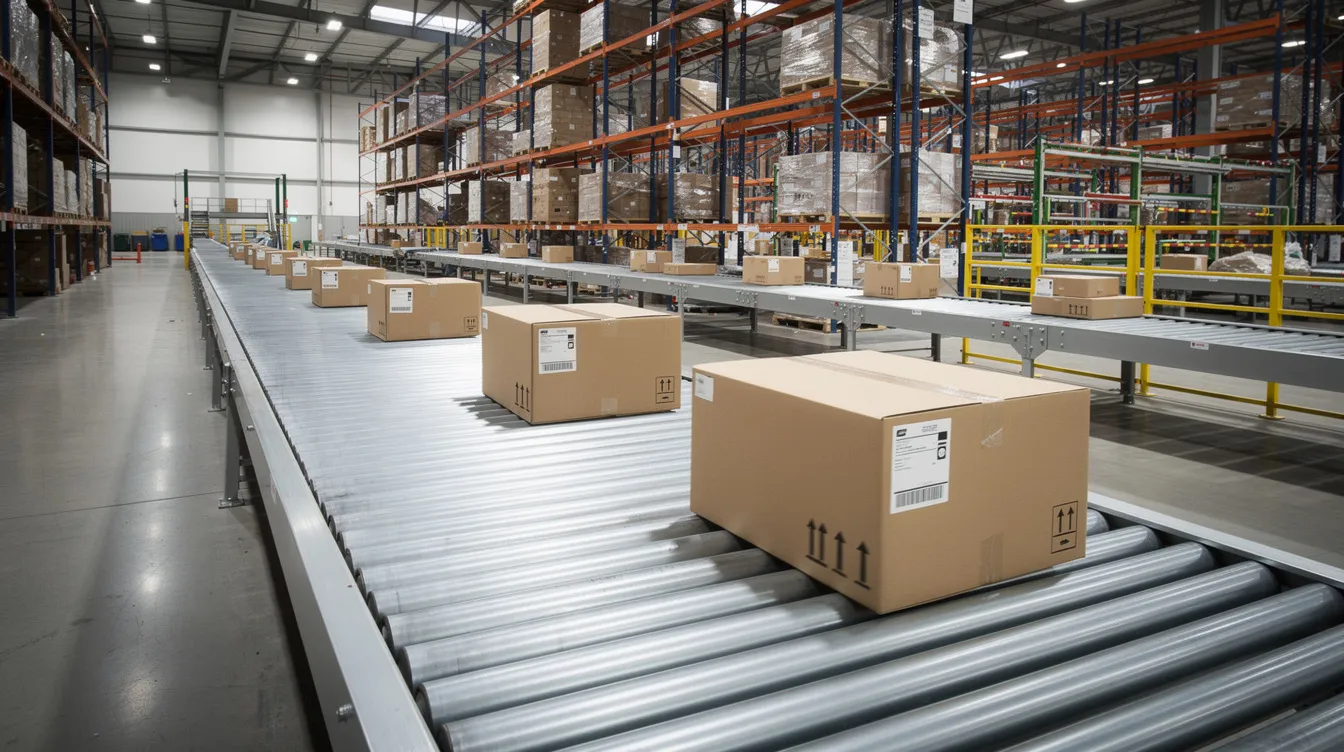
Quick Comparison of Top Shopify Fulfillment Providers
Consider a 3PL if you are fulfilling over 20 orders daily. For most shopify merchants, self fulfillment stops making sense once you pass that threshold because the time spent on pick, pack, and ship workflows inside your own space costs more than outsourcing it.
What to Look For in a Shopify Fulfillment Integration
Native Integration vs Connector App
Not all "Shopify integrations" work the same way. A native shopify integration means the 3PL built and maintains a direct connection to Shopify's APIs and webhooks. Orders, inventory changes, and tracking updates flow between the two systems without a middleman. ShipBob, ShipNetwork, and ShipMonk all operate this way.
A connector app (ShipStation, Extensiv, Pipe17) sits between Shopify and the 3PL's WMS, translating data in both directions. Connectors work, but they introduce a third system that can fail independently. Error handling gets distributed across three parties instead of two. Sync speeds may be slower because data passes through an additional layer.
The practical difference: when a native integration breaks, one party owns the fix. When a connector breaks, you might spend hours figuring out whether the problem is in Shopify, the connector, or the 3PL's WMS. Integration complexity increases with each system in the chain.
Real-Time Data Flow Requirements
Six capabilities separate a functional integration from one that creates daily headaches:
- Real-time inventory sync rather than batch updates every few hours. If an item sells on your Shopify store at 2:01 PM and inventory doesn't update until 4:00 PM, you risk overselling that SKU across channels.
- Automatic order routing on checkout. Orders should reach the 3PL's WMS within seconds of purchase, not wait for a manual CSV upload or a scheduled batch job.
- Tracking number pushback before customers submit "where's my order" tickets. 3PLs provide real-time order tracking and inventory management software that feeds this data back to Shopify automatically.
- Partial fulfillment support. When some items in an order are in stock and others aren't, the integration should ship available items and backorder the rest without manual intervention.
- Cancellation handling. If a customer cancels before the order ships, both Shopify and the WMS need to release the hold on inventory simultaneously.
- Returns syncing. 3PLs can handle returns processing and reverse logistics for Shopify, but only if the integration actually updates inventory levels in Shopify when a returned item passes inspection and gets restocked.
Multi-Channel Capabilities
3PLs handle warehousing, transportation, and order fulfillment across every channel your brand sells on. If you sell on Shopify and Amazon, your fulfillment partners need to manage a single inventory pool rather than splitting stock between platforms.
Multi-location inventory support in Shopify lets you assign stock to specific warehouse locations and set order routing rules like "ship from closest location" or "minimize split shipments." Not every 3PL supports this. Ask whether their integration maps to Shopify's multi-location architecture or treats your entire account as one flat location.
3PL pricing often includes additional fees for custom packaging, branded inserts, or channel-specific labeling. Know these costs before you sign, especially if you need branded packaging for DTC orders and plain packaging for marketplace orders.
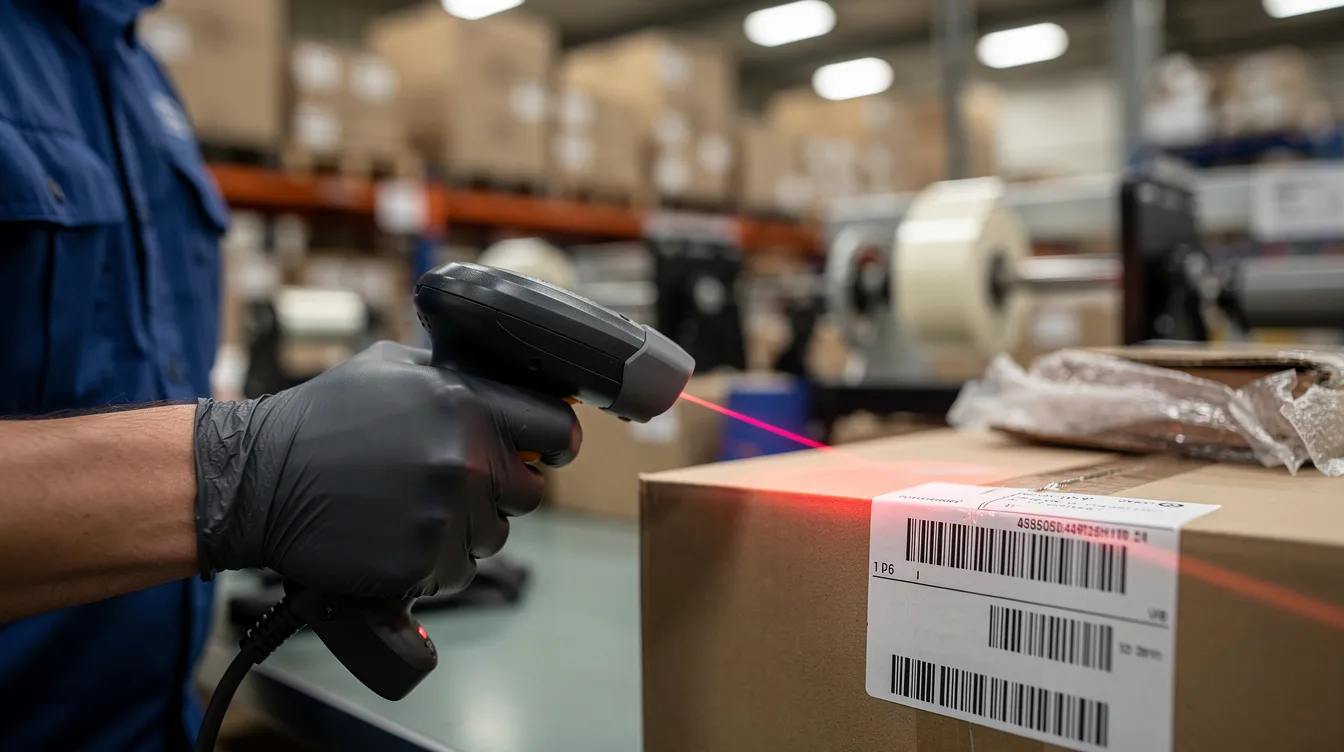
Questions to Ask Shopify Fulfillment Providers
Before signing with any shopify 3pl provider, get direct answers to these questions:
- Is your Shopify integration native or through a connector app? The answer determines your support path when something breaks.
- How long does it take for an order to reach your WMS after checkout? Seconds is good. Minutes is acceptable. Hours means batch processing.
- How often does inventory sync between your WMS and Shopify? Real-time event-driven sync prevents overselling. Hourly backup syncs catch edge cases.
- Can you handle partial fulfillments and cancellations automatically? If either requires a manual support ticket, that's a red flag.
- Do you support multi-location inventory in Shopify? If you use or plan to use distributed inventory across multiple warehouse locations, this matters.
- What happens when the integration breaks, and who owns resolution? Ask about retry logic, backup syncs, and mean time to resolution. Who monitors the connection at 2 AM on a Saturday?
Ask about integration capabilities with your existing systems before you commit. Choose a 3PL that supports your growth for 1-3 years ahead, not just your current volume.
Multi-Channel Fulfillment: Beyond Shopify-Only
The Shopify-only framing breaks down for brands also selling on Amazon, wholesale, or retail. Most ecommerce brands reach a point where Shopify is one of several channels, and the fulfillment solution needs to reflect that.
The core problem with channel-specific fulfillment: split inventory. If you allocate 500 units to your Shopify store and 500 to Amazon FBA, you can't sell unit 501 on either channel without a manual rebalance. A 3PL managing all channels from one inventory pool eliminates this constraint. Every unit is available to every channel until it sells. 3PLs enable scalable order fulfillment for growing brands by keeping a single inventory pool across multiple channels.
ShipNetwork's integration ecosystem covers this directly. Beyond Shopify, it connects to Amazon, Walmart, WooCommerce, eBay, TikTok, Etsy, Best Buy, Nordstrom, and 40+ platforms. The Andie Swim case study illustrates the outcome: one brand fulfilling DTC, retail, and wholesale orders from unified logistics infrastructure, achieving 99.98% inventory accuracy across all channels.
3PLs enable faster delivery times and geographic expansion for brands. Outsourcing to a 3PL can free up capital tied in warehouse space, letting you invest in growth instead of lease payments and warehouse staff. 3PLs can reduce overhead costs by sharing warehouse space across multiple clients, which is why outsourcing fulfillment can reduce overhead costs for brands that don't need a dedicated facility.
Which Shopify Fulfillment Provider Is Best for You?
The answer depends on three variables: your monthly order volume, your product type, and your channel strategy. Fulfillment speed decisions should be guided by local availability and international capabilities.
Choose ShipNetwork if you need a 1-day fulfillment guarantee, 100% order accuracy, and multi-channel support across 40+ platforms. ShipNetwork's distributed fulfillment network and KNCT shipping optimization deliver faster delivery at lower outbound costs for brands shipping 5,000+ orders monthly. 1-2 day delivery is critical for ecommerce fulfillment to meet customer expectations, and ShipNetwork covers 98% of the U.S. population within that window. 3PLs can improve delivery speed to 1-2 days, and ShipNetwork guarantees it.
Choose ShipBob if you want global reach across 60+ fulfillment centers and plan to expand internationally. ShipBob excels at distributed inventory for DTC brands scaling beyond domestic markets.
Choose Shopify Fulfillment Network if you sell exclusively on Shopify and prefer managing fulfillment inside your shopify admin without external dashboards.
Choose Red Stag if you ship heavy, bulky, or high-value products where handling errors cost more than the fulfillment fee itself.
Choose Amazon MCF if Shopify is secondary to your Amazon business and you want to use existing FBA inventory without duplicating stock.
Many 3PLs offer kitting and bundling services to enhance product presentation. 3PLs handle pick, pack, and ship workflows inside their warehouses, and 3PLs can optimize delivery speed and shipping costs across carriers through carrier rate comparison, which is essential for determining shipping costs based on zones. 3PLs provide warehousing, inventory management, and order fulfillment services that replace self fulfillment as your brand scales.
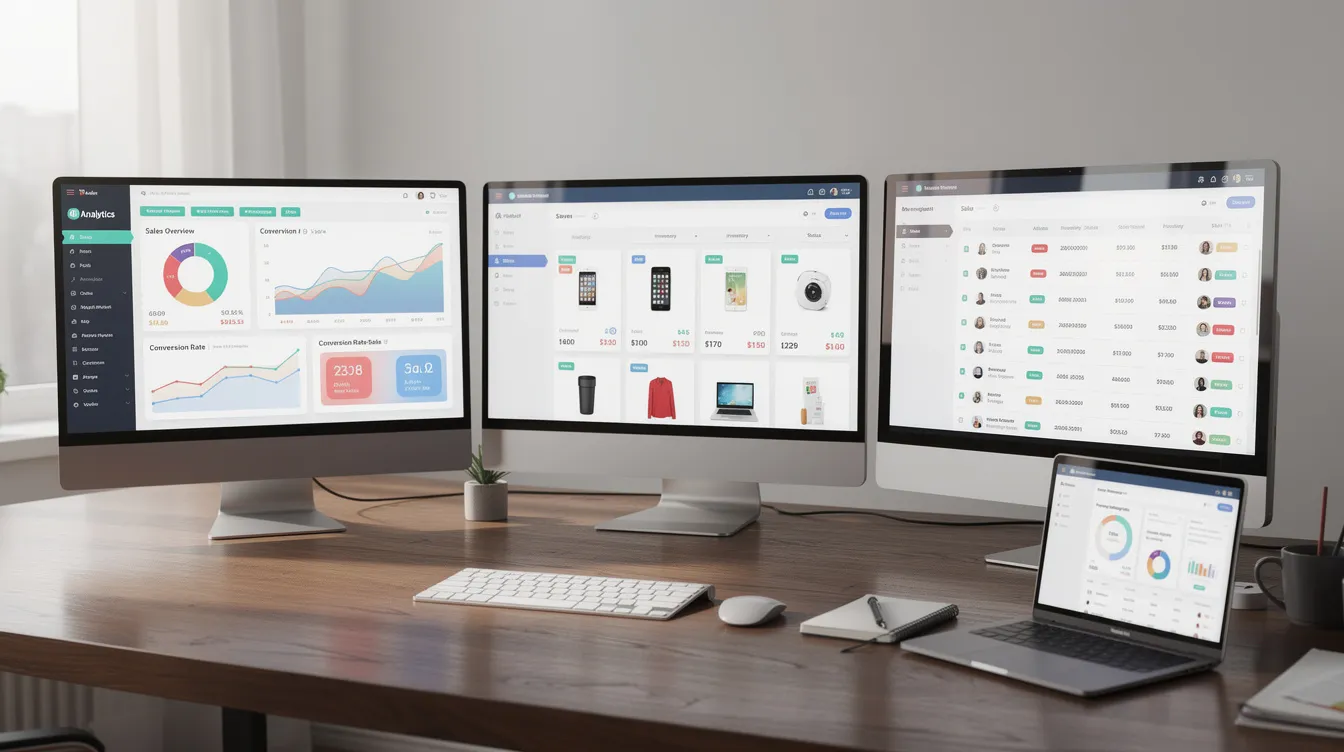
Understanding Integration Terminology
3PLs can integrate with Shopify for smooth order processing when these components work together. The fulfillment data flowing between systems determines whether your customer experience is smooth or full of "where's my order?" emails and customer complaints.
Final Thoughts
Integration quality determines whether your third party logistics 3pl relationship becomes a growth engine or a source of daily operational firefighting. A clean integration means orders flow, inventory stays accurate, customers get tracking before they ask, and your team focuses on business growth instead of patching fulfillment systems.
The best provider depends on your order volume, product type, and channel strategy. For ecommerce businesses shipping at volume across multiple channels, ShipNetwork offers the strongest combination of fulfillment speed, order accuracy, and logistics operations support. Proper evaluation now prevents a costly provider switch six months in.
3PLs guarantee 100% order accuracy for every shipment when they back it with financial commitments, not just marketing language. ShipNetwork's Flawless or Free guarantee puts that in writing.
Ready to see what a real Shopify integration looks like?
- Request a quote to get pricing for your specific volume and product mix
- Explore ShipNetwork's Shopify integration to see the technical details
- View all 40+ platform integrations to confirm your channels are covered
FAQs
ShipNetwork, ShipBob, Red Stag Fulfillment, ShipMonk, Amazon MCF, Shopify Fulfillment Network (Flexport), and GoBolt all offer direct Shopify integrations. ShipNetwork provides the broadest combination of speed (1-day fulfillment SLA), accuracy (100% guarantee), and multi-channel coverage (40+ platforms). Shopify sellers should evaluate each provider based on their specific order volume and product requirements.
A native integration connects the 3PL's warehouse management system directly to Shopify using official APIs and webhooks. A connector app is third-party middleware that sits between both systems. Native integrations have fewer failure points and faster sync speeds. Connector apps add flexibility but introduce a third system that can break independently.
Yes. ShipNetwork offers a native Shopify integration with automatic order routing, real-time inventory sync, and tracking pushback. It also integrates with Amazon, Walmart, WooCommerce, eBay, TikTok, Etsy, and 40+ additional platforms from the same fulfillment operations.
Most 3PLs use webhooks to detect events in Shopify (order created, item cancelled) and update their WMS accordingly. Inventory movements at the warehouse (receipts, returns, outbound shipments) trigger updates back to Shopify. The sync can be real-time (event-driven) or scheduled (hourly or daily batch). Real-time sync prevents overselling; batch sync creates risk windows.
When you enable a 3PL's fulfillment service in Shopify, new orders route to the 3PL automatically after checkout. Existing unfulfilled orders may need to be manually assigned depending on the integration. Your logistics company handles the fulfillment process from that point: picking, packing, labeling, and shipping. Tracking numbers push back to Shopify so customers see delivery updates.
Yes. Providers like ShipNetwork manage a single inventory pool across Shopify, Amazon, Walmart, and other channels. This eliminates split-inventory problems where stock is siloed by channel. Every unit stays available to every channel until it sells, and inventory sits in shared warehouse space rather than being duplicated across platform-specific facilities. This approach supports reduce costs goals while maintaining operational efficiency across all channels.
.svg)