Introduction/Summary
Every ecommerce business lives or dies by what happens after a customer clicks "Buy." Your product might be exceptional and your marketing brilliant, but if fulfillment breaks down, none of it matters. Order fulfillment involves receiving, processing, and delivering orders - and doing it well separates thriving brands from those bleeding revenue through errors, delays, and lost customers.
This guide covers the entire order fulfillment process: what it is, the metrics that matter, each step from warehouse to doorstep, how to choose the right fulfillment model, and what separates average operations from excellent ones. Whether you're evaluating your current fulfillment strategy or preparing to scale, this is the resource you need.
What Is Ecommerce Order Fulfillment?
The order fulfillment definition covers every activity between a customer placing an order and receiving it at their door - plus what happens if they send it back. The scope runs from receiving inventory at a warehouse or fulfillment center through inventory storage, order processing, picking and packing, shipping orders, delivery tracking, and returns processing.
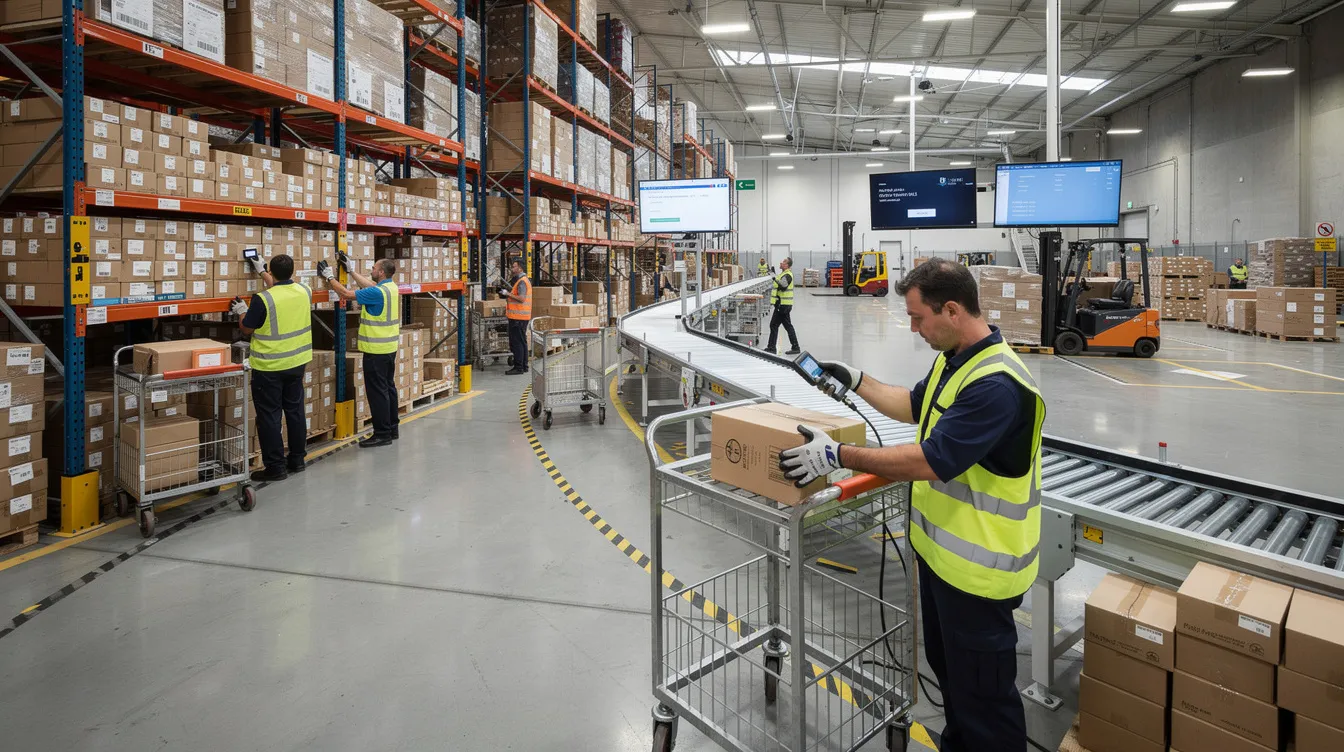
Ecommerce fulfillment includes five key steps: receiving, processing, picking, packing, and shipping. But the complete process also encompasses reverse logistics, inventory management, and customer communication throughout the journey.
Why does this matter so much? Because fulfillment success hinges on inventory accuracy, delivery speed, and customer transparency. Get these right, and you build customer loyalty. Get them wrong, and your brand reputation erodes with every botched shipment.
Order fulfillment accuracy directly impacts customer satisfaction and loyalty. A wrong item, a late package, or a missing component doesn't just cost you a reshipment - it costs you trust. For fast-growing DTC brands, fulfillment operations aren't a back-office afterthought. They're the engine behind customer experience, repeat purchases, and sustainable revenue growth.
Brands today have several approaches available: self fulfillment (handling everything internally), working with a third party logistics provider, dropshipping, or hybrid fulfillment models that combine methods. The right choice depends on your volume, product complexity, and growth trajectory.
Key Metrics Every Brand Should Track
You can't improve what you don't measure. These are the fulfillment metrics that separate data-driven brands from those flying blind.
Order Accuracy Rate measures the percentage of orders shipped correctly - right items, right quantities, right packaging. Formula: (Total Orders – Incorrect Orders) ÷ Total Orders × 100. When you implement quality control measures to ensure order accuracy, every percentage point matters. A facility shipping 10,000 orders at 97.5% accuracy generates roughly 250 errors per month. At 99.7% accuracy, that drops to about 30.
On-Time Ship Rate tracks how many orders leave the warehouse by the promised date. Fast delivery is crucial; most businesses aim for 1-2 business days from order receipt to shipment. During peak seasons, average on-time delivery drops to around 84%, while top performers maintain 95%+.
Fill Rate measures how much customer demand you can satisfy immediately from available stock. Variants include line fill rate, unit fill rate, and order fill rate. Running out of stock harms customer satisfaction and brand reputation, making this metric essential for inventory planning.
Days in Fulfillment captures the time from when a customer places an order to when it ships. This metric reveals processing bottlenecks, labor inefficiencies, and system delays.
Inventory Accuracy tracks whether physical stock matches your system records. Real-time inventory tracking helps maintain accurate stock levels and prevents downstream errors in picking and allocation.
Industry Benchmarks: Average vs. Excellent
TABLE HERE
The Complete Order Fulfillment Process: 6 Essential Steps
Understanding the entire fulfillment process step by step helps you identify where breakdowns happen and where improvements create the biggest impact. Here's how ecommerce order fulfillment works from start to finish.
Step 1: Receiving and Inventory Storage
Every successful order fulfillment operation starts at the loading dock. When incoming inventory arrives at the facility, receiving inventory involves inspecting and counting goods against purchase orders, checking for damage, and verifying compliance documentation.
After quality checks, putaway processes move products to designated locations - bins, pallets, or shelves - based on velocity, size, and storage requirements. You need to organize warehouse layout to speed up picking and packing processes; slotting high-velocity SKUs closer to packing stations dramatically reduces travel time.
Specialized products demand specialized handling. Lot tracking ensures FIFO or FEFO compliance for items with expiration dates. Temperature-controlled storage protects regulated or sensitive products. ShipNetwork offers both lot tracking and temperature-controlled inventory storage for brands that need it.
Implementing a Warehouse Management System (WMS) helps track inventory in real-time, manage bin locations, and maintain the inventory accuracy that prevents downstream errors. Without a WMS, even organized warehouses develop phantom stock and misplaced SKUs.
Step 2: Order Processing and Allocation
When a customer's order hits your system, the order processing management system takes over. An order management system integrates with your ecommerce platform - Shopify, WooCommerce, Amazon, or others - to pull orders and route them to the correct fulfillment center.
Order Management Systems automate order routing and inventory updates, eliminating manual data entry errors and reducing processing time. Allocation rules determine which inventory fills which order: FIFO (first in, first out), FEFO (first expired, first out), or batch control for regulated products.
Order processing includes verifying payment and inventory management - confirming stock availability, reserving units, and generating pick tickets with fulfillment instructions. For brands selling across multiple sales channels, multi-channel order routing ensures priority handling and prevents overselling.
When you automate order processing to improve efficiency and reduce errors, you cut the gap between when a customer places an order and when a picker starts pulling items. That speed compounds across thousands of orders.
Step 3: Picking Operations
Picking is where accuracy and speed collide. Picking involves selecting items based on packing slip instructions from their storage locations and staging them for packing.
Different methods suit different operations:
- Discrete picking: One picker handles one order at a time. Simple but slow for high volume.
- Batch picking: A picker collects items for multiple orders simultaneously. Efficient for overlapping SKUs.
- Zone picking: Pickers work assigned zones and pass orders along. Reduces travel time.
- Wave picking: Combines batch and zone methods, releasing groups of orders in timed waves.
Warehouse Management Systems optimize picking routes and packing procedures, directing pickers along the shortest path through the facility. Barcode scanning at each pick location verifies the correct item and quantity, catching errors before they reach the packing station.
Automation reduces labor costs by 30% in fulfillment operations, particularly in facilities using goods-to-person systems, RF-directed picking, or robotic assistance. Even without full automation, scan verification alone can raise accuracy from ~97–98% to 99.5%+.

Step 4: Packing and Kitting
Packing optimizes dimensional weight to reduce shipping costs - an underappreciated lever for margin protection. Choosing the right box size prevents you from paying for air.
Standardizing packaging reduces shipping costs and material waste while maintaining consistency. Using sustainable packaging can lower shipping costs associated with dimensional weight, since lighter, right-sized materials weigh less and occupy less carrier space.
For brands that invest in the unboxing experience, custom packaging and branded inserts create memorable moments that drive social sharing and repeat purchases. Kitting and bundling - assembling multiple products into a single package - adds value and increases average order value. ShipNetwork offers kitting and bundling services for brands that need product combinations assembled at the fulfillment center.
Every package should include a packing slip and return materials. Pre-included return labels simplify the process if a customer needs to send something back. A final quality control checkpoint at packing confirms item accuracy, quantity, and condition before sealing.
Step 5: Shipping and Carrier Selection
Shipping includes selecting carriers and tracking shipments - and the choices you make here directly impact both fulfillment costs and delivery speed. Shipping costs impact profitability significantly for eCommerce businesses, especially as customers increasingly expect free or low-cost shipping.
Integrating carrier management software allows for automatic rate comparison and optimal shipping routes. ShipNetwork's KNCT shipping optimization analyzes weight, dimensions, origin, destination, and carrier performance data to select the best carrier and rate for each individual parcel - optimizing 100% of shipping volume.
Key strategies for cost and speed optimization:
- Zone skipping: Consolidating shipments to bypass intermediate carrier zones, cutting transit time and cost.
- Distributed inventory: Shipping costs can be reduced by distributing inventory closer to customers.
- Rate negotiation: Negotiating favorable rates with carriers reduces shipping expenses. Fulfillment providers offer bulk discounted rates for shipping that individual brands can't access alone.
- Carrier diversification: Leveraging USPS, UPS, DHL, and regional carriers for route-specific advantages.
Optimizing shipping strategies can help manage shipping costs effectively without sacrificing the delivery speed customers expect. Advanced shipping solutions provide real-time tracking information to customers from the moment a label is generated.
Step 6: Delivery Tracking and Returns Processing
The fulfillment process doesn't end when a package leaves the warehouse. Real-time tracking updates and proactive customer communication - shipment confirmation, transit updates, delivery notification - build trust and reduce "where's my order?" customer inquiries.
Delivery confirmation and proof of delivery close the loop on outbound fulfillment. But for many brands, the real challenge is what happens next: returns.
24% of customers dislike poor returns experiences, and that dissatisfaction directly erodes repeat purchase rates. Returns processing includes inspecting items for damage, determining whether products can be restocked or must be recycled, and updating inventory records. Including return labels with orders simplifies returns for customers, reducing friction.
A strong return process can improve customer satisfaction and turn a potentially negative experience into a loyalty-building one. Returns management involves restocking or recycling returned items - and efficient returns management keeps reverse logistics costs from eating your margins.
Fulfillment Models Comparison
Not every brand needs the same fulfillment approach. Here's how the main models compare:
TABLE HERE
In-House vs 3PL Fulfillment: When Each Makes Sense
This is the question most growing brands wrestle with. The answer depends on your volume, complexity, and growth ambitions.
Choose In-House Fulfillment When
- Monthly order volume is under 1,000 orders and manageable with existing staff
- Products require highly specialized handling, extensive customization, or hands-on quality inspection at every stage
- Maintaining direct control over every fulfillment touchpoint is critical to your brand promise
- You have available capital, warehouse space, and expertise for facility management, staffing, and technology investment
In house fulfillment gives you complete control over the entire process, but it demands significant operational attention and capital that could go toward product development or marketing.
Choose 3PL Fulfillment When
- You're shipping 5,000+ orders per month and need to scale efficiently without adding headcount or warehouse leases
- Your customers expect nationwide 1–2 day ground delivery coverage
- You need specialized services like subscription box fulfillment, lot tracking, or temperature-controlled storage
- You want to focus resources on product development and marketing rather than logistics operations
Outsourcing fulfillment can reduce operational costs significantly. Third-party logistics can improve delivery speed and accuracy by leveraging existing infrastructure and technology. Using a 3PL can help businesses scale operations efficiently, and outsourcing fulfillment allows brands to focus on core business activities - the things that actually grow revenue.
Fulfillment providers often offer bulk discounted shipping rates that individual brands can't negotiate on their own, creating immediate cost savings on every shipment.
Geographic and Operational Considerations
Utilizing a multi-warehouse strategy can significantly reduce transit times. A distributed network - like ShipNetwork's facilities reaching 98% of the U.S. population in 1–2 day ground - positions inventory placement closer to end customers, cutting both transit time and shipping costs.
Seasonal volume fluctuations make capacity planning critical. Peak periods stress every link in the supply chain, and operations that run lean during normal months often break during Q4. A 3PL absorbs that variability across its client base.
Technology integration matters. Your fulfillment partner needs seamless connectivity with your existing ecommerce platform, inventory management software, and order management system. API-driven integrations prevent the manual data entry that causes errors and delays.
For brands eyeing international expansion, cross-border fulfillment adds customs documentation, duties management, and carrier complexity that most in-house operations aren't equipped to handle.

What to Look for When Evaluating a Fulfillment Partner
Choosing the right fulfillment partner is one of the highest-leverage decisions a growing ecommerce business can make. Here's how to evaluate your options.
Service Level Agreements and Guarantees
Demand specifics, not vague promises. Look for:
- Order accuracy guarantees with clear definitions of what constitutes an error. ShipNetwork offers a 100% accuracy commitment - errors result in credits, not excuses.
- Fulfillment speed commitments: a 1-day processing SLA versus the industry standard of 2–3 days represents a significant competitive advantage.
- Geographic coverage and delivery time promises: Can the partner deliver ground shipping in 1–2 days to the majority of U.S. customers?
- Return processing timeframes: How quickly are returns inspected, restocked, and refunded?
Use real-time tracking to enhance customer satisfaction and transparency throughout the entire fulfillment process.
Technology and Integration Capabilities
A fulfillment partner without strong technology is just an expensive warehouse. Evaluate:
- Real-time inventory visibility and reporting dashboards that prevent stockouts and overstock situations
- Native ecommerce platform integrations (Shopify, WooCommerce, Amazon) for automatic order syncing
- API capabilities for custom workflows and data synchronization across your tech stack
- Shipping optimization tools that provide carrier rate intelligence - like ShipNetwork's KNCT, which selects the optimal carrier for each parcel based on cost and performance data
Real-time inventory tracking prevents stockouts and overstock situations, keeping your inventory levels accurate across all sales channels.
Account Support and Communication
Technology matters, but so do people. Look for:
- Dedicated account management rather than shared support queues
- U.S.-based customer service teams with fast response times
- Operational transparency through regular performance reporting - weekly metrics, error root cause analysis, and proactive issue resolution
- Scalability planning: Can the partner grow with you through volume increases, new product lines, and geographic expansion?
The right fulfillment partner acts as an extension of your team, not a vendor you're constantly chasing for updates.
How Fulfillment Impacts Customer Experience and Retention
Fulfillment isn't a logistics function. It's a customer experience function. Every package is a brand touchpoint, and the data makes the stakes clear.
74% of shoppers abandon brands after three bad experiences. That means fulfillment errors, late deliveries, and botched returns don't just cost you one sale - they cost you a customer permanently. Accurate order fulfillment and timely delivery are the foundation of customer satisfaction.
Slow delivery times lead to negative reviews and lost customers. In a market where 1–2 day delivery is the baseline expectation, brands that can't meet customer expectations on speed lose to those that can. Every day of delay erodes confidence.
Shipping cost optimization directly affects conversion rates. When shipping costs are too high or delivery windows too long, cart abandonment spikes. Brands that streamline operations and optimize carrier selection can offer faster, cheaper shipping - or absorb costs without destroying margins.
Running out of stock leads to customer dissatisfaction and pushes shoppers toward competitors. On the flip side, overstocking increases storage costs and risks unsold inventory tying up cash. Effective inventory management prevents stockouts and backorders while keeping storage costs under control.
The returns experience matters more than most brands realize. 24% of customers cite poor returns experience as a major issue with online retailers, according to industry data. A seamless, customer-friendly return process can turn a potential detractor into a repeat buyer.
Tracking and communication round out the picture. Customers expect visibility into their order status. Brands that provide proactive updates - not just reactive responses to customer inquiries - build trust and reduce support volume. Excellent customer service in post-purchase communication is a low-cost, high-impact differentiator.

Ecommerce Fulfillment Glossary
Clear terminology prevents confusion. Here are the terms every ecommerce operator should know - for a deeper dive, see ShipNetwork's shipping terminology guide.
- SKU (Stock Keeping Unit): A unique alphanumeric identifier assigned to each product variant for inventory tracking. A single product in three colors and four sizes equals twelve SKUs.
- Pick Ticket: A document or digital instruction listing items, quantities, and storage locations for a specific order. Guides pickers through the warehouse efficiently.
- Putaway: The process of moving received inventory from the receiving dock to designated warehouse storage locations. Proper putaway directly affects picking speed.
- WMS (Warehouse Management System): Software that controls and optimizes warehouse operations - from receiving and putaway through picking, packing, and shipping. A core tool for any serious fulfillment operation.
- Fill Rate: The percentage of customer demand fulfilled immediately from available stock without backorders. Higher fill rates mean fewer disappointed customers.
- 3PL (Third-Party Logistics): A company that provides outsourced fulfillment services including warehousing, picking packing and shipping, and returns processing.
- EDI (Electronic Data Interchange): A standardized format for exchanging business documents (purchase orders, invoices, shipping notices) electronically between systems.
- FIFO (First In, First Out): An inventory allocation method ensuring the oldest stock ships first. Critical for perishable or date-sensitive products.
- DIM Weight (Dimensional Weight): A pricing method carriers use based on package volume rather than actual weight. Oversized boxes with light products get charged at DIM weight.
- Zone Skipping: A shipping strategy where packages are consolidated and transported in bulk to a carrier's regional hub, bypassing intermediate zones to reduce cost and transit time.
- Cross-Docking: Moving inbound inventory directly to outbound shipping with minimal or no storage time. Used for high-velocity items or pre-allocated orders.
- Fulfillment Center: A facility specifically designed for processing orders - not just storing goods. Fulfillment centers include receiving, picking, packing, shipping, and returns capabilities with high throughput and technology integration. Inventory management systems within these facilities optimize replenishment processes to keep stock flowing.
Ready to Optimize Your Ecommerce Fulfillment?
E commerce order fulfillment is a crucial aspect of your business that touches every customer, every order, every day. The brands that treat it as a strategic growth lever - not just a cost center - build the kind of customer loyalty and competitive advantage that compounds over time.
Successful order fulfillment requires the right combination of technology, process discipline, and infrastructure. ShipNetwork delivers all three: a 1-day fulfillment SLA, 100% order accuracy guarantee, 98% U.S. population coverage in 1–2 day ground shipping, and KNCT-powered shipping optimization that drives cost savings on every parcel.
Whether you're looking to streamline operations, scale your e commerce fulfillment, or find the right fulfillment partner to help you fulfill orders faster and more accurately, ShipNetwork is built for growing brands that refuse to compromise.
Explore ShipNetwork's Order Fulfillment Services →
Ready to see how your current fulfillment operations stack up? Contact ShipNetwork for a free fulfillment consultation to assess your entire order fulfillment operations and identify opportunities to deliver satisfied customers at every touchpoint.
FAQs
Costs vary by product size, weight, and handling requirements. Industry median pick and pack cost is approximately $2.78 per order for the first unit. Storage runs about $21 per pallet per month or $2.10 per bin per month. Total per-order fulfillment costs typically range from $3–$8 when combining storage, labor, packaging, and shipping. Fulfillment costs scale down on a per-unit basis as volume increases.
If you want accurate pricing reach out to us here.
Best-in-class operations process and ship orders within one business day - ShipNetwork's 1-Day Fulfillment SLA guarantees this. The industry average for non-peak periods is 2–3 business days from order to ship, with longer timelines for products requiring kitting, lot tracking, or special handling. Orders requiring processing orders through complex workflows may take additional time.
While context matters, brands shipping approximately 5,000+ orders per month typically see clear benefits from outsourcing order fulfillment. Below roughly 1,000 orders per month, in house fulfillment may be manageable if products are straightforward. The decision also depends on growth trajectory, product complexity, and whether your online store sells across multiple channels.
Distributing inventory across multiple warehouses reduces transit time and shipping costs - particularly for ground shipping. It increases complexity in inventory management, forecasting, and systems integration, but the net effect for most scaling brands is positive: lower per-order shipping expense and faster delivery to more customers.
At minimum: order accuracy rate, on-time ship/delivery rate, fill rate, inventory accuracy, days in fulfillment, cost per order, and return rate. These metrics give you visibility into speed, accuracy, stock health, and cost - the four pillars of efficient order fulfillment. Optimize inventory management to prevent stockouts and overstocking by tracking these numbers weekly.
Most established 3PLs offer native integrations with major platforms like Shopify, Amazon, and WooCommerce. Integration typically works through APIs, connectors, or EDI. The critical requirement is real-time inventory syncing to prevent overselling. ShipNetwork's Partner API and platform integrations provide seamless order synchronization, fulfilling each sales order automatically.
A warehouse stores goods. A fulfillment center processes orders - receiving, picking, packing, shipping, and handling returns - with technology and workflows optimized for speed and accuracy. Fulfillment centers typically have higher inventory turnover and more sophisticated supply chain management capabilities than pure storage facilities.
Key tactics: use distributed inventory closer to customers, implement zone skipping, leverage carrier rate shopping tools (like KNCT), optimize packaging dimensions, and negotiate volume-based rates. A third party logistics provider with an established carrier network can access rates individual brands cannot. These approaches help you manage shipping costs while maintaining the delivery speed your customers expect in a timely manner.
.svg)